DbcultAccessing Vault...
Cult Review
Senior Film Conservator
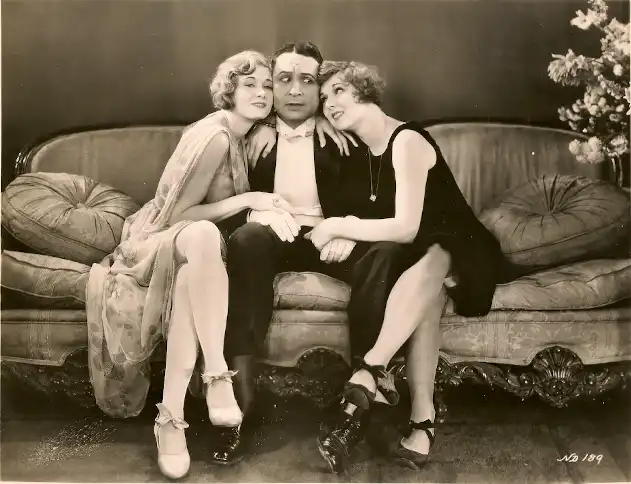
If you have about an hour and you really like looking at guys in 1920s work gear, No Defense is actually worth a look. It is not a masterpiece, but it has that weird, heavy heart that only silent movies from 1929 seem to have.
You’ll probably like this if you enjoy stories where the hero is painfully noble. Like, so noble it actually becomes kind of frustrating to watch.
If you hate slow-moving plots where a single conversation could solve everything, you should probably skip this one. It’ll just make you want to yell at the screen.
The movie stars Monte Blue as Monte Collins. I always find it funny when actors play characters with their own first name. It feels like they just couldn't be bothered to remember a new one that day.
Monte is the foreman of a bridge construction gang. He’s the kind of guy who looks like he knows exactly how many rivets are in a steel beam.
Then there is Ruth, played by May McAvoy. She’s great, but her character has a real loser for a brother named John.
John is played by William Desmond. He looks like the kind of guy who would accidentally break your favorite lamp and then blame the cat.
The whole plot kicks off when the bridge they are building just... collapses. It’s the big set-piece of the movie.
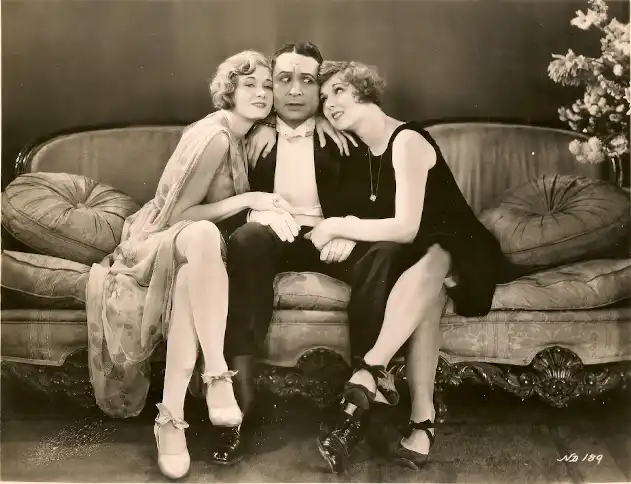
I have to say, the bridge collapse looks pretty cool for 1929. You can tell it’s a model, obviously.
The water splashes up in a way that feels very 'bathtub-sized'. But there is a charm to those old practical effects that you just don't get anymore.
It’s not quite as visually wild as something like La tour, but it gets the job done. The tension is there, even if the physics are a little bit off.
Anyway, the bridge falls, and everyone is looking for someone to blame. Instead of pointing at the brother—who totally did it—Monte just stands there and takes it.
He does it for Ruth. Because he loves her. Naturally.
There is this one shot of Monte Blue looking at the ruins of the bridge. He has this expression that is half-sad and half-constipated.
It lingers for a long time. Maybe five seconds too long.
The pacing in these late silents is always a bit hit-or-miss. Sometimes they move like a freight train, and other times they just sit there and stare at a character’s hat.
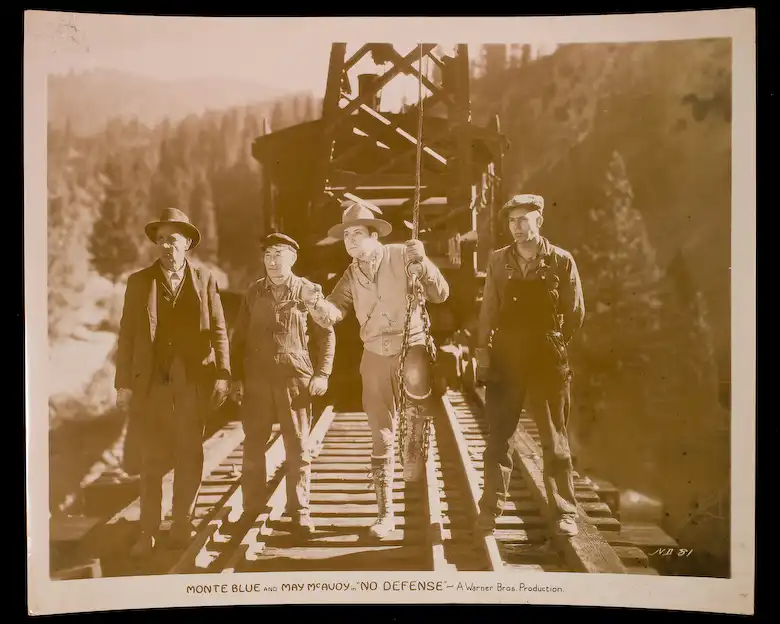
There is a lot of hat-staring in this movie. People had very nice hats back then, I guess.
I found myself thinking about Smooth as Satin while watching this. It has that same sort of 'high stakes melodrama' energy where every look is life or death.
The middle of the movie drags a bit when they get into the legal and social fallout. It feels like the movie is trying to be a serious drama, but the plot is a bit too thin for that.
It’s a bit like For $5,000 a Year in how it handles money and reputation. Everything is about your 'good name' in these scripts.
I kept waiting for someone to just tell the truth. But no, Monte has to be the martyr.
The supporting cast is okay. Lee Moran pops up, and he’s usually a bright spot in these things.
He has this way of moving that feels more natural than the leads. Sometimes the main actors are so busy 'acting' that they forget to look like real people.
I noticed a weird smudge on the lens in one of the indoor scenes. It’s right in the corner.
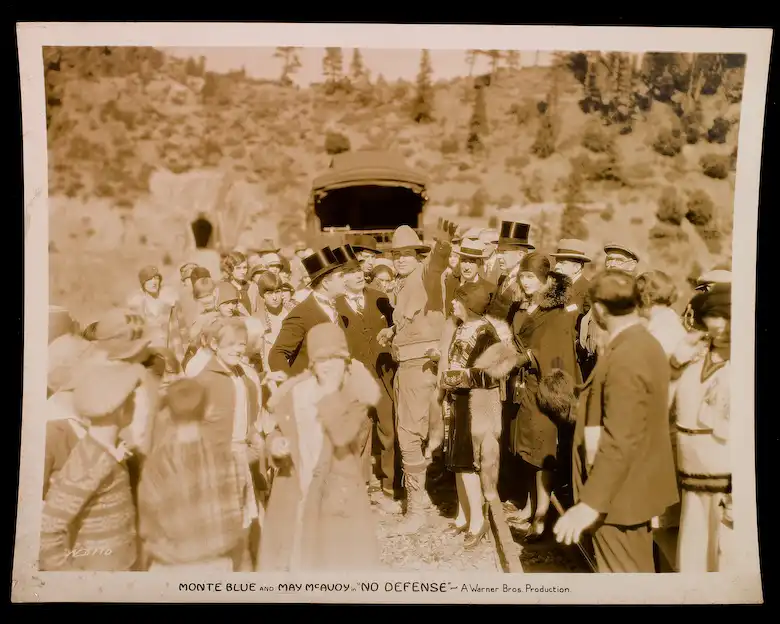
Once you see it, you can't unsee it. It’s like a little ghost haunting the edge of the frame.
The lighting is actually pretty decent, though. They use shadows in the bridge site scenes that make everything look very industrial and gritty.
It’s not quite as stylized as a German film like Alraune, but it’s got some mood.
There’s a scene where Ruth and Monte are talking near the river. The wind is blowing her hair all over the place.
It feels like a real moment that wasn't totally planned. Those are the best parts of these old films.
The ending is... well, it’s exactly what you think it is. I won't spoil it, but it’s very satisfying in a 'justice is served' kind of way.
I did feel like the brother got off a little too easy. He was a real piece of work.
If this were made today, there would be a 20-minute sequence of him being chased through the bridge supports. In 1929, they just kind of settle things with a stern look and some title cards.
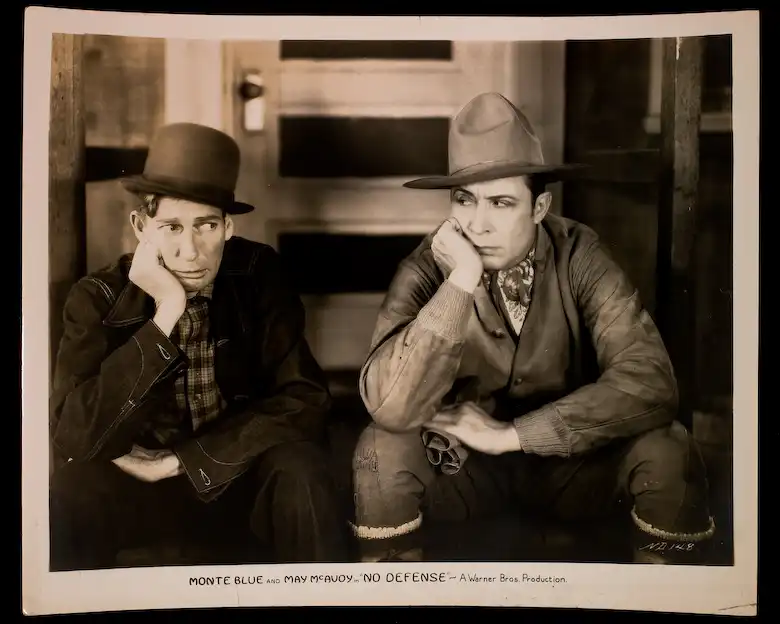
Is it better than Davy Crockett? Maybe not. That one has a bit more adventure.
But No Defense is a solid example of what was playing in theaters right before sound took over everything. You can feel the craft in it.
The writers—Robert Lord and the others—knew how to milk a situation for maximum guilt. They really make you feel for Monte.
Even if you think he's being an idiot for taking the fall. Which he is.
I wonder what happened to the actual bridge after they filmed. Did they just leave the model in a tank somewhere?
Probably. Movies were so disposable back then.
Anyway, if you find a copy of this, give it a watch on a rainy Sunday. It’s got that dusty, nostalgic feeling that fits perfectly with a cup of coffee.
Just don't expect it to change your life. It’s just a story about a bridge and a guy who loved a girl too much.
Also, the dog in the background of one scene is very cute. I think it was a stray that just wandered onto the set. 🐾
Final thought: Monte Blue’s mustache deserves its own billing. It is very well-groomed.
Okay, that's all I've got on this one. It's a bit of a relic, but a nice one.
IMDb —
1932
Community
Log in to comment.