DbcultAccessing Vault...
Cult Review
Senior Film Conservator
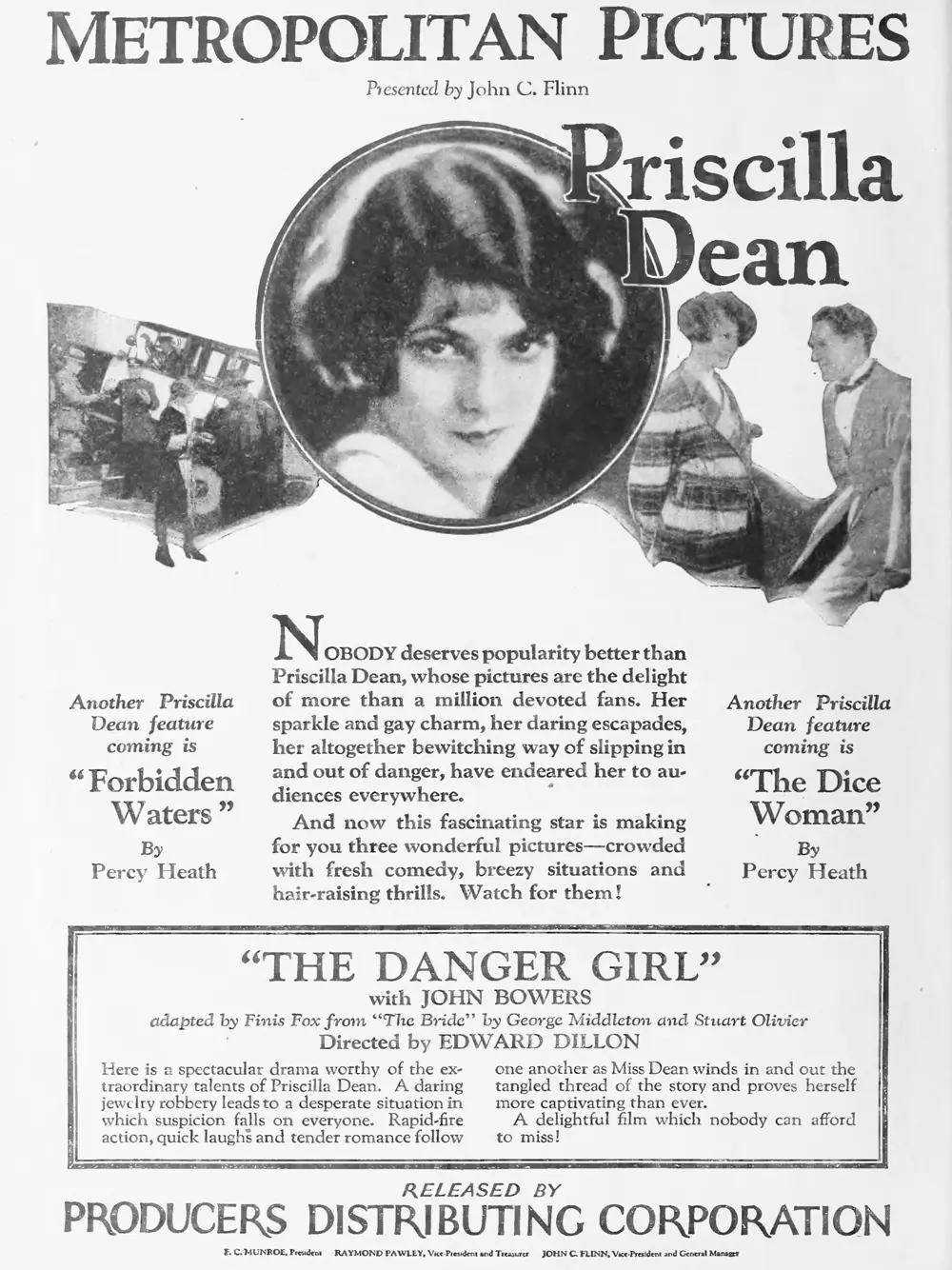
Is The Danger Girl a forgotten silent-era gem deserving of rediscovery today? Short answer: yes, but with significant caveats that anchor it firmly in its historical context. This film is a fascinating peek into the early days of cinematic mystery and character drama, offering a unique blend of intrigue and quaint charm that will undoubtedly appeal to dedicated silent film aficionados and those with a keen interest in film history. However, its deliberate pacing and theatrical acting style might prove a significant hurdle for viewers accustomed to the rapid-fire narratives and subtle performances of contemporary cinema.
It's a picture for those who appreciate the artistry of a bygone era, for whom the very act of watching a silent film is an exercise in historical empathy and visual interpretation. Conversely, if your viewing habits demand constant plot propulsion, modern psychological depth, or dialogue-driven exposition, The Danger Girl will likely test your patience more than it rewards your curiosity.
Directed by Fred J. Balshofer, The Danger Girl unfolds a narrative that, while perhaps familiar in its core tropes today, was fresh and engaging for audiences of the early 1920s. It’s a film that plays with expectations, introducing characters whose initial presentations are mere facades for deeper, more complex roles. The central conceit of a detective infiltrating a seemingly innocuous household is classic, but here it's imbued with a particular silent film sensibility that prioritizes visual storytelling and broad emotional strokes.
The film’s strength lies in its ability to slowly peel back layers, revealing the true nature of its players with a measured suspense that relies heavily on the audience’s interpretation of gestures and expressions. It’s less about explosive action and more about the quiet tension of suspicion and hidden motives.
Fred J. Balshofer's direction in The Danger Girl is a testament to the evolving visual language of the silent film era. He effectively uses the camera not just to record, but to narrate. The film opens by establishing the eccentric, insular world of the Travers brothers with meticulous detail. We see Wilson among his gleaming gem collection, and Mortimer meticulously tending to his tropical fish, each scene serving as a silent exposition of their singular, almost hermetic, existence. Balshofer’s framing emphasizes this isolation, often placing the brothers within grand, yet somewhat sterile, interiors that underscore their detachment from the wider world.
The arrival of Marie Duquesne is handled with a theatrical flair characteristic of the period. Her entrance, dressed as a bride, is a striking visual that immediately signifies disruption. Balshofer understands the power of a strong visual metaphor, using Marie's attire to symbolize both innocence and artifice. This moment, more than any intertitle, communicates the dramatic shift in the brothers' lives. The director then skillfully contrasts the brothers' rigid composure with Marie's expressive, often desperate, physicality, creating an immediate visual tension that carries through the film.
One particularly effective directorial choice is the way Balshofer handles the reveal of Marie's true identity. Instead of an abrupt declaration, there’s a gradual accumulation of suspicious behaviors, observed keenly by the butler and then confirmed by Marie’s decisive action in preventing the safe robbery. This slow burn allows the audience to participate in the detective work, piecing together clues from visual cues rather than explicit dialogue. It’s a technique that demands viewer engagement, a hallmark of good silent film direction. However, this reliance on visual cues also means that if an audience member isn't fully attuned to the nuances, some of the subtext might be lost, leading to moments that feel less impactful than intended.
The film's pacing, while slow by modern standards, is deliberate. Balshofer allows scenes to breathe, letting the emotional weight of a glance or a gesture fully register. This is evident in the scenes where Wilson begins to fall for Marie; the lingering shots on his face, conveying a mixture of confusion, awe, and burgeoning affection, are crucial. It's a directorial style that privileges atmosphere and character reactions over a breakneck plot, which, for contemporary audiences, can feel like a double-edged sword. It creates a rich, immersive experience if one commits to it, but can feel ponderous if one expects a more aggressive narrative drive.
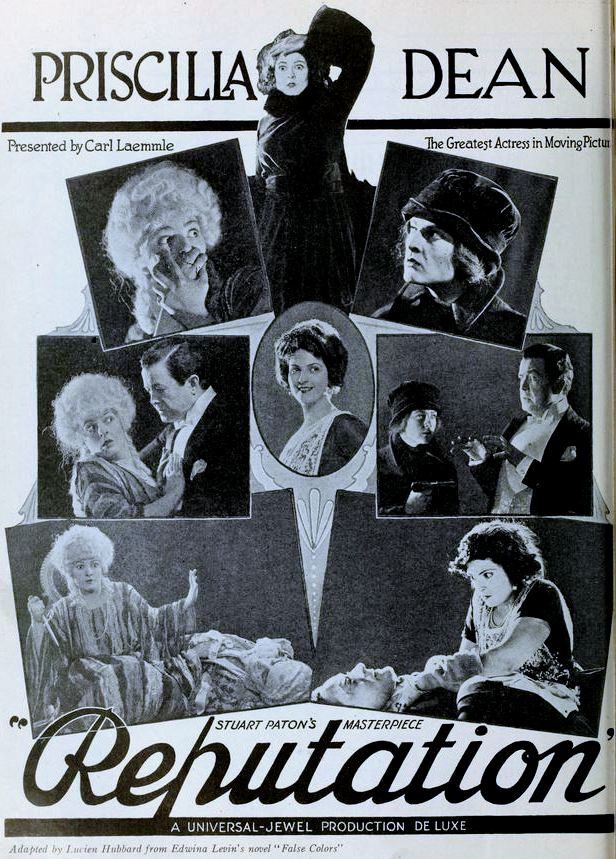
The acting in The Danger Girl is a fascinating study in silent film performance, a delicate balance between broad theatricality and nascent cinematic subtlety. Priscilla Dean, as Marie Duquesne, is the undeniable center of gravity. Her performance is a masterclass in silent-era charm and physical storytelling. Dean conveys Marie's initial desperation, her underlying cunning, and her eventual romantic interest with a dynamism that transcends the lack of spoken dialogue. Her expressions range from wide-eyed innocence to sharp, calculating glances, often within the same scene. For instance, her appeal to the brothers for shelter is delivered with a captivating blend of vulnerability and a hint of steel in her eyes, leaving the audience to question her sincerity long before her true identity is revealed.
John Bowers, as Wilson Travers, provides a compelling counterpoint. His character is initially portrayed as almost comically oblivious, consumed by his hobbies. Bowers manages to convey Wilson's transformation from an academic recluse to a man smitten by love with a surprising degree of pathos. His facial expressions, particularly in moments of confusion or dawning realization, are remarkably effective. The scene where he first truly looks at Marie, his face shifting from polite curiosity to genuine enchantment, is a subtle triumph of silent acting. He doesn't just react; he visibly processes the emotional upheaval.
“Priscilla Dean’s performance as Marie Duquesne is a vibrant reminder that silent film acting, far from being merely melodramatic, could convey immense complexity and charisma through sheer presence and precise gesture.”
The supporting cast, particularly Gustav von Seyffertitz as Mortimer Travers, embraces the more exaggerated style common to the era, serving primarily as a foil to Wilson's burgeoning affections. Mortimer’s resentment of Marie is almost cartoonish, with scowls and dramatic gestures that leave no doubt about his disapproval. While this might seem over-the-top to modern viewers, it was a necessary shorthand in silent cinema to quickly establish character traits and emotional states without dialogue. The butler, played by William Humphrey, also delivers a performance that leans into archetype, his shifty eyes and furtive movements clearly signaling his duplicitous nature long before his attempted robbery.
The chemistry between Dean and Bowers, while not overtly passionate by today's standards, is palpable. Their interactions are built on glances, shared smiles, and moments of quiet understanding. It’s a more chaste, yet still effective, portrayal of romance, demonstrating how much could be communicated without a single word. This human element, the believable spark between Wilson and Marie, is arguably the film’s greatest asset, elevating it beyond a simple genre exercise.
Beyond its surface-level mystery, The Danger Girl subtly explores several compelling themes. The most prominent is the disruption of established order and the transformative power of the 'other.' The Travers brothers live in a carefully constructed bubble, a microcosm of intellectual pursuits detached from societal norms. Marie’s arrival shatters this peace, forcing Wilson, in particular, to confront emotions and desires he likely never acknowledged. Her presence is a catalyst, an agent of change that challenges their rigid routines.
Another fascinating theme is the idea of appearance versus reality. Marie, the 'danger girl' of the title, is initially presented as a damsel in distress, then suspected as a thief, only to be revealed as a law enforcer. This constant shifting of identity keeps the audience engaged and highlights the film's playful manipulation of expectations. It's a reminder that in the world of silent cinema, and perhaps life itself, what you see isn't always what you get. The butler's hidden criminal intent further reinforces this theme, demonstrating that even those closest to us can harbor secrets.
The film also touches upon the evolving role of women in the 1920s. Marie is not a passive figure; she is intelligent, resourceful, and takes decisive action. She is a woman of agency, capable of outwitting criminals and charming the unsuspecting. This portrayal, while still framed within a romantic narrative, hints at the burgeoning independence and capability of women in the post-suffrage era, a subtle but powerful message for its time. Her ability to navigate a male-dominated world, both as a 'victim' and as a detective, speaks volumes.
The pacing of The Danger Girl is undeniably a product of its time. It’s leisurely, allowing scenes to unfold without haste. Intertitles, while well-integrated, punctuate the action rather than driving it at a rapid clip. This deliberate rhythm can be a challenge for modern viewers accustomed to quick cuts and constant narrative progression. However, for those willing to adjust, it allows for a deeper appreciation of the visual storytelling and the actors' nuanced expressions. The quiet moments, like Wilson's internal struggle with his feelings for Marie, gain significant weight through this unhurried approach.
The tone oscillates effectively between lighthearted romance and genuine suspense. The initial scenes with the brothers lean into gentle comedy, almost a character study of eccentric bachelors. Marie's arrival injects immediate drama, shifting the tone towards mystery and intrigue. The film manages to maintain this balance, never fully committing to outright slapstick or grim noir, making it a surprisingly versatile viewing experience. The atmosphere is generally one of genteel domesticity disturbed by external threats, underscored by the slightly gothic feel of the brothers' grand, yet secluded, home.
Absolutely, for the right audience. The Danger Girl is a captivating piece of silent cinema that offers more than just historical curiosity. It presents a well-crafted mystery with engaging performances, particularly from Priscilla Dean. It showcases the visual storytelling prowess of the era, relying on expression and gesture to convey complex emotions and plot points. While its pacing is slower than modern films, this allows for a rich, immersive experience if you're willing to lean into it. It’s a valuable film for understanding the foundations of genre cinema and the evolution of screen acting.
The Danger Girl is more than just a historical artifact; it's a surprisingly engaging silent film that holds its own as a compelling mystery and a charming romance. It works. But it’s flawed. Its greatest asset is undoubtedly Priscilla Dean, whose vibrant performance injects life and charisma into every frame, making Marie Duquesne a truly memorable figure of early cinema. While the deliberate pacing and theatrical style might require a shift in viewing expectations, the film rewards patience with a cleverly constructed plot and a genuine sense of human connection.
For those willing to step back in time and appreciate the artistry of silent storytelling, The Danger Girl offers a delightful and insightful viewing experience. It’s not a film that will revolutionize your understanding of cinema, but it will certainly deepen your appreciation for the foundations upon which modern filmmaking was built. Give it a chance, and you might just find yourself captivated by this forgotten 'danger girl' and her silent world of intrigue. It’s a film that deserves to be seen, not just studied.
IMDb 6.5
1921
Community
Log in to comment.