DbcultAccessing Vault...
Cult Review
Senior Film Conservator
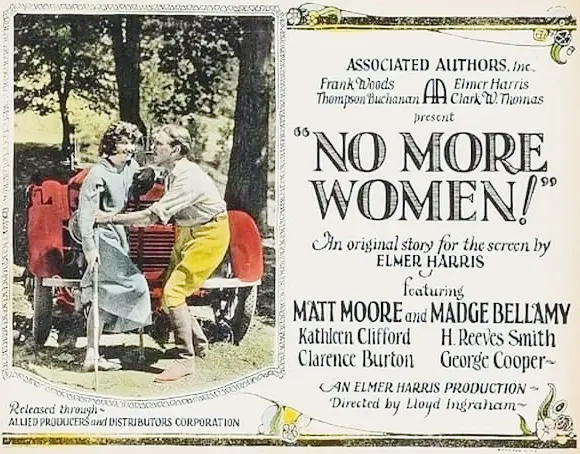
Step back in time to an era when cinematic storytelling relied on the eloquence of gesture, the power of light and shadow, and the profound expressiveness of the human face. "No More Women," a fascinating silent film from 1924, emerges from this rich period as a surprisingly nuanced character study, cleverly disguised within the framework of a romantic drama. It's a film that, despite its age, speaks volumes about the enduring complexities of trust, vulnerability, and the transformative power of persistent affection. As an art critic, I find myself drawn to its subtle psychological undercurrents, its masterful use of visual narrative, and the compelling performances that breathe life into a seemingly straightforward premise.
At its core, "No More Women" unfurls a narrative as intricate as the geological formations Paul Maddox, the film’s protagonist, so diligently studies. We are introduced to Maddox, portrayed with compelling restraint by Matt Moore, as a man whose professional precision is starkly contrasted by a deeply entrenched emotional reticence. He is a geologist, a seeker of truths buried deep beneath the earth’s surface, yet he has, ironically, buried his own heart under layers of cynicism. This self-imposed emotional exile stems from a past romantic entanglement with Daisy Crenshaw, whose perceived unpredictability shattered his capacity for trust. For Maddox, love became synonymous with chaos, and thus, he declared a personal moratorium on women, retreating to a secluded mountain sanctuary where the only constants were rocks and solitude.
Enter Peggy Van Dyke, the effervescent daughter of an oil millionaire, brought to life with spirited charm by Madge Bellamy. Peggy is everything Maddox has sworn off: vibrant, spontaneous, and undeniably feminine. Her world of inherited wealth and social privilege stands in stark contrast to Maddox's austere, self-sufficient existence. Yet, an undeniable spark ignites, drawing her into his orbit. What follows is not a mere chase, but a determined, almost geological, pursuit. Peggy, accompanied by her remarkably intelligent and loyal canine companion, Don the Dog, follows Maddox to his mountain refuge, a symbolic journey from urban sophistication to untamed wilderness. This physical journey mirrors an emotional one, as Peggy endeavors to excavate Maddox’s buried affections, challenging his preconceived notions about love and stability. Her unwavering presence, combined with Don’s unconditional loyalty, serves as a persistent solvent, gradually eroding the hardened strata of Maddox’s skepticism, eventually winning his guarded heart. It's a testament to the film's writing by Elmer Harris that this transformation feels earned, rather than contrived, highlighting the slow, arduous process of rebuilding trust.
The success of "No More Women" hinges on its characterizations, particularly the intricate portrait of Paul Maddox. Matt Moore delivers a performance of remarkable subtlety, conveying a man deeply wounded yet fiercely independent. His stoicism is not a lack of emotion, but a carefully constructed defense mechanism. Through his eyes, we glimpse the lingering pain of past betrayal, a silent narrative that speaks volumes without a single spoken word. Moore's physicality – the way he carries himself, his guarded glances, the slight hardening of his jaw – paints a vivid picture of a man who has consciously chosen isolation over the risk of further heartbreak. This portrayal is crucial, as it grounds the entire narrative, making his eventual thaw genuinely moving. He embodies a certain archetype of masculinity prevalent in the 1920s: the strong, silent type, but with an added layer of psychological complexity that elevates him beyond a simple hero.
Contrasting Maddox’s reserved nature is Madge Bellamy's Peggy Van Dyke, a character who radiates an infectious vitality. Bellamy's performance is a masterclass in silent film vivacity, her expressive eyes and animated gestures conveying a spirit that refuses to be deterred. Peggy is not just a rich girl seeking a thrill; she possesses an inner strength and an unwavering belief in the possibility of genuine connection. Her pursuit of Maddox is less about conquest and more about conviction – a belief that beneath his hardened exterior lies a man worthy of love. She challenges the conventional female roles of the era, displaying an independence and proactive agency that feels remarkably modern. Her character reminds me of the assertive female protagonists found in other films of the period, such as those navigating social complexities in The Clever Mrs. Carfax, albeit with a different romantic trajectory. Peggy’s journey is one of perseverance, demonstrating that true love often requires an unwavering commitment to seeing beyond surface appearances.
Perhaps the most charming and impactful "performance" comes from Don the Dog. Far from being a mere prop, Don is an integral character, a furry bridge between the two human protagonists. His loyalty to Peggy is absolute, and his gradual acceptance of Maddox symbolizes the breaking down of the geologist’s emotional barriers. Don’s presence provides much-needed comic relief, but also a profound sense of warmth and unconditional affection that Maddox has been sorely lacking. The intelligence conveyed by Don on screen is truly remarkable, making him an unforgettable animal co-star, echoing the beloved canine companions seen in other films of the time who often served as moral compasses or emotional facilitators.
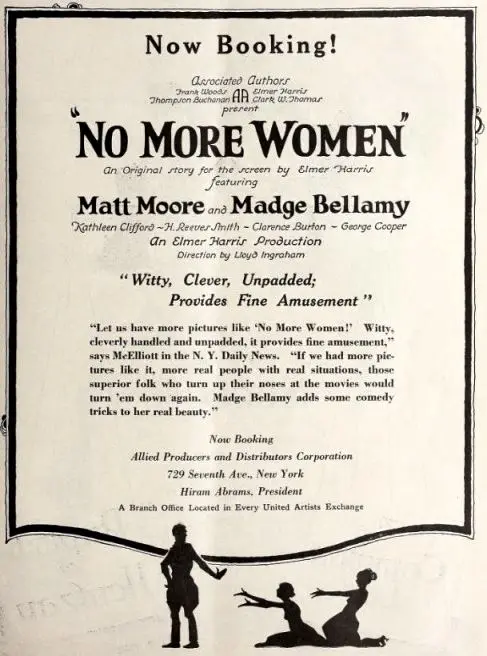
Even the unseen, or barely seen, character of Daisy Crenshaw, played by Kathleen Clifford, casts a long shadow over the narrative. Her "unpredictability" is the ghost in Maddox’s emotional machine, the trauma that fuels his isolation. While we don't spend much time with Daisy, her impact is deeply felt, a testament to the screenplay's ability to create compelling backstory through implication rather than overt exposition. The supporting cast, including George Cooper, Georgia Hale, Clarence Burton, H. Reeves-Smith, and Stanhope Wheatcroft, contribute to the film’s rich tapestry, each adding a layer of authenticity to the world in which Peggy and Paul’s drama unfolds, even if their roles are more peripheral.
Elmer Harris's writing for "No More Women" is a masterclass in silent film storytelling. Without dialogue, the narrative relies heavily on visual cues, character actions, and well-crafted intertitles to convey emotion and plot progression. Harris understands the power of implication, allowing the audience to infer much from the characters' reactions and environments. The pacing is deliberate, allowing the emotional arc of Maddox to unfold organically, rather than rushing toward a simplistic resolution. The journey to the mountain retreat, for instance, is not just a plot device; it’s a symbolic representation of Peggy's unwavering commitment and Maddox's deep-seated need for solitude. The screenplay expertly balances moments of lighthearted charm, largely provided by Don, with the more serious exploration of Maddox’s psychological barriers. This blend prevents the film from becoming overly melodramatic, a common pitfall in silent cinema, and instead elevates it to a more sophisticated character study. The narrative structure, focusing on the persistent pursuit and gradual breaking down of defenses, feels fresh and engaging, even a century later.
The visual language of "No More Women" is as compelling as its narrative. The cinematography, while perhaps not groundbreaking for its era, is highly effective in conveying mood and character. The use of natural landscapes, particularly the rugged mountain retreat, serves as more than just a backdrop. It becomes a reflection of Maddox’s internal state – wild, untamed, and resistant to intrusion. The stark beauty of the mountains mirrors his stoicism, while the eventual softening of the lighting in scenes with Peggy subtly hints at his emotional thawing. Close-ups are employed judiciously, allowing the audience to connect intimately with the characters' unspoken emotions, a crucial technique in silent film. The contrast between the opulent settings of Peggy’s world and the rustic simplicity of Maddox’s retreat further emphasizes their differing backgrounds and the journey they must undertake to bridge that gap. This visual dichotomy is a powerful storytelling tool, enriching the thematic resonance of the film.
Released in 1924, "No More Women" sits comfortably within the golden age of silent cinema, a period characterized by rapid innovation and evolving narrative sophistication. The film reflects the societal shifts of the Roaring Twenties, particularly the changing roles of women. Peggy Van Dyke, with her independence and proactive pursuit of love, embodies aspects of the burgeoning "flapper" archetype – spirited, confident, and unafraid to challenge convention. This era also saw a growing interest in psychological depth within film narratives, moving beyond simplistic melodramas towards more complex character motivations. While not as overtly dramatic as some contemporary films, its focus on Maddox’s internal struggle aligns with this trend.
Comparing "No More Women" to other films of the period illuminates its unique position. While many silent dramas, such as Faith Endurin' or The Law of Blood, explored themes of perseverance and redemption, "No More Women" distinguishes itself through its specific focus on rebuilding trust after emotional trauma. The dynamic between a cynical man and a determined woman is a classic trope, but here it is handled with a delicate touch, avoiding overt sentimentality. The role of nature as a character, or at least a powerful symbolic force, also brings to mind films like The Dragon Painter, which also used secluded, natural settings to emphasize character isolation and transformation. The film's narrative of a strong-willed woman challenging societal norms or personal barriers finds echoes in the adventurous spirit of characters in films like The Daring of Diana, though Diana's daring is more physical, Peggy's is primarily emotional. The quiet resilience and subtle emotional shifts in "No More Women" offer a refreshing counterpoint to the more grandiose spectacles of the era, proving that intimate stories could be just as captivating and profound.
What makes "No More Women" resonate even today? Its timeless themes, for one. The struggle to overcome past hurt, the courage required to open one's heart again, and the power of unwavering affection are universal human experiences. The film’s nuanced portrayal of these themes ensures its continued relevance. Furthermore, the exceptional performances, particularly from Matt Moore and Madge Bellamy, and the unforgettable presence of Don the Dog, elevate the film beyond a mere historical curiosity. It stands as a testament to the artistry of silent cinema, demonstrating how compelling narratives and deep emotional resonance could be achieved without spoken dialogue. For cinephiles and casual viewers alike, it offers a window into a bygone era of filmmaking, showcasing a charm and sincerity that feels refreshingly authentic. This film is more than just a relic; it's a vibrant piece of cinematic history that continues to enchant and remind us of the enduring power of love and perseverance.
In conclusion, "No More Women" is a delightful and surprisingly profound silent film that deserves a wider audience. Its blend of romance, character study, and subtle humor, anchored by strong performances and intelligent direction, makes it a captivating watch. It’s a film that quietly asserts the power of connection, proving that even the most hardened hearts can be softened by genuine affection and the persistent loyalty of a good dog. If you're looking for a silent film that offers more than just historical intrigue, one that truly connects on an emotional level, then this overlooked gem is an absolute must-see.
IMDb —
1917
Community
Log in to comment.