DbcultAccessing Vault...
6.2/10
Senior Film Conservator
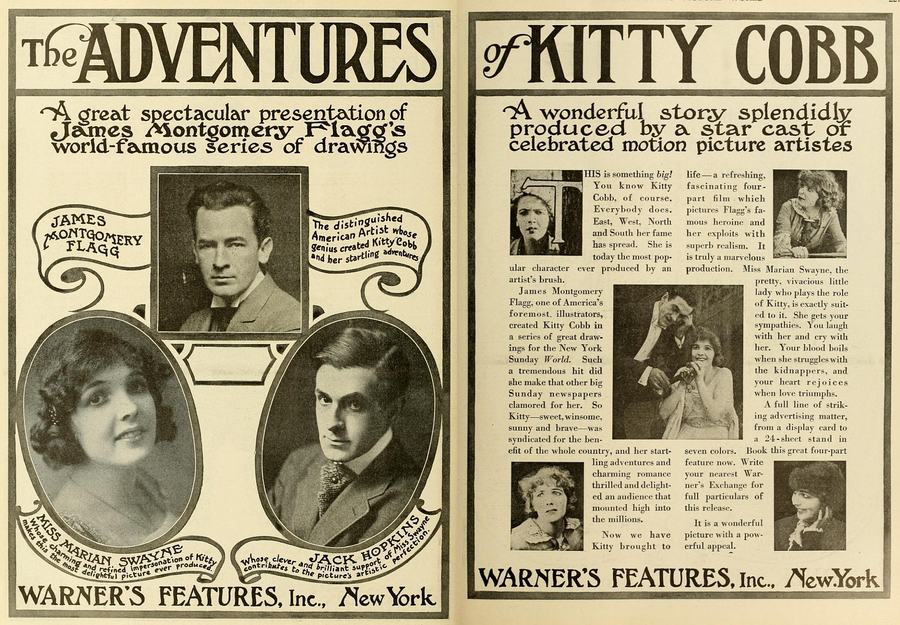
A definitive 6.2/10 rating for a film that redefined the boundaries of cult cinema. The Adventures of Kitty Cobb remains a cornerstone of transgressive art.
To understand the cinematic heartbeat of The Adventures of Kitty Cobb, one must first recognize its progenitor, the legendary illustrator James Montgomery Flagg. Known primarily for his iconic 'I Want You' recruitment posters, Flagg possessed a keen eye for the American character—a blend of pluck, vulnerability, and burgeoning modernity. This 1914 adaptation serves as a fascinating bridge between the static elegance of magazine lithography and the kinetic energy of early feature filmmaking. Unlike the stagey theatricality found in contemporaneous works like Uncle Tom's Cabin, Kitty Cobb feels distinctly rooted in the visual vernacular of the 1910s, utilizing the 'New Woman' archetype as its central axis.
The film functions as more than mere entertainment; it is a cultural artifact documenting the transition from the nineteenth-century agrarian mindset to the industrial fervor of the twentieth. Marian Swayne’s portrayal of Kitty is a revelation of silent-era nuance. She avoids the hyperbolic gesticulation often associated with the period, opting instead for a performance that mirrors the grounded realism of the working-class struggle. This is a film that understands the weight of a 'last cent' and the suffocating terror of an unpaid board bill, themes that resonate far more deeply than the melodrama of its espionage subplot.
The narrative architecture is split into a fascinating dichotomy. The opening act, set amidst fields and fortifications, utilizes natural light and deep-focus photography to establish Kitty’s world. When Bob Caldecott arrives in his automobile, the 'auto' serves as a mechanical harbinger of the change Kitty craves. It is a classic trope: the machine in the garden. Yet, the intrusion isn't just technological; it is political. The introduction of spies documenting the fort introduces a level of pre-WWI anxiety that would have been palpable to 1914 audiences. This isn't the sweeping historical drama of Votsareniye doma Romanovykh, but rather a localized, intimate thriller.
When Kitty finally reaches New York, the film undergoes a stylistic metamorphosis. The wide-open vistas are replaced by the claustrophobic interiors of boarding houses and the back-alleys of the Globe Theater. The transition is jarring, reflecting Kitty’s own disorientation. The sequence where she is nearly evicted—saved only by the magnanimity of a fellow boarder—highlights a communal female resilience that was rarely so explicitly depicted. It reminds one of the social undercurrents in The Three of Us, where economic survival is as much a protagonist as the human characters themselves.
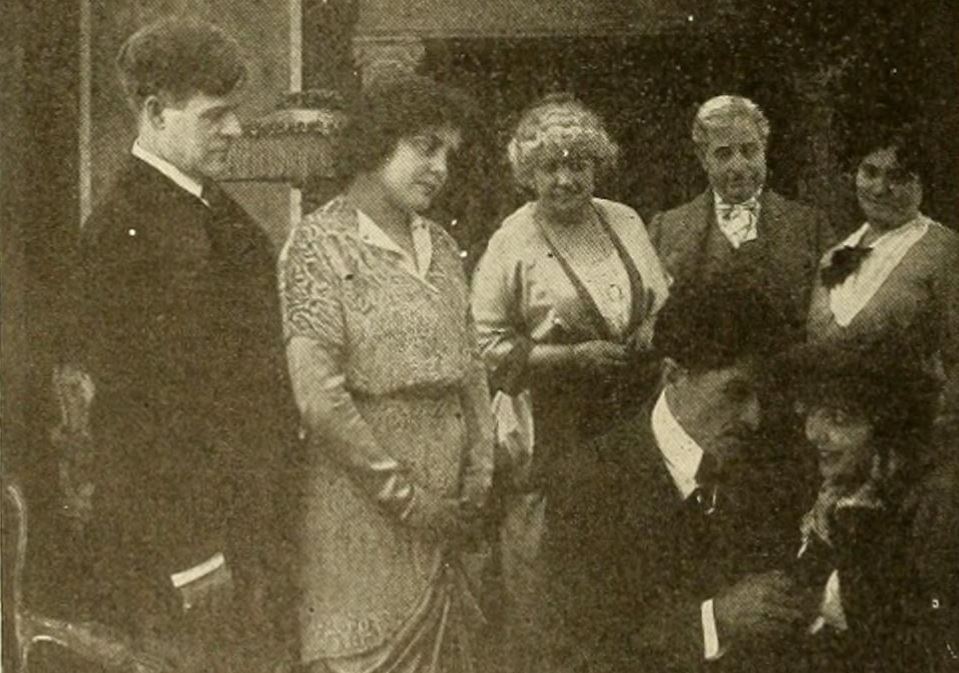
The re-emergence of the spy as 'Count Pulaski' is a masterstroke of narrative economy. By linking Kitty’s past trauma to her new urban life, the script by James Montgomery Flagg creates a sense of inescapable destiny. Pulaski, played with a delightful, oily menace, represents the 'foreign threat'—a common villainous trope of the era. His attempts to infiltrate the Caldecott household through marriage are reminiscent of the predatory antagonists in The Greyhound.
The tension reaches a fever pitch when Kitty discovers his stratagem. The workshop scene, where she conceals the secret plans, is a masterclass in suspense. The use of the heavy curtain to abduct her is a visceral visual metaphor; she is literally and figuratively 'blinded' and 'shrouded' by the city’s hidden dangers. This sequence elevates the film from a social drama to a proto-noir thriller, replete with the dark shadows and moral ambiguity that would later define the genre.
The final act of The Adventures of Kitty Cobb is an unrelenting barrage of action that challenges the technical limitations of its time. The arrival of Ed Randall, the 'country swain,' provides a necessary link back to Kitty’s origins. His role as the secondary hero creates a compelling dynamic with Bob Caldecott; it is a union of rural brawn and urban intellect. The tenement raid is choreographed with a chaotic energy that feels surprisingly modern. The exchange of blows is not the stylized stage-fighting of Nelson-Wolgast Fight, but a desperate, messy struggle for survival.
Perhaps the most harrowing moment is the 'gas room' sequence. Bob, rendered unconscious and left to die in a room filling with gas, introduces a ticking-clock element that predates the sophisticated suspense of Hitchcock. It is a testament to the directorial vision that such a sequence remains effective over a century later. The rescue, involving Ed descending a fire escape and Kitty battering down a boarded window, showcases a level of physical agency for the female lead that was quite progressive. Kitty is not merely a prize to be won; she is a participant in her own salvation and the salvation of her future husband.
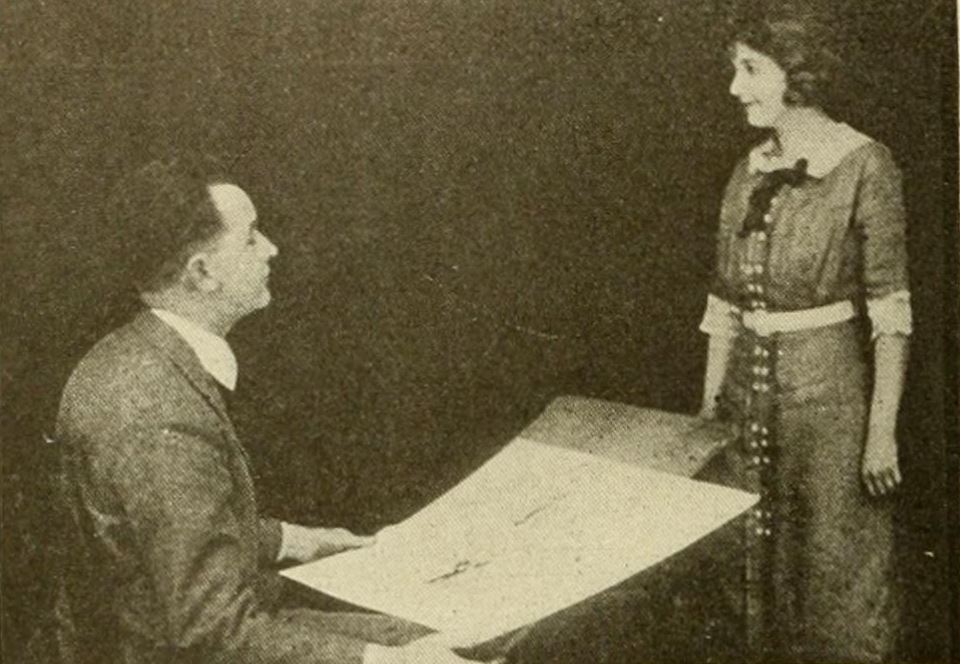
In the broader context of 1914 cinema, The Adventures of Kitty Cobb stands as a sophisticated outlier. While films like Evangeline focused on poetic, historical narratives, Kitty Cobb embraced the messy, vibrant present. It shares a certain DNA with Beating Back in its depiction of a protagonist overcoming the odds, but it swaps the frontier for the sidewalk.
The film concludes with a 'great reunion,' a standard trope that provides the audience with the catharsis required after such a harrowing journey. However, the true resolution lies in Kitty’s transformation. She begins as a girl looking at the city through a window and ends as a woman who has survived its darkest alleys. The marriage to Bob is less a fairy-tale ending and more a partnership forged in the fires of shared trauma and mutual respect.
For the modern viewer, the film offers a rich tapestry of early twentieth-century life. From the intricate costumes of the theater-goers to the squalid realism of the tenements, the production design is impeccable. It may lack the mythological scale of Mohini Bhasmasur, but it makes up for it with a grounded, human-centric narrative that feels remarkably contemporary. The Adventures of Kitty Cobb is a vital piece of cinema history that deserves a prominent place in the conversation regarding the evolution of the American thriller.
IMDb —
1928
Community
Log in to comment.