DbcultAccessing Vault...
6.1/10
Senior Film Conservator
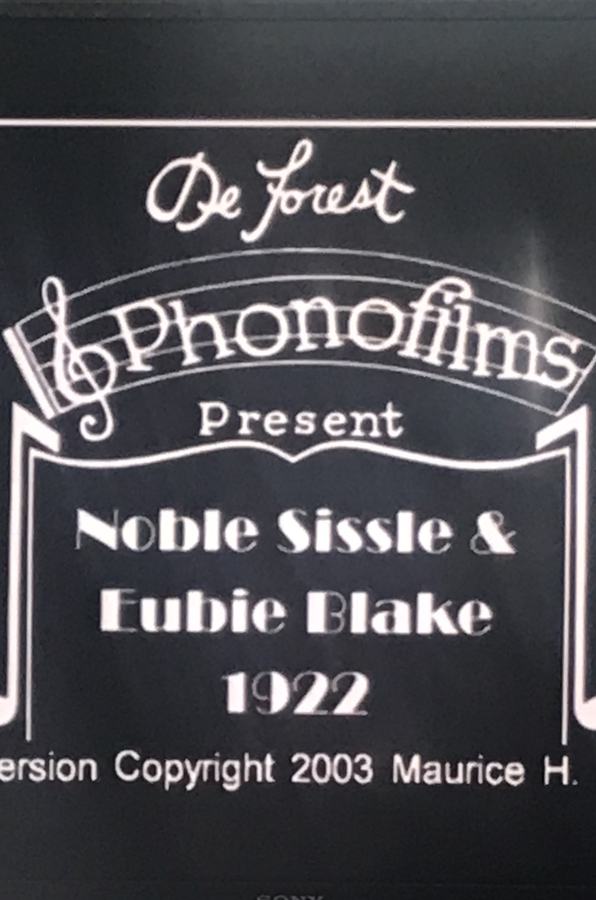
A definitive 6.1/10 rating for a film that redefined the boundaries of cult cinema. Noble Sissle and Eubie Blake Sing Snappy Songs remains a cornerstone of transgressive art.
In the annals of cinematic history, few artifacts possess the dual gravitas of artistic expression and technological pioneering quite like Noble Sissle and Eubie Blake Sing Snappy Songs. This brief, electrifying film, a testament to Lee De Forest's audacious Phonofilm experiments, isn't merely a performance; it is a profound echo from an era when the very concept of synchronized sound in motion pictures was a fantastical whisper on the wind. To witness it today is to engage with a moment of pure, unadulterated creation, where the raw energy of vaudeville's finest collided with the nascent, often temperamental, machinery of the future.
The true genius of this short lies in its unvarnished immediacy. Unlike the meticulously crafted narratives of contemporary silent films such as Forbidden Paths or the dramatic flourishes of The Beautiful Mrs. Reynolds, Noble Sissle and Eubie Blake Sing Snappy Songs makes no pretense of storytelling. Its purpose is singular: to capture and convey the live performance of two legendary figures with an astonishing fidelity for its time. It’s a direct conduit to the past, allowing modern audiences to experience the vibrant interplay, the rhythmic precision, and the sheer charisma of Sissle and Blake as they were, almost a century ago. This isn't cinema as escapism; it is cinema as a living, breathing historical document, a window into a pivotal juncture of cultural and technological evolution.
Noble Sissle and Eubie Blake were more than just performers; they were cultural titans whose influence reverberated through the Harlem Renaissance and beyond. Their partnership, forged in the crucible of early 20th-century American entertainment, produced some of the most enduring songs and stage productions of their era, most notably the groundbreaking 1921 Broadway musical Shuffle Along. This film, though brief, encapsulates the essence of their collaborative genius. Sissle, with his debonair presence and smooth baritone, complements Blake's virtuosic piano playing and melodic inventiveness. Their 'snappy songs' are precisely that: effervescent, rhythmically intricate, and imbued with a joyful energy that is utterly infectious. The performance is a masterclass in understated showmanship, demonstrating how two artists, armed with nothing but their talent and a piano, could command an audience with an irresistible charm and musical prowess.
Their contribution to American music, particularly within the African American community, cannot be overstated. They broke barriers, challenged stereotypes, and paved the way for countless artists who followed. To see them captured in this nascent sound film is to witness history being made not just in technology, but in representation. It's a powerful affirmation of their talent and their rightful place in the pantheon of American entertainers, contrasting sharply with the often one-dimensional portrayals found in other films of the era, which might lean into comedic stereotypes or less nuanced characterizations, unlike the straightforward, dignified presentation here.
The technical backdrop to this performance is as compelling as the music itself. Lee De Forest, an inventor of prodigious talent, was relentless in his pursuit of synchronized sound for motion pictures. His Phonofilm system, while ultimately superseded by rival technologies, represented a monumental leap forward. Unlike the cumbersome, often unreliable sound-on-disc systems, Phonofilm recorded sound directly onto the film strip itself, alongside the visual images. This innovation, though still in its infancy, promised a future where sound and picture were inextricably linked, opening up entirely new dimensions for cinematic expression. The crackle and hiss, the slight imperfections in synchronization, are not flaws but rather poignant reminders of the audacious ambition underpinning this technological quest. They lend an almost tactile quality to the experience, grounding the viewer in the raw, experimental nature of its creation. One might compare the pioneering spirit here to other early cinematic explorations, such as the visual novelty of Die rollende Kugel, both pushing boundaries, albeit in different domains of filmic possibility.
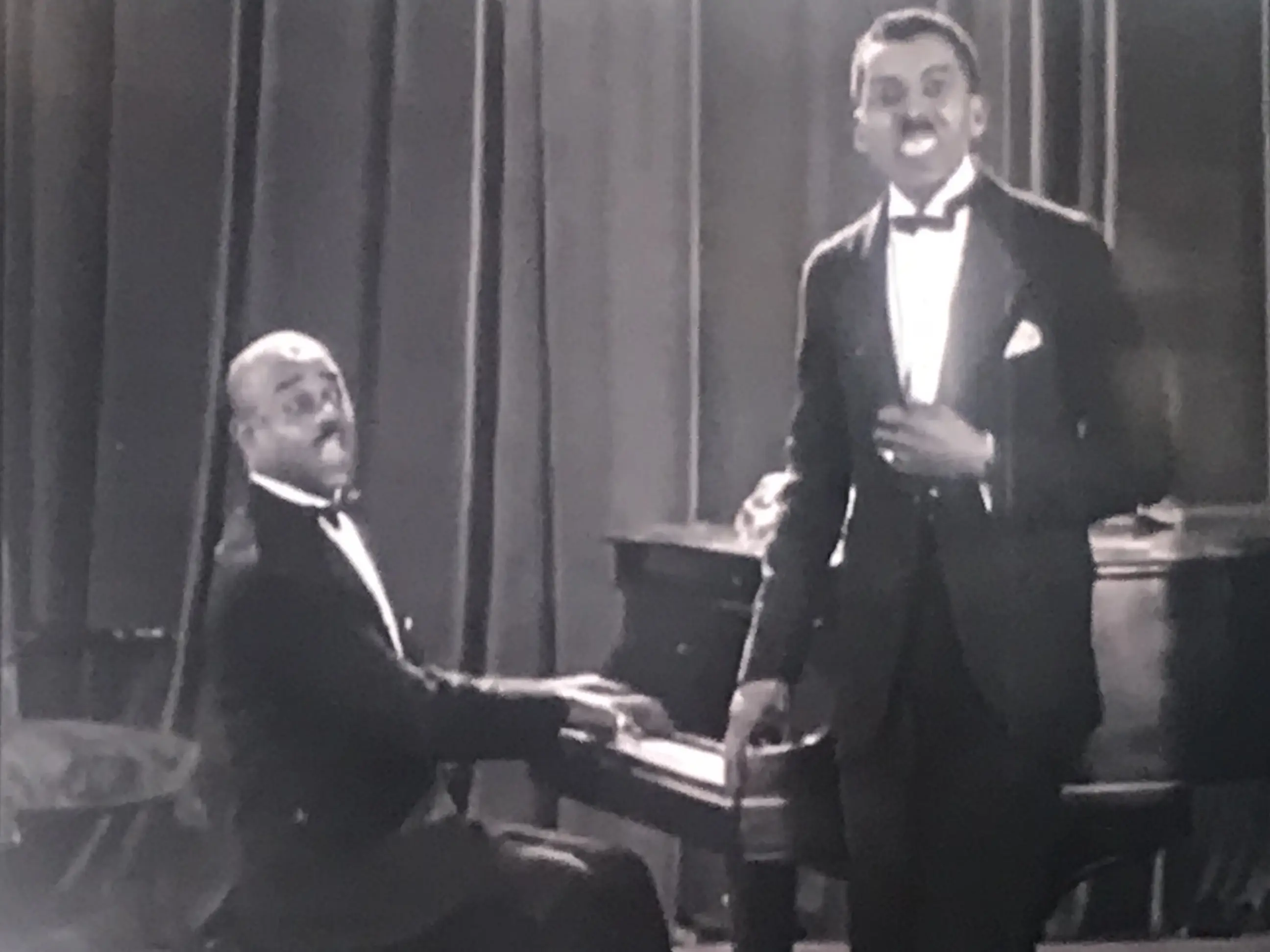
What strikes one most about Sissle and Blake's performance is its genuine, unforced charisma. There’s no elaborate staging, no grand theatricality often associated with silent film spectacles like The Kaiser, the Beast of Berlin or the dramatic intrigue of Sylvia of the Secret Service. Instead, the focus is entirely on the artists and their craft. Blake, seated at the piano, exudes a calm mastery, his fingers dancing across the keys with an effortless grace. Sissle, standing beside him, delivers the lyrics with a clear, resonant voice, his gestures minimal but expressive. The camera, largely static, acts as an impartial observer, allowing the viewer to absorb every nuance of their interaction. The 'snappy songs' themselves are a delightful blend of ragtime, jazz, and popular song forms, showcasing the duo’s versatility and their innate ability to craft melodies that were both catchy and sophisticated. It’s a testament to the enduring power of live performance, even when captured through the nascent lens of a revolutionary technology.
This film, brief as it may be, is a resonant cultural touchstone. It captures the spirit of the Roaring Twenties, an era of unprecedented social and artistic ferment. Vaudeville, though beginning its slow decline, was still a dominant force in American entertainment, and Sissle and Blake were at its zenith. Their presence on screen, in a sound film no less, was a powerful statement about the evolving landscape of entertainment and the increasing visibility of African American artists. It serves as a vital counterpoint to the more overtly narrative-driven films of the period, such as The World's Great Snare, demonstrating that cinema was already diversifying its forms and purposes. While narrative films sought to weave intricate tales, this film sought to preserve a moment, a performance, a voice.
Viewing it today, one cannot help but reflect on the broader context of racial dynamics in early 20th-century America. Sissle and Blake navigated a segregated society, yet they achieved mainstream success through sheer talent and perseverance. Their dignified and joyful presentation in this film offers a powerful testament to their resilience and artistry. It’s a stark reminder that even amidst systemic challenges, art finds a way to flourish and transcend.
The historical weight of Noble Sissle and Eubie Blake Sing Snappy Songs is immense. It stands as one of the earliest surviving examples of synchronized sound film, predating the widespread adoption of 'talkies' by several years. For film historians, it offers invaluable insights into the technical challenges and creative solutions employed during this transitional period. For musicologists, it provides an authentic auditory record of Sissle and Blake's performance style, capturing nuances that sheet music or written accounts simply cannot convey. It's a direct connection to the roots of jazz, ragtime, and American popular song, showcasing the foundational elements that would later evolve into diverse musical genres.
Furthermore, the film's existence underscores the relentless human drive for innovation. De Forest’s commitment to sound film, even when faced with skepticism and technical hurdles, paved the way for the cinematic revolution that would soon engulf the world. Without these early, often imperfect, experiments, the transition from silent to sound cinema would have been far more protracted. This humble short, therefore, is not just a film about two musicians; it is a film about the very future of cinema itself, glimpsed through a grainy, yet remarkably clear, lens. Its significance outweighs its brevity, offering a profound lesson in the interplay of artistic talent and technological ambition. It serves as a stark contrast to films focused purely on dramatic narratives or comedic antics like The Decorator or Upside Down, reminding us that cinema's early days were also about documentation and pure performance.
Despite its age and technical limitations, the film remains remarkably engaging. The vibrant personalities of Sissle and Blake shine through, their chemistry palpable. The 'snappy songs' are just as catchy and delightful today as they were a century ago, a testament to their timeless appeal. It's easy to imagine audiences in the 1920s being utterly captivated by this novel experience – seeing and hearing their favorite performers simultaneously. For a contemporary viewer, the experience is equally captivating, albeit for different reasons. We are drawn in by the historical weight, the technological marvel, and the sheer joy of witnessing two masters at work. It's a reminder that true artistry transcends medium and era, finding resonance across generations.
In conclusion, Noble Sissle and Eubie Blake Sing Snappy Songs is far more than a curiosity; it is a cornerstone of film history, a vibrant musical performance, and a poignant cultural document. It encapsulates the audacious spirit of innovation that defined early cinema and the enduring power of artistic collaboration. To experience it is to embark on a brief, yet deeply meaningful, journey back to the very dawn of the sound era, guided by the infectious melodies and charismatic presence of two true American legends. Its brevity belies its profound impact, standing as a monument to both technological progress and timeless talent, a film that continues to sing its 'snappy songs' across the decades, loud and clear. It’s a powerful illustration of how early cinema wasn't just about crafting narratives like The Winning Girl or Help Wanted, but also about capturing the essence of live performance and pushing the boundaries of what was technologically possible. Even in its raw form, it carries a gravitas similar to the immediate, unpolished charm of early actualities, though here amplified by the revolutionary inclusion of sound.
Community
Log in to comment.