The 1921 silent film Nobody unfolds as a masterclass in psychological tension, its narrative coiled tight around the paradox of a man who claims ignorance yet holds the key to a murder. Directed with taut precision by an unseen hand (the script by Charles Henry Smith and Roland West), the film is a chiaroscuro of moral decay and societal hypocrisy, where every character orbits the gravitational pull of a financier’s transgressions.
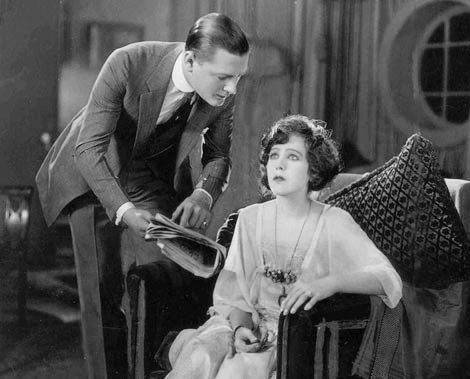
At the heart of the film lies the haunting figure of John Rossmore, portrayed with avaricious charm by Kenneth Harlan. His library—a sanctum of leather-bound secrets—becomes the stage for his demise, a death that is less a climax than the inevitable exhalation of his sins. The butler, Hedges (Henry Sedley), emerges as a cipher, his stoic demeanor masking a labyrinth of motives. Yet the true narrative force is his wife, Grace Studdiford’s Mrs. Smith, whose transformation from passive spouse to vengeful widow is rendered with aching nuance, her every glance a silent monologue.
The film’s brilliance lies in its structural audacity. By framing the story within a jury’s deliberation, the screenplay (a collaboration between Smith and West) forces the audience into complicity, implicating them in the jurors’ oath of secrecy. This narrative choice, reminiscent of Sein schwierigster Fall, elevates the proceedings from mere whodunit to a meditation on the fragility of truth. The trial scenes are masterclasses in silent film acting; the jury’s collective body language—a twitch here, a slouched shoulder there—speaks louder than any dialogue ever could.
The yachting trip to Palm Beach is rendered with a lush, almost dreamlike quality, its beauty a grotesque counterpoint to the moral rot unfolding beneath. Rossmore’s seduction of Mrs. Smith is a slow, inexorable descent into blackmail, the financier’s power weaponized against a woman whose desperation is as tragic as it is believable. Florence Billings’ performance as the financier’s wife—though limited in screen time—haunts with her silent anguish, a reminder that in this world, women are both victims and unwitting instruments of the patriarchy’s undoing.
The film’s climax hinges on a single, devastating act of violence. Mrs. Smith’s entry into Rossmore’s home, armed with a key and a resolve forged in humiliation, is a moment of feminist retribution that subverts the era’s gendered power dynamics. Yet the acquittal of Hedges—a man whose guilt is never truly denied—leaves a bitter aftertaste. Is this justice, or the system’s admission of its own complicity in the financier’s sins? The film offers no easy answers, a rare boldness for a work of 1921.
Technically, Nobody is a marvel. The cinematography by J. Herbert Frank and Riley Hatch (credited here only in the cast) employs deep focus and shadow play to create a suffocating atmosphere, the library’s bookshelves becoming prison bars for Rossmore’s soul. The editing—sharp and deliberate—mirrors the film’s thematic tension between control and chaos. While the score is sparse (as befits a silent film), the lack of music amplifies the tension, leaving the audience to fill the void with their own unease.
The supporting cast, though often relegated to background roles, adds texture to the film’s moral landscape. Lionel Pape’s Rossmore double, a figure of sardonic detachment, and Ida Darling’s juror, whose eyes betray a flicker of doubt, are particularly noteworthy. These performances, though brief, underscore the film’s thesis: that every life is a thread in the tapestry of someone else’s tragedy.
Comparisons to The Empire of Diamonds are inevitable, given both films’ preoccupation with wealth as a corrupting force. Yet Nobody distinguishes itself through its introspective focus on the individual rather than the system. Where Wee Lady Betty relies on melodrama for its emotional impact, this film strips away such artifice, exposing the raw nerve of human frailty.
The film’s legacy is perhaps best measured by its influence on later noir conventions. The jury’s collective secrecy, for instance, prefigures the communal complicity that defines many post-war noirs. The use of a silent protagonist’s internal monologue, conveyed through expression and gesture, is a precursor to the voice-over narration that would become a genre staple. Yet for all its forward-looking innovations, Nobody remains rooted in the silent era’s visual language, its power derived not from words but from the spaces between them.
In the end, Nobody is a film that defies easy categorization. It is a murder mystery, yes, but also a study in power dynamics, a critique of class privilege, and a meditation on the performative nature of justice. Its greatest strength lies in its refusal to offer catharsis, leaving the audience to sit with the unresolved tension long after the credits roll. For modern viewers, it is a haunting artifact of a bygone era—a silent scream in the dark, still resonant after a century.