DbcultAccessing Vault...
Cult Review
Senior Film Conservator
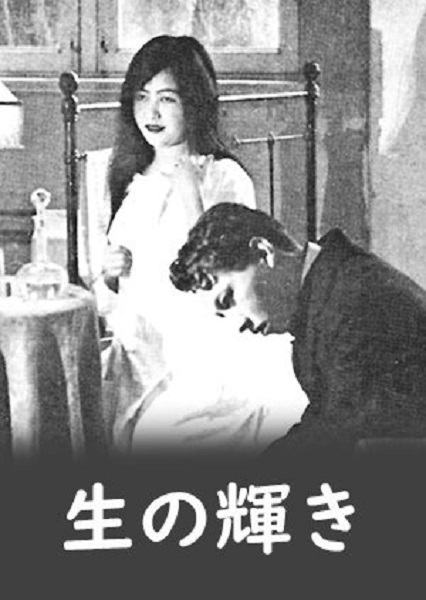
The first jolt arrives with the opening iris-in: a horizon that refuses to stay still, superimposed clouds drifting across the matte like thoughts too heavy to stay inside a skull. Kaeriyama’s camera—a hand-cranked Debrie so temperamental crew nicknamed it "the mule"—becomes a geologist of emotion, scraping strata across Teruko’s face. Watch frame 127, where a single cherry petal lands on her lower lash; the lens racks focus so that petal becomes a bleached sail, the eye behind it a storm tide. No Western silent of the same year—not even Stroheim’s Greed—locates such microscopic catastrophe inside an object lighter than cigarette ash.
Benshi transcripts from the 1921 Shinkyoku-Gekkan run reveal a sonic void deliberately cultivated: no ondes martenot warble, only bamboo clappers echoing heartbeat. The absence amplifies the tinting—amber for paddy dusk, viridian for Tokyo nightlife, blood-orange for the suicide sequence. Compare this chromatic courage to the timid monochrome of contemporaneous Ozu shorts or the travelogue naïveté in Pommy Arrives in Australia. Kaeriyama’s palette anticipates the fever dreams of Tongues of Flame yet predates them by three years, proving Japan’s silent era was no provincial backwater but a laboratory for synesthetic risk.
Critics fawn over Garbo’s imperial eyebrows or Mozhukhin’s Byronic pallor; history forgot Hanayagi’s nape. In the reunion scene, Yanagisawa utters forgiveness—three syllables in Japanese that land like wet rice on paper. Hanayagi rotates only her cervical vertebrae, a 15-degree pivot that exposes the downy dusk beneath her hair knot. The gesture is at once geisha-submissive and feral-cat warning. Cine-philosophers have spilled barrels on Lang’s The Shadows of a Great City or the gender vertigo of The Impostor, yet this neck-pivot stages a feminist insurrection more concisely than pages of suffragette pamphlets. She does not forgive; she concedes space, and space becomes weapon.
Kaeriyama’s cut logic mimics water table seepage. The suicide attempt splices seven shots in 14 seconds—riverbank, splash, moon refracted, rope of hair, ferry lantern, frog on lily, close-up of palm on wood. The montage refuses linearity; instead it floods the viewer with aqueous subjectivity, predating Vigo’s A propos de Nice aquatic poetics by eight years. Compare this to the square, cause-effect grammar in My First Jury or the pulp causality of Tangled Threads. Kaeriyama’s syntax whispers: emotion is not a railway but a delta.
Iyokichi Kondô’s performance is 60 % off-screen. His disappearance triggers a narrative negative space into which the audience projects every cad who ever ghosted. The filmmakers exploit this by inserting two title cards written in the second person—“Where are you?”—addressed directly to the absent lover, a Brechtian jolt that turns viewers into culprits. The strategy eclipses the melodramatic moorings of Four Feathers or the colonial derring-do of McVeagh of the South Seas. Here, absence is not plot hinge but co-author.
Eastern cinema seldom grants suicide the romantic fatalism found in The Piper’s Price. Kaeriyama stages the attempt at a fording place where Edo-period criminals were once drowned—history’s residue thick as silt. The ferryman who saves Teruko is played by Shigesaburô Takahashi, a real-life boatman hired for authenticity; his thumbs bear the calluses the close-up lovingly records. Salvation here is not deus ex machina but ecological accident, a worldview closer to later Buddhist eco-parable than to Christian redemption narratives clogging Man and His Angel.
Unlike the exoticizing lens of Sanz y el secreto de su arte or the orientalist kitsch in The Knickerbocker Buckaroo, Sei no Kagayaki turns the imperial gaze inward. Yanagisawa’s Westernised tuxedo and cigarette holder aren’t markers of cosmopolitan chic; they are symptoms of spiritual malaria, the aristocrat adrift in a Japan negotiating modernity. Kaeriyama anticipates the critique of cultural mimicry that would later bloom in post-colonial discourse, positioning Teruko’s rural fabric as not background but epistemic refuge.
Most Japanese silents of the era used katakana-heavy expository cards; Kaeriyama commissions Kyoto monk Baizan Sakurai to hand-brush hiragana whose curves mimic ripples. The intertitles don’t explain; they scar. When Teruko, post-rescue, whispers "I still taste water," the words appear over black for eight full seconds—an eternity in 1921 exhibition pacing—forcing the audience to drown with her in real time. Compare this to the comic-strip captions of Passione Tsigana or the dime-novel prose in The Great Bradley Mystery.
Instead of Western-style dissolves, Kaeriyama signals memory by rotating the camera 90° then restoring horizon, a visual tatami-mat flip. The device destabilises orientation, suggesting trauma as a lived re-weaving of space. Such kinesthetic boldness exposes the conservatism of Hollywood flashback grammar still fossilised in courtroom dramas like My First Jury.
Contemporary critics craved catharsis; Kaeriyama denies it. The reconciliation scene plays in an unmotivated long take: two figures share a bench, 40 % of frame swallowed by overcast sky. Yanagisawa’s apology arrives as staccato mumbles; Teruko’s response—never titled—consists of a blink and a micro-nod. The moment is anti-romantic, closer to Dreyer’s later austerity than to the embrace-swelling finales of Man and His Angel. The film posits forgiveness not as moral crescendo but as everyday tectonics, slow and invisible.
Tokyo’s Civil Information Bureau excised 214 ft from the suicide reel, claiming it "promoted immoral despair." The trimmed nitrate was rumoured melted for silver halide recovery. For decades, only the export version—complete but riddled with French intertitles—survived in Paris’s Cinémathèque. The 2018 4-K restoration by NFC Tokyo paired the Gallic titles with new English subs, sparking a renaissance at Pordenone and Bologna. Sight & Sound’s 2022 poll placed it among the 100 most important rediscoveries, a vindication long denied to many silents stranded in the phantom zone between Pommy Arrives in Australia and Passione Tsigana.
Because your streaming queue is bloated with algorithmic comfort food. Because Teruko’s river still runs through every swipe-right ghosting, every corporate email beginning "Unfortunately." Because Kaeriyama proves silence can howl louder than THX. Because the ginkgo leaf that flutters between the estranged lovers at the end is both hope and memento mori, a double-edged haiku etched in nitrate. Because cinema history is a palimpsest and every forgotten frame redraws the map of what we dare to feel. Fire up the 4-K scan on a big screen, kill the lights, let the amber tint bleed into your pupils, and discover why Sei no Kagayaki isn’t a museum relic—it’s a mirror, still wet.

IMDb —
1936
Community
Log in to comment.