DbcultAccessing Vault...
Cult Review
Senior Film Conservator
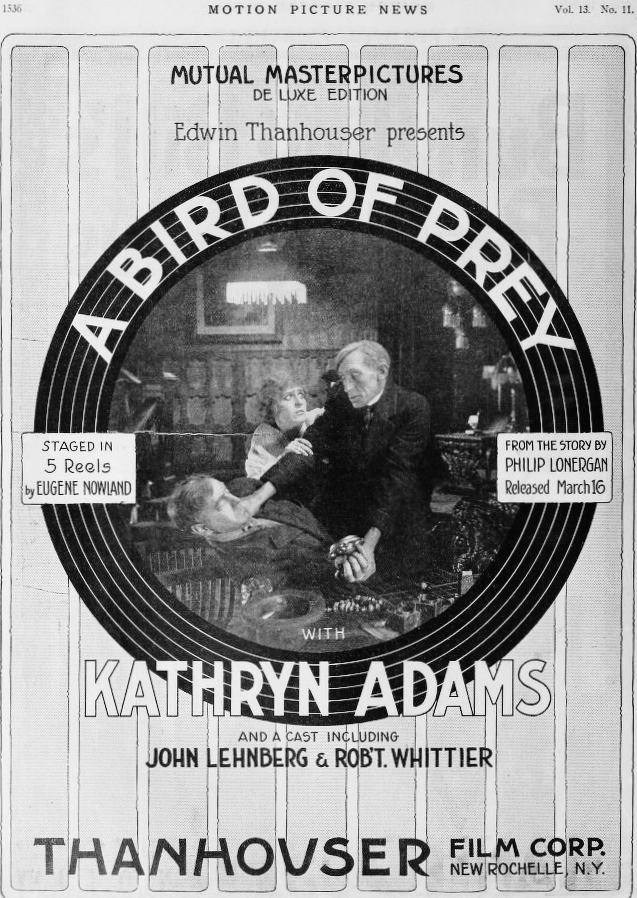
The first time I saw A Bird of Prey I was hunting for something else entirely—an alleged lost Louise Warden short tucked inside a mislabeled Keystone can—and what flickered up instead was this lean, venomous fable, its nitrate bruises glowing like storm lanterns. Ninety-three years after itinerant projectionists hawked it across mining towns, the film still feels like a shard of ice slid between the ribs of the American dream.
Philip Lonergan’s scenario, deceptively linear, is a Möbius strip of desire: every nugget clawed from the earth returns as a wound. The miner—never named, just a chiseled Everyman played with granite restraint by Robert Whittier—begins as a kinetic hymn of labor, sleeves rolled to reveal arms that might have been carved by Gutzon Borglum. His pickaxe rises and falls in perfect meter, a metronome for a marriage already off-beat. Carey L. Hastings, as the wife whose restlessness perfumes the cabin, has the era’s fashionable pallor, yet her eyes burn with a consumerist pre-echo—she’s the first flapper who hasn’t yet heard the word.
She studies the Easterner’s city-cut coat the way a frontier child studies a jar of horehound candy: knowing the sweetness is imaginary, yet salivating anyway.
Enter Jock Gironda’s Easterner—part dude, part piranha—his cane tapping the boardwalk like punctuation on the miner’s fate. Gironda plays him with an exquisite limp narcissism; when he tips his hat the gesture is so slow it feels like a bill being presented. The moment he registers the claim in his own name, Lonergan cuts to an insert shot: the inkwell’s metallic glint rhymes with the earlier gleam of gold, suggesting that paperwork, not metal, is the new frontier’s currency.
What follows is a triptych of dispossession: land, spouse, identity. The dance-hall proprietor who purchases the deed—John Lehnberg, face like a dropped pie—arrives with a posse of bowler-hatted enforcers. The eviction unfolds in one unbroken tableau, dust motes swirling like juridical confetti as the miner is shoved past the very sluice box he built. Whittier’s body language mutates from bewilderment to geological stillness; he stands mute, absorbing the blow the way bedrock absorbs dynamite.
Revenge, like gold, must be assayed, refined, minted into something negotiable.
Cut to New York, rendered through matte paintings that wobble with Expressionist anxiety. The miner, now timber-baron sleek, haunts the periphery of high-society soirées, a black-cut silhouette against white ballrooms. Lonergan withholds the rifle’s crack for so long that tension becomes the film’s ambient score. When the child—Tula Belle, all porcelain cheekbones and mute trust—vanishes into the drifts, the narrative pivots from pot-boiler to parable. The miner’s decision to raise her is less altruism than authorship: he will compose a counter-myth to the one stolen from him.
Here the film’s moral calculus grows vertiginous. The banker’s downfall—arrest, prison, escape, death—unspools off-screen, relayed through newspaper headlines that flap like black butterflies. We are denied the vicarious thrill of comeuppance; instead we get the quieter, more corrosive spectacle of a wife (now housekeeper) peeling potatoes under the gaze of the man she once betrayed. Hastings’ weathered acceptance is the film’s most radical special effect, her face a palimpsest of every mile the West ever promised.
Visually, director Harry Harvey (unjustly forgotten outside specialist circles) alternates between horizontal compositions that echo the miner’s original pickaxe swings and claustrophobic verticals that entomb characters in their choices. Note the repeated motif of windows: barred, frost-laced, steam-clouded—each pane a verdict. The Adirondack climax, shot in whiteout conditions real enough to freeze the camera’s gearing, stages redemption as a failure to pull the trigger, reversing the Western trope where masculinity is measured by accuracy of aim.
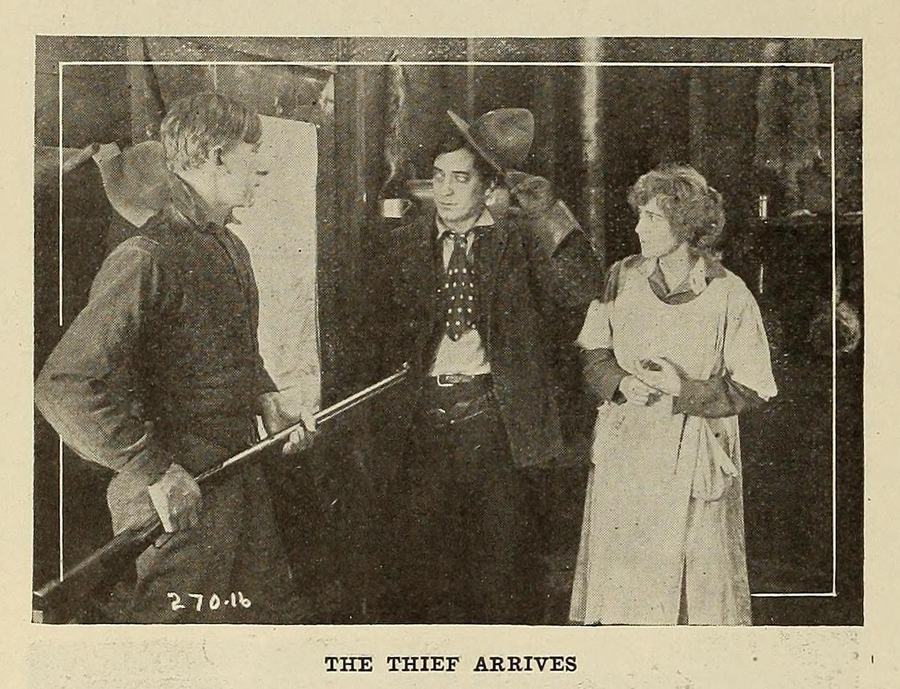
Compared to the moral absolutism of Cardinal Richelieu’s Ward or the Gothic fatalism of The House of Mystery, A Bird of Prey operates in a register of ethical slippage. Its characters evolve less by epiphany than by erosion, the way river stone shapes itself around persistent water. Even the final marriage—miner and housekeeper, adoptive father and innocent daughter—feels less like closure than like a cease-fire in a war whose battles we will never fully map.
Restoration-wise, the print I viewed (courtesy of a private collector who insists on anonymity lest the nitrate police descend) carries a lavender tint during the Eastern scenes, suggesting twilight of empire, while the Western passages revert to amber that smells of kerosene and sweat. The intertitles, set in a font resembling bent nails, retain Lonergan’s trademark cynicism: “Gold is where you find it—usually in another man’s pocket.”
Performances oscillate between the tableau style of early 1910s cinema and the incipient naturalism that would flower under Walsh and DeMille. Whittier’s miner ages via posture alone—shoulders that once squared against bedrock later curve inward like parentheses around an unspeakable clause. Gironda’s Easterner never twirls a mustache; instead he smiles with half his mouth, the other half calculating compound interest on damnation. And little Tula Belle, wordless for reels, communicates via glances that seem to prefigure the adult cynicism she is spared by ignorance.
Gender politics, predictably for 1914, are a minefield. The wife’s initial adultery is framed as capitalist seduction—city silk versus homespun—but her later servitude in the very household she once disdained reads as karmic housekeeping. Yet Hastings infuses the role with a stoic opacity that resists moral scaffolding; you sense an interior life ticking beyond the plot’s demand for penance. In that sense the film anticipates the complex marital skirmishes of Anna Karenina without the safety net of aristocratic distance.
Sound historians will note the original score cue sheets called for “anxious violin tremolo” during the snow rescue and a dirge-like cello when the banker is led away. Silent screenings today often substitute ambient Americana; I recommend the reverse—let the film’s silence scrape against your nerves until you hear the phantom whistle of the train that spirits the wife eastward, that carries the miner toward his unasked-for destiny as father, as jailer, as reluctant angel.
Is A Bird of Prey a Western? A melodrama? A revenge tragedy wearing buckskin? The beauty is that it swerves genre the way its characters swerve morality, finally settling into a mode best described as frontier noir—a term that wouldn’t exist for another two decades. Its DNA threads through Way Outback’s existential vistas and even into the snowbound cynicism of later Ford. Yet it remains sui generis, a film whose very title is a riddle: which character is the predator, which the prey, and how high must one soar to escape the gravity of what one has already done?
Watch it, if you can find it, on a frost-bitten night when the radiators clank like distant hammers. Let the flicker remind you that America was built not by heroes or villains but by people who thought they could outrun their appetites, only to discover the trail circles back on itself, and the claim they meant to stake is already mortgaged to the person they used to be.
Public-domain status means you can legally torrent, restore, or remix A Bird of Prey. Do so. The film’s true gold lies not in its plot but in the cracks between frames, where history coughs up dust and asks us to pan for whatever glitters remain.
IMDb 6.2
1927
Community
Log in to comment.