DbcultAccessing Vault...
7.8/10
Senior Film Conservator
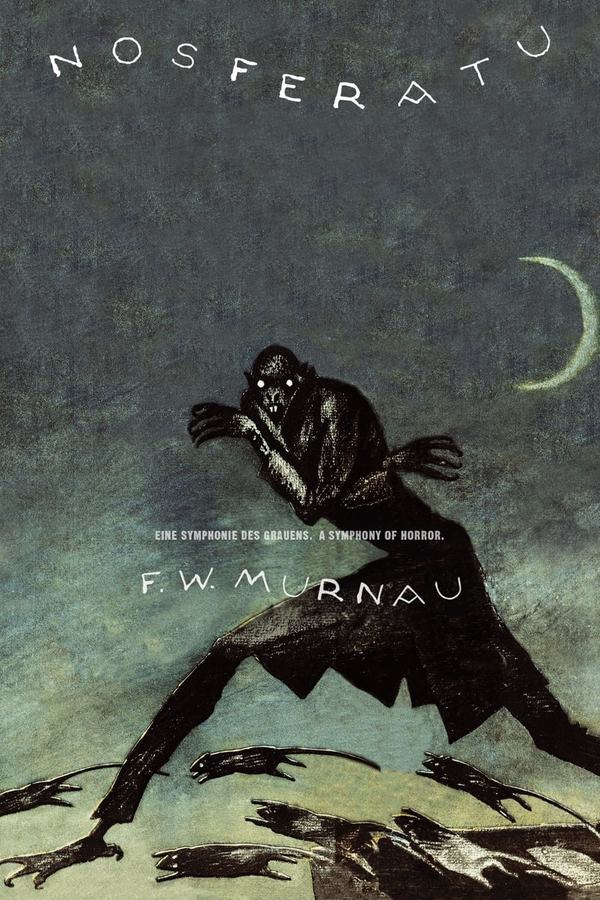
A definitive 7.8/10 rating for a film that redefined the boundaries of cult cinema. Nosferatu remains a cornerstone of transgressive art.
Few films possess the chilling, visceral power of F.W. Murnau's 1922 cinematic tour de force, Nosferatu: Eine Symphonie des Grauens. More than a mere adaptation of Bram Stoker's 'Dracula' – though it famously and controversially borrows its narrative skeleton from it, with the screenplay penned by Henrik Galeen – this silent masterpiece transcends its origins to become a foundational text in horror cinema and a quintessential example of German Expressionism. Its enduring legacy is not just a testament to its groundbreaking visuals and atmospheric dread, but to its profound exploration of fear, contagion, and the encroaching shadow of the unknown. It’s a film that doesn't just tell a story; it weaves a nightmare directly into the fabric of the viewer's subconscious, an indelible imprint of gothic terror.
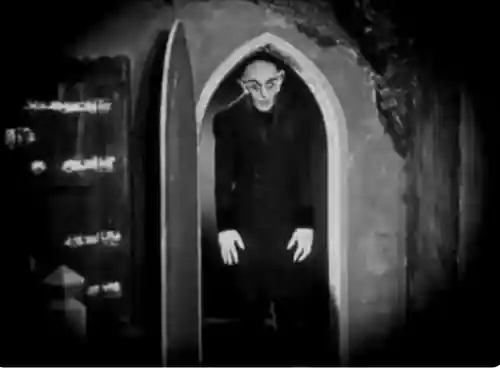
At the heart of Nosferatu lies the unforgettable visage of Count Orlok, brought to horrifying life by the legendary Max Schreck. Schreck’s performance is nothing short of iconic, a masterclass in physical acting that eschews theatricality for a stark, unsettling realism. Orlok is not the suave, seductive vampire of later interpretations; he is a creature of pure, unadulterated menace, a grotesque embodiment of pestilence and decay. His elongated fingers, rat-like teeth, and bald head are not just makeup choices; they are extensions of his predatory nature, linking him inextricably to the vermin that carry disease. His movements are stiff, almost mechanical, yet imbued with an eerie, almost supernatural grace, making him appear less a man and more a force of nature, an ancient evil awakened. This portrayal redefined the cinematic vampire, setting a standard for creature design that many have tried to emulate but few have matched. The sheer unsettling quality of his presence, even in static shots, is a testament to Schreck's commitment and Murnau's vision. Unlike the more romanticized vampires, Orlok is a symbol of contagion, a walking plague, a stark reminder of the devastating epidemics that haunted European history.
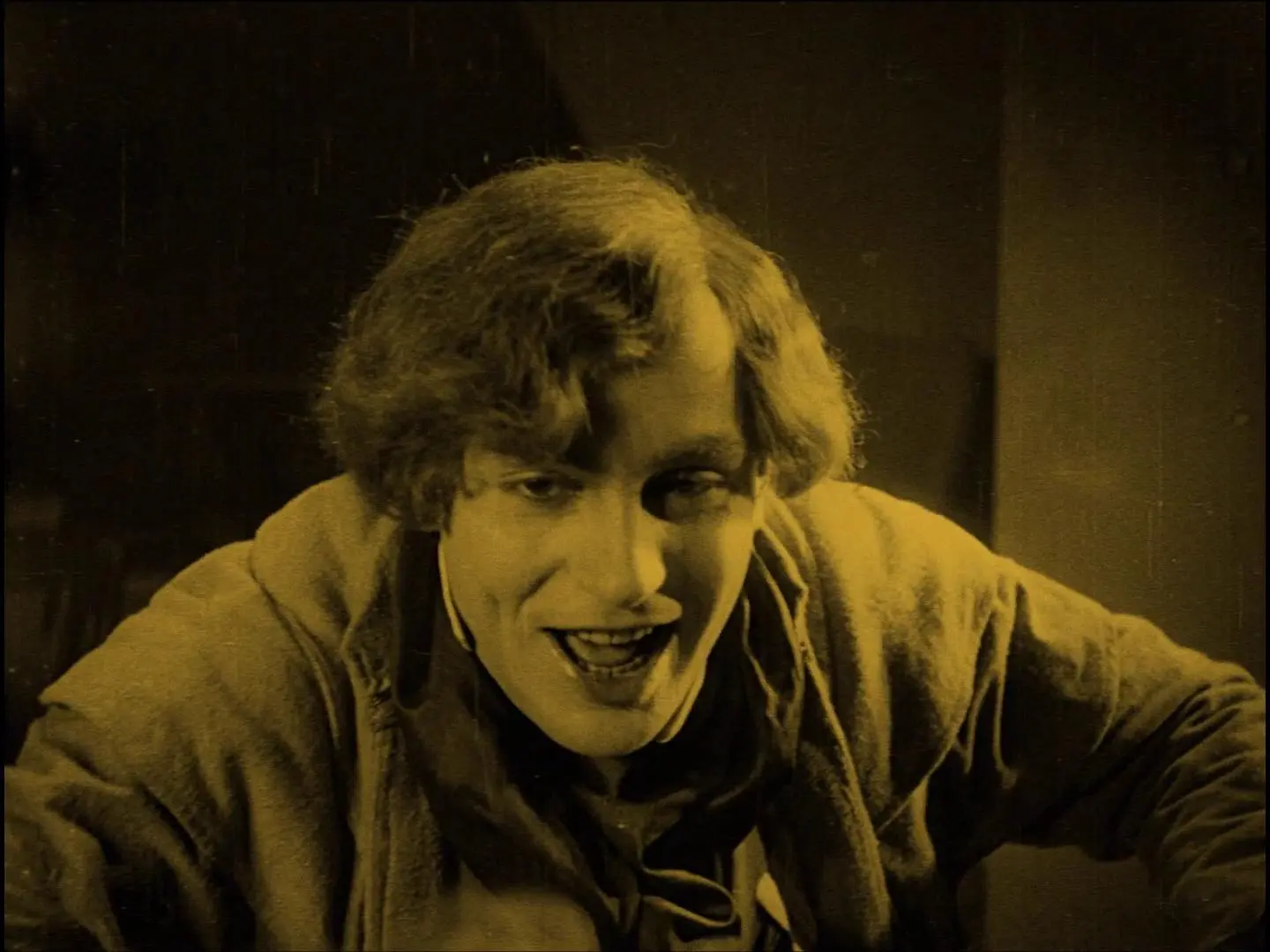
The journey of Thomas Hutter (Gustav von Wangenheim), the naive real estate agent sent to Transylvania, serves as our entry point into this world of encroaching darkness. Hutter is the everyman, an innocent lured by the promise of prosperity into a realm beyond his comprehension. His initial enthusiasm for the commission, his cheerful farewell to his beloved wife Ellen (Greta Schröder), starkly contrasts with the desolate, ominous landscape of Orlok’s domain. Wangenheim perfectly captures Hutter's gradual descent from carefree optimism to abject terror, his wide-eyed innocence slowly replaced by a haunted desperation. Ellen, portrayed with a delicate intensity by Greta Schröder, is more than just the damsel in distress; she possesses an almost psychic sensitivity to Orlok’s presence, a spiritual connection to the unfolding horror that transcends the physical. Her purity and eventual self-sacrifice become the unlikely bulwark against the vampire’s relentless, insatiable hunger, echoing archetypal narratives of good versus evil. The supporting cast, including Alexander Granach as the opportunistic Knock and John Gottowt as Professor Bulwer, further flesh out the world, portraying characters either oblivious, corrupted, or intellectually wrestling with the supernatural, providing various human reactions to the inexplicable.
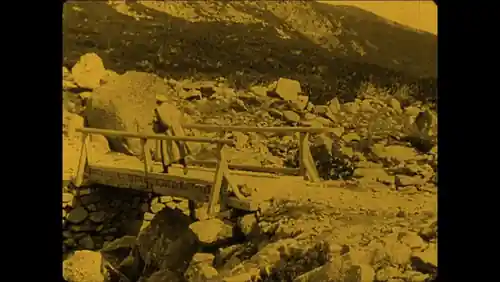
Murnau’s directorial genius is evident in every frame of Nosferatu. He masterfully employs the techniques of German Expressionism, utilizing stark contrasts of light and shadow, distorted perspectives, and exaggerated sets to create a world that feels inherently off-kilter and menacing. The film’s visual language is its most potent weapon, crafting an atmosphere of pervasive dread that seeps into the viewer’s bones. From the jagged peaks of the Carpathian mountains to the claustrophobic interiors of Orlok’s castle, every setting is imbued with a sense of unease. The shadows themselves become characters, stretching and twisting, hinting at unseen horrors and amplifying the sense of isolation and vulnerability. The scene where Orlok ascends the stairs, his shadow preceding him like a monstrous, detached entity, remains one of the most iconic and terrifying moments in cinema history, a pure distillation of visual storytelling at its peak. This innovative use of chiaroscuro not only enhances the horror but also reflects the psychological states of the characters, projecting their inner turmoil onto the external world. The influence of Bram Stoker's original novel, while legally contested, is clear in the narrative's gothic romanticism and the thematic undertones of ancient evil invading modern life, but Galeen and Murnau transform it into something uniquely German Expressionist.
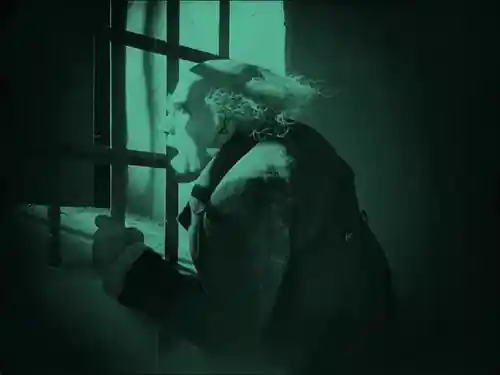
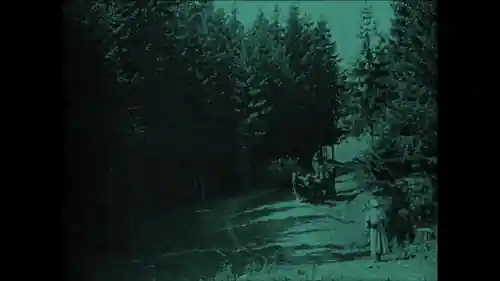
The cinematography, with its innovative use of negative images and time-lapse photography (for instance, the blossoming flower sequence), further distinguishes Nosferatu. These techniques, though rudimentary by today's standards, were revolutionary at the time, creating surreal, dreamlike effects that heighten the film’s unsettling quality. Murnau's choice to shoot on location, contrasting with the often artificial studio sets of other Expressionist films, lends a unique authenticity to the horror. The natural landscapes, often bleak and foreboding, become extensions of Orlok’s malevolent spirit, blurring the lines between the natural and the supernatural. The ominous journey of the plague ship, with its cargo of coffins and rats, is a masterpiece of escalating tension, each shot building towards the inevitable unleashing of horror upon the unsuspecting town of Wisborg. The slow, deliberate pacing allows the dread to marinate, ensuring that when the horror finally arrives, it is not a sudden jump scare, but a creeping, suffocating inevitability. This meticulous craftsmanship is why Nosferatu continues to be studied and revered by filmmakers and critics alike, a testament to its timeless artistry.
Beyond its superficial scares, Nosferatu delves into profound thematic territory. The most prominent is the allegory of plague and contagion. Orlok is not merely a bloodsucker; he is the embodiment of disease, his arrival coinciding with the proliferation of rats and the spread of a mysterious illness that decimates Wisborg. This resonates deeply with post-World War I Germany, a nation scarred by war and the Spanish Flu epidemic, where the fear of invisible, pervasive threats was acutely felt. The film taps into a collective societal anxiety, portraying evil not as a singular villain but as an insidious force that corrupts and destroys from within. This theme of an unseen, creeping dread is reminiscent of the psychological tension explored in films like Black Fear, which, while different in genre, similarly grapples with pervasive anxieties that permeate a community, albeit through a more human-centric drama. Orlok's obsession with Ellen also introduces a forbidden, primal desire, a dark inversion of romantic love that highlights the destructive nature of unchecked longing. Other cast members, such as Albert Venohr, Gustav Botz, and Josef Sareny, though in smaller roles, contribute to the tapestry of the imperiled town, their faces reflecting the escalating terror and helplessness against the invisible enemy.
The film also explores the clash between ancient superstition and nascent scientific understanding. Professor Bulwer, representing the scientific mind, attempts to explain the plague through natural means, even as the townsfolk succumb to old wives' tales and panic. This tension between rationality and the inexplicable adds another layer to the horror, suggesting that some evils defy logical categorization. The climax, where Ellen's purity and love are pitted against Orlok's ancient evil, elevates the narrative beyond simple horror to a mythic struggle. Her sacrifice, illuminated by the dawn, represents the triumph of good, albeit at a terrible cost, a poignant comment on the nature of heroism and the ultimate vulnerability of innocence. The interplay of these profound themes elevates Nosferatu from a mere horror film to a significant piece of social and psychological commentary, reflecting the anxieties and spiritual quests of its era. The performances by Max Nemetz, Ruth Landshoff, Hans Lanser-Ludolff, Fritz Rasp, Loni Nest, Eduard von Winterstein, Karl Etlinger, Georg H. Schnell, Heinrich Witte, Hardy von Francois, Eric van Viele, Fanny Schreck, and Wolfgang Heinz, even in their brief appearances, contribute to the film's rich, unsettling atmosphere, each face a brushstroke in Murnau's canvas of dread.
As a silent film, Nosferatu relies entirely on its visual storytelling, intertitles, and the accompanying musical score (often composed or adapted for screenings) to convey its narrative and emotional depth. The absence of spoken dialogue forces the viewer to engage more deeply with the imagery, with the exaggerated facial expressions and body language of the actors, and with the evocative power of the music. A well-chosen score for Nosferatu can elevate its horror to unbearable heights, using dissonant chords and haunting melodies to underscore Orlok’s malevolence and the town’s despair. Conversely, the profound silence in certain moments, broken only by the projected flicker and the audience’s own gasps, can be even more terrifying, allowing the imagination to fill the void with unspeakable horrors. This unique interplay between visual and auditory experience, even in a silent film, is a testament to the medium's profound ability to manipulate perception and evoke deep-seated fear. It demonstrates that true horror lies not just in what is seen or heard, but in what is suggested, what lingers in the terrifying spaces between.
The influence of Nosferatu on subsequent horror cinema is immeasurable. It established many of the visual tropes and thematic concerns that would become staples of the vampire genre and horror films in general. Its chilling atmosphere and Max Schreck’s unforgettable portrayal of Orlok have been referenced, parodied, and paid homage to countless times. The film's legal troubles, stemming from its unauthorized adaptation of Bram Stoker's novel, ironically contributed to its legend, as Stoker's widow sought to have all copies destroyed. Fortunately, some prints survived, allowing future generations to discover its macabre brilliance. Its survival against such odds only adds to its mythic status, a testament to its intrinsic power and significance. It's a film that refuses to die, much like its central antagonist.
Today, Nosferatu remains a cornerstone of film history, not just for its pioneering horror elements, but for its artistic innovation and its profound psychological depth. It stands as a stark reminder of the power of early cinema to craft narratives that resonate far beyond their initial release, continuing to frighten, fascinate, and inspire. It is a film that demands to be seen, not just as a historical artifact, but as a living, breathing piece of art that continues to cast its long, terrifying shadow over the landscape of fear. Its legacy is a testament to Murnau's genius, Schreck's terrifying embodiment, and the enduring power of a story that speaks to our deepest, most primal fears. The haunting images and the pervasive sense of dread ensure that Orlok's spectral presence continues to linger, a chilling whisper from the annals of cinematic horror that refuses to be silenced.
IMDb —
1918
Community
Log in to comment.