DbcultAccessing Vault...
Cult Review
Senior Film Conservator
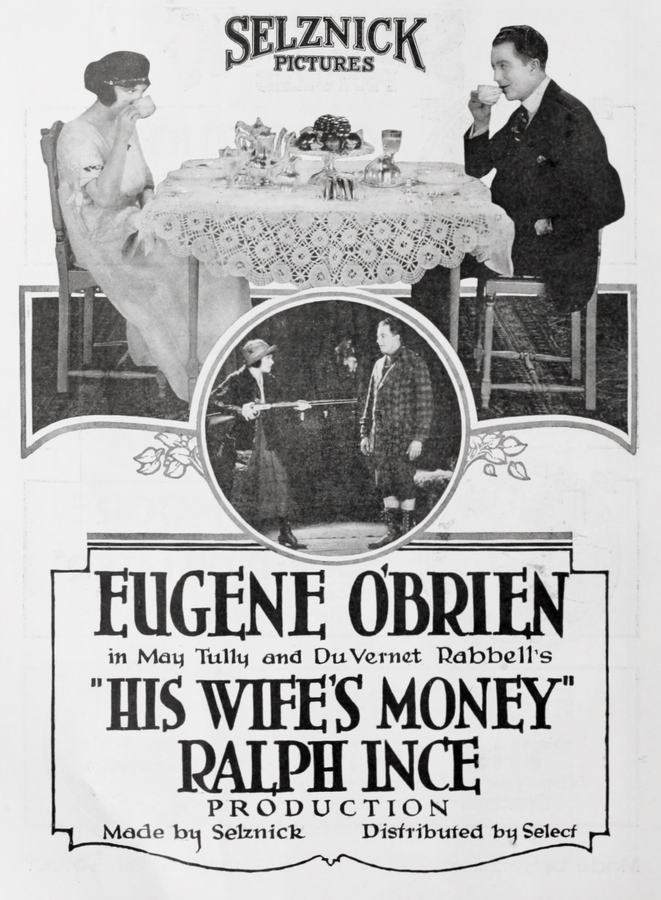
There is a moment—halfway through His Wife’s Money—when the camera simply watches a log split: the axe hesitates, bites, and the wood exhales a sigh of sap. It is the film in microcosm: a marriage cleft by money, the ooze of something once alive. Made in 1920, this Paramount silent arrives like a tarnished locket, its hinges stiff yet still exuding the faint perfume of scandal. Director Rabell and scenario writers Corbett, Smith, Tully lace a woodland fairy-tale with arsenic, reminding us that America’s post-war affluence was already curdling into class resentment.
The narrative is a prism, not a path. Marion’s forest-disorientation becomes an existential fugue: lost, she is momentarily unburdened of surname, of expectation. Flint’s lodge is no rustic retreat but a limbo where identity can be shed like wet silk. Their courtship is conducted in glances rather than intertitles—Chadwick’s eyes simmer with self-reliant hunger while Keefe’s counter-gaze flickers between trust and evasion. When the marriage contract is signed, the film performs a visual coup: the sheet is stamped not with ink but with the super-imposed stock-ticker of Marion’s assets, letters crawling like ants. The device is silent-era Brecht, foreshadowing the blood-transfusion of capital that will follow.
Chadwick carries the masculine panic of the decade: a man whose worth is measured by ledgers he cannot read. Watch the slump of his shoulders beneath tuxedo-cloth when Marion’s coterie mock his “primitive” masculinity; the jacket fits like borrowed armor. Keefe, by contrast, navigates a trickier gradient—she must radiate warmth while embodying the gilded anvil that crushes her husband. She solves this with micro-gestures: the way her fingertips retreat a millisecond too early from Richard’s palm, as though wealth were a static charge.
In the third act, when Richard returns as Wall Street predator, Chadwick’s gait elongates; the former outdoorsman now prowls marble corridors like a panther overdosed on ticker-tape. The performance is calibrated not for realism but for moral folklore—he becomes a capitalist avenging angel, yet the tremor in his jaw confesses the boy from the woods still craves endorsement.
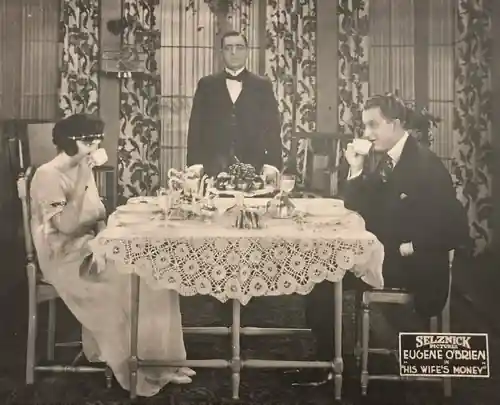
Cinematographer Al Liguori (uncredited in most archives) toggles between chiaroscuro interiors and the white onslaught of snow-caked exteriors. The hunting lodge is photographed at dusk, windows become amber panels sealing the lovers in a diorama of impending strife. Once the action relocates to Manhattan, the palette desaturates; opulent drawing rooms are rendered in slate grays, as though the city itself inhales cigar smoke. Notice the repeated motif of mirrors: Marion’s boudoir glass reflects her maids tightening pearls while, in the same frame, Richard’s silhouette dissolves—he is already vanishing from her gilt equation.
Surviving prints contain no original cue sheets, yet modern festivals often commission scores. The most musically coherent version (Il Cinema Ritrovato 2019) deploys a string quartet that swaps legato for pizzicato the instant Richard enters the stock exchange. The sudden pluck feels like joints dislocating; capitalism as bodily betrayal.
The DNA of Die Jagd nach der Hundertpfundnote circulates here—both films chase a fortune that transmogrifies lovers into antagonists. Likewise, the redemption-through-ruin arc predates The Amazing Adventure by six years, proving that the silent era already toyed with the notion that insolvency can purchase marital honesty. Where The Clown externalizes self-worth via applause, His Wife’s Money internalizes it within share-certificates; both are currencies of validation easy to forge.
Marion is no idle heiress; she is the film’s contested site of production. Her body is the ore seam, her dowry the lode Richard refuses to mine with marital tools. When she re-enters high society, the camera fetishizes her attire—each gown a strata of silk veiling the iron seam of capital beneath. Yet the film refuses to vilify her; instead, it indicts the social grammar that translates “wife” into “asset.” Compare this to White Youth, where the female lead is a passive pawn; Marion, conversely, engineers her own exile, suggesting agency even within gilded shackles.
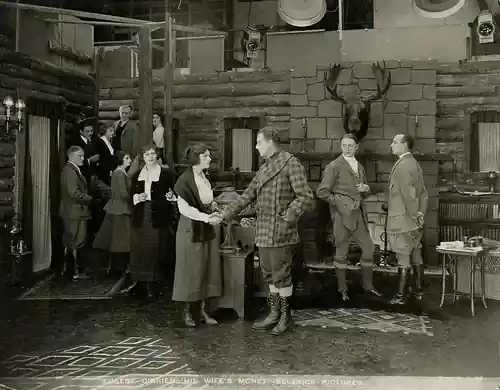
Like many silents, the film survives in 63-minute form, down from an advertised 76. The missing footage reportedly detailed Richard’s subterranean torment, including a near-fatal cave-in. Existing prints jump from pickaxe clang to stock-market roar, creating an inadvertent montage that fuels the allegory: labor transmuted into speculation overnight. Historians debate whether the truncation weakens or strengthens the parable; the absence of bodily peril makes Richard’s ascent feel occult, as though Midas himself ghost-wrote the scenario.
Contemporary trade sheets praised the film’s “raw nerve realism,” though the New York Telegraph carped that the reconciliation felt “too tidy as though Wall Street itself had scripted the dénouement.” Modern viewers, jaded by 2008 crash headlines, may find the ending perversely prescient: love restored only after both parties are rendered penniless. In the age of NFT weddings and crypto divorces, the film’s cynicism feels prophetic rather than punitive.
His Wife’s Money leaves one queasy, not because love fails but because it succeeds only when stripped of every external metric. It whispers a paradox that still singes: to possess the beloved you must first scorch the field of possession. The final embrace—framed against the hollow echo of auctioneers cataloguing repossessed art—plays less like triumph than like two survivors huddling in a burnt clearing, listening for the next spark.
Paramount’s marketing boasted “A Drama that Pries the Lid Off Society’s Gilded Coffin.” A century on, the lid remains ajar. The film’s emotional veracity, its willingness to let venality and tenderness coexist within the same close-up, hoist it above the moral absolutism of contemporaries like Damaged Goods. Imperfect, yes—some intertitles wallop you with moral platitudes—but its silences, those flickers where faces replace words, achieve the kind of bruised intimacy few talkies dared replicate. Seek it out, preferably on a 35-mm print where the cigarette burns look like coins dropping through black water.
IMDb —
1923
Community
Log in to comment.