DbcultAccessing Vault...
7.2/10
Senior Film Conservator
A definitive 7.2/10 rating for a film that redefined the boundaries of cult cinema. It Happened in Paris remains a cornerstone of transgressive art.
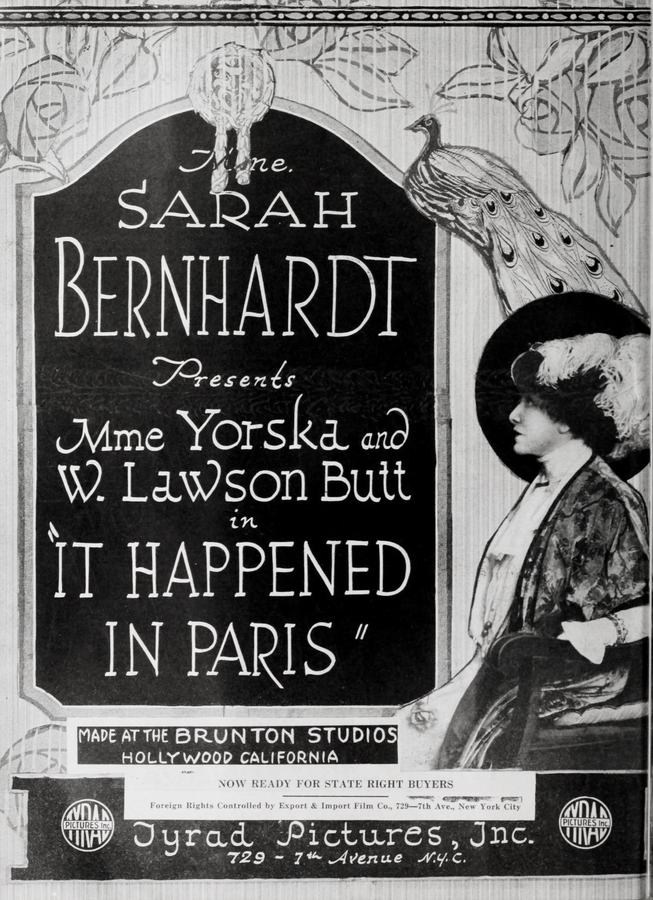
Madame Yorska's eyes—haunted amber pools reflecting centuries of aristocratic decay—anchor Maurice Tourneur's labyrinthine melodrama It Happened in Paris (1915) with unsettling magnetism. As the destitute artist Yvonne Dupré, her gaunt elegance suggests a Ghérandière etching come to life, fingers perpetually stained with the pigments of survival. Opposite her, Rose Dione's Juliette explodes across the screen like a Romani firework—hips slicing through smoke-filled cafés in apache dances that simulate violent lovemaking, a feral counterpart to Yvonne's suppressed anguish. Their uncanny resemblance isn't mere casting convenience but the film's throbbing thematic core, interrogating how environment sculpts identity when genetics deal identical cards.
Charles Gunn's Leon Naisson remains one of silent cinema's most insidious villains precisely because he dresses predation in bourgeois respectability. Watch how he fingers Yvonne's canvases—not with connoisseurial appreciation but the acquisitive lust of a man caressing a woman's spine. His gallery, bathed in sea-blue shadows, functions as a brothel for stolen genius, where Dupré's seascapes get reborn as "lost Monets." When he confesses desire to Romildo (Hayward Mack, oozing opportunism), the scene plays out amidst taxidermied birds—an apt metaphor for how Naisson treats living artists. His proposal to rape the drugged Juliette, mistaken for Yvonne, involves counting banknotes onto a table already stained with absinthe, reducing violation to transactional theater.
Tourneur stages the critical substitution sequence with harrowing restraint. Juliette's drugged collapse mirrors Manet's Olympia in composition—but where Olympia confronts the viewer with defiant ownership of her body, Juliette lies surrendered, ribbons spilling like blood from her limp wrist. The rape occurs off-screen, conveyed through Naisson's shadow recoiling violently against a wall, then buckling to kneel. What elevates this beyond exploitation is the aftermath: Juliette awakening to find a dark-orange shawl—Yvonne's signature garment—deliberately left by Naisson. This perverse souvenir ignites her transformation from victim to avenger.
Parallel to this, Lawson Butt's Dick Gray suffers beautifully. His discovery of the shawl in Juliette's apartment channels Othello's handkerchief tragedy. Tourneur photographs his unraveling through fractured mirrors in Yvonne's studio, his reflection splintering as Naisson whispers poison. The subsequent courtroom sequence—Yvonne framed for forgery—achieves operatic heights. Accused of copying her own work, her defense—"I only steal from myself!"—becomes a devastating critique of artistic commodification. Sarah Bernhardt's co-authorship manifests in these grandiloquent declarations, carved onto title cards like epitaphs.
Identity fractures further when Gypsy lore collides with bourgeois genealogy. The revelation of Juliette's abduction—told via a locket containing twin infant portraits—lands with seismic force. Dione's performance pivots magnificently; her apache dancer's ferocity now channeled into dismantling Naisson's enterprise. The climactic raid on his gallery sees her shredding fake attributions like ticker tape, her dance moves repurposed as tactical evasion against henchmen. In restoring Yvonne's freedom, she reclaims her own nobility—not through blood, but righteous fury.
Visually, Tourneur crafts a gilt-edged nightmare. Parisian rooftops resemble prison bars during Yvonne's arrest; Naisson's forgeries materialize in negative exposures, glowing with spectral falseness. The film shares The Prussian Cur's fascination with aristocratic decay, but replaces Germanic severity with Gallic sensuality. Its closest spiritual cousin might be The Hell Cat—both feature women weaponizing sexuality against predators—though Paris layers complex sisterhood atop revenge mechanics.
Where the film transcends melodrama conventions lies in its materialist critique. Naisson's crime isn't lust or even forgery—it's labor theft. Yvonne's paintings sell for 200 francs; Naisson resells them for 20,000. The thousand-franc rape price becomes a grotesque inversion of this exploitation—another transaction stealing female creative energy. Contemporary parallels with Bernhardt's own battles against theatrical pirates add meta-resonance. When Juliette declares "The Dupré name belongs to those who earn it," she condemns inherited privilege while affirming earned dignity—a radical statement in 1915.
Madame Yorska's dual performance warrants dissection. As Yvonne, her posture suggests a violin string tightened to snapping; as Juliette, she becomes a switchblade—all thrusting pelvises and predatory grins. Yet in the recognition scene, when the twins silently mirror each other's gestures, we glimpse a shared trauma deeper than genetics. Their final embrace—shot from above through a spiral staircase—suggests DNA helices reuniting. Contrast this with the maternal void in Little Orphant Annie, where orphanhood breeds fantasy, not fury.
Modern viewers might bristle at the Gypsy stereotypes, yet Mack's Romildo subverts expectations. His betrayal of Juliette stems not from innate treachery, but resentment towards her independence—"You dance for crowds, not just for me!" His later remorse, delivering the locket evidence, complicates easy villainy. Similarly, the police—usually bumbling foils in silent thrillers—here display unnerving competence, tracing paper stocks to Naisson's mill. This procedural realism grounds the extravagance, much like The Price balanced passion with forensic detail.
The restored print's visual poetry haunts: raindrops on Yvonne's skylight warp her canvases into impressionist blurs; gaslights flicker across forgeries like approving ghosts. Most chilling is Naisson's demise—not through arrest, but artistic justice. Cornered in his gallery, he falls backward through his own fake "Rembrandt," the canvas tearing like flesh. As gendarmes arrive, he lies impaled on the stretcher bars—a living forgery crucified by his machinery. This potent symbolism anticipates Blue Blood and Red's exploration of art as weaponized legacy.
Bernhardt's narrative architecture reveals her theatrical genius. Each act climaxes with a tableau vivant echoing stage blocking: the rape framed like a tragic opera; the courtroom modeled on Racine confrontations; even the finale's reunion evokes Phèdre's familial reckonings. Yet cinema liberates her vision—the cross-cutting between Yvonne's prison cell and Juliette's investigation generates unbearable tension, impossible on stage. One wishes she'd penned more screenplays; her understanding of cinematic intimacy surpasses contemporaries.
Dick Gray's arc merits reappraisal. Initially a bland romantic lead, his disillusionment breeds fascinating darkness. Watch him tracing Yvonne's face in a fogged window after believing her unfaithful—the gesture equal parts longing and erasure. When he testifies against her at trial, his clenched jaw reveals self-loathing. Their reunion avoids easy forgiveness; Yvonne touches his cheek like verifying a restored artifact. This emotional ambiguity aligns with True Heart Susie's nuanced reconciliations.
Juliette's apache dance sequences remain astonishing. Choreographed as stylized combat, the dances—set in a dive called "L'Enfer" (Hell)—symbolize sexual power dynamics. Her partner hurls her downward; she arches inches from the floor, skirt flaring like a poison flower before rising to throttle him. This isn't entertainment but survivalist theater. When she later infiltrates Naisson's mansion using the same moves to dodge guards, dance becomes tactical language—a precursor to Den hvide Slavehandels sidste Offer's use of performance as resistance.
Thematic repetitions across Tourneur's oeuvre fascinate. Water recurs as purifier and concealer—Yvonne paints storm-tossed coasts; Juliette discovers her locket near the Seine; even the final reunion occurs during a downpour washing grime from Parisian streets. Compare this to May Blossom's gentle streams. For Tourneur, water signals moral reckoning.
Naisson's gallery warrants analysis as Hades' antechamber. Walls drip with forged masterpieces—a Boschian hell where art screams in counterfeit agony. His office displays an authentic Degas dancer, positioned so it seems to watch transactions with melancholic judgment. Production designer Ben Carré outdoes himself: infrared photography reveals hidden pentimenti in set paintings—ghost images beneath surfaces, mirroring the narrative's buried truths.
Ending not on romantic embrace but on the sisters sharing Yvonne's studio—Juliette learning to paint while Yvonne mimics dance steps—suggests fluid self-reinvention. Their laughter as charcoal smudges both faces proposes identity as collaborative art. This quiet coda resonates deeper than any betrothal promise, concluding a film that equates artistic and personal authenticity as ultimate acts of revolution against a world thriving on reproductions.
IMDb 4.4
1928
Community
Log in to comment.