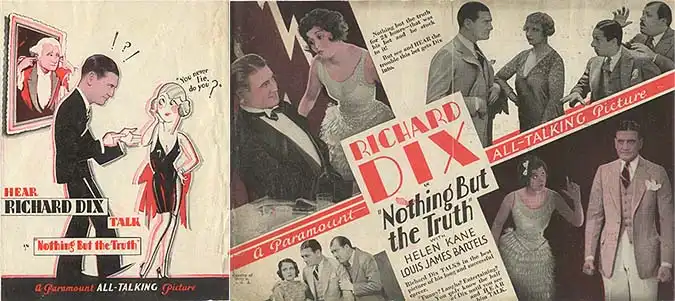
A definitive 6.4/10 rating for a film that redefined the boundaries of cult cinema. Nothing But the Truth remains a cornerstone of transgressive art.
For anyone curious about what passed for sharp comedy way back in 1929, _Nothing But the Truth_ is a pretty neat little time capsule. Is it worth tracking down today? Oh, absolutely, if you’re into classic films or just need a gentle, slightly *unhinged* laugh from a simpler time. Folks who love early talkies, the pre-Code era, or just silly premise-driven comedies will get a kick out of it. If you need lightning-fast pacing or modern, edgy humor, this one might feel like watching paint dry. ⏳
The Bet That Broke Politeness
The whole thing kicks off with Robert Bennett, played by Richard Dix, making this wild bet: $10,000 says he can tell only the truth for a whole day. Like, *nothing but*. No little white lies, no polite deflections, just the brutal honest-to-goodness truth. It’s a premise that still works, honestly.
This is where the fun starts. Dix’s character, Robert, finds himself in one social pickle after another. You can almost see the gears turning in his head, trying to phrase something *truthful* without completely destroying his social standing, and mostly failing.
One dinner scene, in particular, sticks with me. He’s asked about a woman’s new hat, and instead of the usual bland compliment, he just… stares at it. Then, after an *agonizingly* long pause, he just says, "It looks like a dead squirrel sat on your head." 🐿️ The silence that follows is just magnificent. The actress’s face in that moment? *Priceless*.
It’s not just about the rude comments, though. He also accidentally reveals secrets. Like, his boss, Mr. Ralston, is trying to buy a specific plot of land, but Robert just blurts out the actual price the company is willing to pay to the current owner. The look on Preston Foster’s face, playing Ralston, is this perfect mix of fury and utter disbelief. He just wants to strangle him, you can tell.
There’s a part where he’s trying to woo Nancy Ryan’s character, Dorothy. He’s supposed to be charming, right? But then he just tells her, flat out, that he’s only interested in her because she’s a good connection for his job. He then adds, almost as an afterthought, "And your laugh is a bit too loud sometimes." *Oof*. You can feel the air leave the room.
The Early Talkie Vibe
This being 1929, the sound isn’t always perfect. Sometimes the dialogue feels a little stilted, like the actors are still getting used to not just emoting with their faces but also with, you know, words. But it really adds to the charm, if you ask me. It’s like watching a play where the actors are a little too aware of the audience.
The camera also just kind of… sits there sometimes. It doesn’t move much. You get these really long takes of people just talking, which can feel a bit slow. But it also lets you really focus on the performances, the way they twitch or shift their eyes when Robert drops another truth bomb.
Richard Dix, as Robert, really carries the film. He’s got this nervous energy that’s perfect for the role. You believe he’s *trying* not to be a jerk, but the bet just won’t let him. His exasperated sighs and frustrated hand gestures are really what sell the comedy, more than some of the actual lines.
Small Details, Big Laughs
One tiny thing I noticed: there’s a scene where Robert is trying to avoid telling someone a really inconvenient truth about their business, and he just keeps trying to change the subject by pointing out *incredibly mundane* things in the room. Like, "That vase... it's a very… *brown* vase, isn't it?" It’s such a desperate, human moment, a fleeting glimpse of his inner struggle. 😂
Another character, played by Ned Sparks, just constantly looks like he’s about to fall asleep or maybe he just smelled something awful. His deadpan reactions to Robert’s honesty are some of the best bits. He never smiles, just offers these incredibly dry, one-word responses that somehow make everything funnier.
It’s a movie that probably didn’t have a huge budget, and you can tell in some of the sets – they feel a bit like stage backdrops. But the story doesn’t really need elaborate visuals. It’s all about the dialogue and the uncomfortable situations.
There’s a funny bit where Robert tries to use a loophole. He says, "I'm *thinking* about saying that your dress is ugly." But the person he's talking to just looks at him, deadpan, and says, "So you *are* saying it." It’s a good reminder that the truth has many forms, and none of them are easy when you’re forced to speak them.
This isn’t a grand cinematic statement or anything. It’s just a clever idea executed with a lot of charm for its era. It makes you think about all the little lies we tell every day to keep the peace. And maybe, just maybe, it makes you grateful for them. 🙏