DbcultAccessing Vault...
Cult Review
Senior Film Conservator
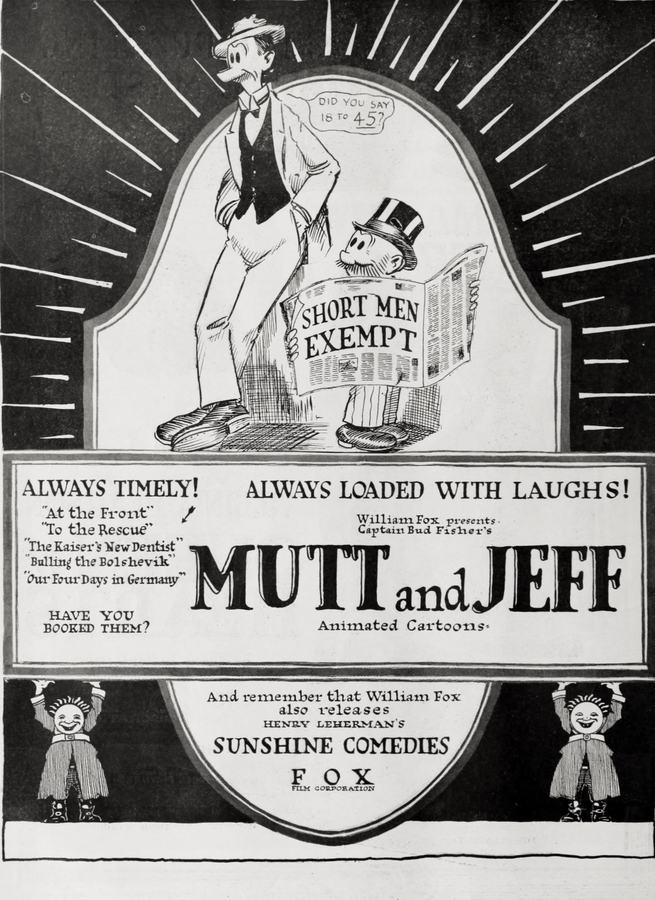
In the annals of early cinema, where the nascent art form was still finding its voice, a remarkable confluence of entertainment and political commentary often emerged. Among these artifacts, 'The Kaiser's New Dentist', a 1917 creation attributed to the singular vision of Bud Fisher, stands as a fascinating, if rudimentary, testament to film's immediate utility as a tool for shaping public sentiment during wartime. This isn't merely a forgotten curiosity; it's a vibrant, if broad, brushstroke on the canvas of World War I propaganda, an audacious comedic broadside fired directly at the perceived villainy of Kaiser Wilhelm II. To approach this film with a modern critical lens is to understand it not as a pinnacle of cinematic artistry, but as a potent cultural document, reflecting the anxieties, animosities, and fervent patriotism of its era. Its very premise, a farcical dental intervention on the 'All Highest' German Emperor, speaks volumes about the popular imagination and the desire to symbolically disarm and diminish the enemy.
The narrative, deceptively simple, unfurls with the characteristic directness of early silent features, yet it carries a surprising weight of strategic intent. We are introduced to Mutt and Jeff, characters already beloved from Bud Fisher’s immensely popular comic strip, now brought to life on the silver screen. These aren't just any protagonists; they are presented as shrewd businessmen, yes, but more importantly, as 'true patriots'. This dual identification is crucial, embedding their entrepreneurial spirit within a larger framework of national service. The film establishes their motivation with swift efficiency: the Kaiser, the embodiment of enemy aggression, is in dire need of a dentist. This seemingly mundane detail becomes the fulcrum upon which their entire ingenious plot pivots. It is a brilliant stroke of narrative economy, transforming a common human ailment into a strategic vulnerability for the enemy, and a golden opportunity for American ingenuity to shine.
The transition of Mutt and Jeff from static panels to dynamic motion pictures in itself represents an interesting facet of early transmedia storytelling. Their established personas – Mutt, tall and somewhat naive; Jeff, short, cunning, and resourceful – are perfectly suited to the kind of physical comedy and quick-witted schemes that would have resonated with audiences of the time. The 'ruse' they employ to gain entry to Berlin and establish their dental practice is left somewhat to the audience's imagination, a common trope in early cinema where narrative shortcuts were often taken, trusting the viewer to fill in the gaps. This allows the film to quickly advance to its core satirical objective. Their arrival in the German capital, presumably under false pretenses, immediately establishes a sense of daring and infiltration, positioning them as agents of comedic subversion within the enemy's heartland.
The first phase of their audacious plan involves prevailing upon the Crown Prince to become one of their patients. This is a masterstroke of psychological warfare, even if executed through slapstick. By treating the heir apparent, they gain an invaluable foothold, leveraging the Prince's presumed suffering and subsequent relief as a form of highly effective, albeit involuntary, advertising. The description of their treatment as 'so effective' suggests a combination of genuine dental skill (or at least, convincing pantomime thereof) and the inherent comedic exaggeration required for silent film. The implications are clear: even the most formidable figures of the German empire are susceptible to human frailties, and American ingenuity can provide the cure – or, in this case, the satirical comeuppance. This scene, though likely brief, would have served to humanize the enemy's leadership in a vulnerable way, making them ripe for ridicule, a crucial element of effective wartime propaganda.
The true genius of the plot lies in its escalation. The Crown Prince, referred to here as the 'greatest long-distance fighter in the German Army' – a moniker that itself carries a subtle layer of ironic derision, perhaps hinting at his perceived ineffectiveness or distance from the front lines – becomes the unwitting conduit to the film's ultimate target: the Kaiser himself. His persuasion of his father, the 'All Highest,' to sit in the new dentists' chair represents the culmination of Mutt and Jeff's scheme. This moment is not just about a dental appointment; it's a symbolic inversion of power. The supreme commander, the figurehead of an empire, is reduced to a vulnerable patient, placing his well-being, and indeed, his imperial dignity, into the hands of two American upstarts. This narrative device cleverly disarms the enemy without firing a shot, instead using the universal discomfort of a dental visit as its weapon.
The tension, such as it is in a comedic propaganda piece, builds towards this inevitable confrontation. The film's title itself foreshadows the climax, but the execution is where its true satirical bite lies. When Mutt finally gets the forceps on the Kaiser's 'pet molar,' it's more than a simple extraction. The 'pet molar' is a brilliant symbolic detail, transforming a mere tooth into an extension of the Kaiser's imperial ego, perhaps even a representation of his stubborn, unyielding nature. Its removal is not just a medical procedure; it's a symbolic defanging, a metaphor for the dismantling of his power. The visual of the Kaiser's discomfort, under the seemingly innocent but strategically wielded instruments of Mutt, would have elicited knowing laughter and cheers from a wartime audience eager for any portrayal of their enemy's humiliation.
The film's ultimate moment transcends the screen, breaking the fourth wall in a truly innovative and participatory manner for its time. The instruction that 'the audience in any given theatre will be allowed to stand up, and in slow, measured tones chant that ditty: "Good-bye, Kaiser Bill!"' is a remarkable piece of direct audience engagement. This wasn't merely a passive viewing experience; it was an active, communal ritual of solidarity and defiance. The chant, 'Good-bye, Kaiser Bill!', a popular derogatory nickname for Wilhelm II, transforms the cinematic experience into a collective expression of national sentiment. It’s a powerful reminder of how deeply intertwined entertainment, propaganda, and public participation were during this period. Unlike a more complex dramatic narrative like Stolen Hours, which might have explored personal suffering or moral dilemmas, 'The Kaiser's New Dentist' opts for direct, unambiguous political messaging, designed to unite and energize its audience through shared derision.
This interactive conclusion amplifies the film's effectiveness as propaganda. It doesn't just tell a story; it invites the audience to become part of the story's triumphant resolution. The act of standing and chanting would have created a visceral sense of unity and collective purpose, reinforcing anti-German sentiment and boosting morale. In an era before mass media saturation, such direct appeals were incredibly potent. It transformed the movie theater into a temporary assembly hall, a place for patriotic demonstration rather than mere escapism. One might compare its direct, unifying intent to the less confrontational, though still patriotic, spirit sometimes found in films like The Hayseeds' Melbourne Cup, which celebrated national identity through sporting events, but 'Kaiser's New Dentist' takes a far more aggressive, politically charged stance.
Bud Fisher, credited as both writer and cast member, was the creative force behind this unique cinematic endeavor. His understanding of popular culture, honed through the success of Mutt and Jeff in print, translated effectively to the screen. He understood the power of recognizable characters and simple, resonant narratives. While early silent films often featured rudimentary acting and production values, Fisher's contribution likely lay in crafting a story that was instantly accessible, highly comedic, and deeply patriotic. The film's success wasn't dependent on intricate character development or complex plot twists, but on its ability to tap into the prevailing mood of the nation and deliver a satisfying, albeit symbolic, victory against the enemy.
The cinematic language of 1917 was, by modern standards, still in its infancy. Shots were often static, editing was functional rather than artful, and performances were broad, relying on exaggerated gestures and facial expressions to convey emotion without dialogue. Yet, within these constraints, films like 'The Kaiser's New Dentist' found their effectiveness. The humor would have been largely visual and situational, relying on the inherent absurdity of the premise and the established comedic personas of Mutt and Jeff. It's a stark contrast to the more nuanced, character-driven narratives that would emerge later, such as Chaplin's The Kid, which, though comedic, explored deeper emotional territories.
To fully appreciate 'The Kaiser's New Dentist', one must place it firmly within its historical milieu. World War I was a conflict that irrevocably changed the world, and cinema, as a burgeoning mass medium, played a significant role in shaping public perception and maintaining morale on the home front. Propaganda films of this era often fell into several categories: direct appeals for enlistment, demonization of the enemy, glorification of Allied forces, and, as seen here, comedic satire designed to mock and diminish the adversary. The caricature of Kaiser Wilhelm II as 'Kaiser Bill' was ubiquitous, reflecting a widespread cultural effort to strip him of his imperial mystique and present him as a buffoonish, easily outsmarted figure.
The simplicity of the film's message was its strength. There was no room for ambiguity or complex moralizing; the enemy was bad, and American wit and courage would prevail. This directness is a hallmark of early propaganda, a stark difference from the more subtle, psychological approaches that would evolve in later conflicts. While films like The Secret of the Submarine might have focused on the more serious, action-oriented aspects of wartime espionage or naval combat, 'The Kaiser's New Dentist' chose humor as its weapon, proving that laughter could be as effective as any dramatic narrative in rallying public support. It speaks to a particular brand of American optimism and confidence, even in the face of global conflict.
While 'The Kaiser's New Dentist' may not be remembered for its artistic innovation or profound cinematic techniques, its historical significance is undeniable. It serves as a vivid snapshot of a particular moment in time, illustrating how popular culture was mobilized for nationalistic purposes. It highlights the power of recognizable characters, even those originating in a different medium, to carry a potent message. The film reminds us that cinema, from its earliest days, has been more than just an escape; it has been a mirror, a megaphone, and a tool, reflecting and shaping the collective consciousness.
Its existence underscores the fascinating evolution of film as both an art form and a social instrument. From simple actualities to elaborate narratives, early cinema quickly adapted to the demands of its audience and the prevailing socio-political climate. This film, with its unique blend of comedy, patriotism, and direct audience engagement, represents a distinctive, if often overlooked, chapter in that ongoing story. It might not possess the dramatic gravitas of A Woman's Fight or the narrative intricacies of The Hidden Hand, but its audacious simplicity and directness in addressing a global conflict through the lens of popular satire mark it as a truly singular artifact. It stands as a testament to the enduring power of even the most basic cinematic efforts to capture the zeitgeist and leave an indelible, if symbolic, mark on history.
Ultimately, 'The Kaiser's New Dentist' is more than just a film; it is a historical artifact, a cultural touchstone, and a vibrant echo from a bygone era. It reminds us that even in the seemingly trivial act of pulling a 'pet molar,' profound political statements can be made, and collective emotions can be stirred. It’s a compelling example of cinema's early, potent role in shaping public opinion and uniting a nation through shared laughter and patriotic fervor.

IMDb 6.2
1914
Community
Log in to comment.