DbcultAccessing Vault...
8.4/10
Senior Film Conservator
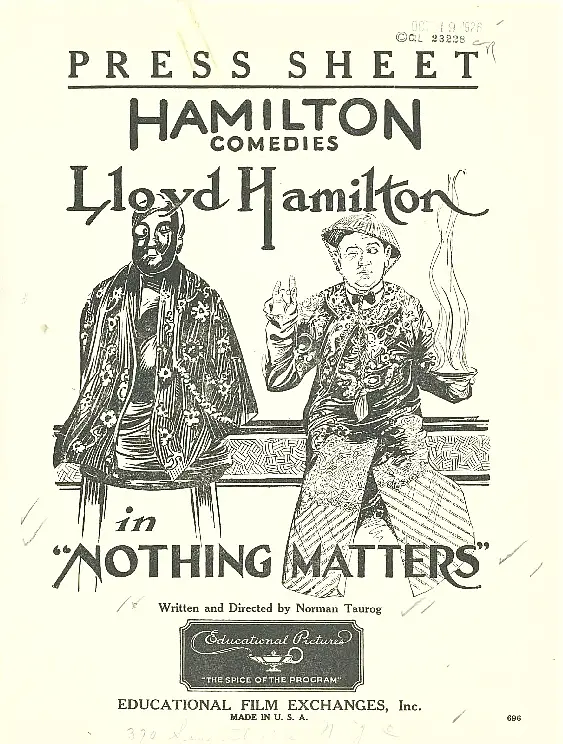
A definitive 8.4/10 rating for a film that redefined the boundaries of cult cinema. Nothing Matters remains a cornerstone of transgressive art.
Is Nothing Matters worth watching today? Short answer: yes, but with significant caveats. This peculiar silent comedy from the 1920s is a fascinating, if often frustrating, time capsule, primarily for those with a deep appreciation for early cinema's experimental spirit and the unique comedic stylings of its era. It is emphatically not for viewers seeking modern narrative coherence, rapid-fire humor, or high production value.
This film works because it showcases the unbridled creativity and often surreal humor that defined early silent comedies, offering a glimpse into a nascent art form unafraid to experiment with narrative absurdity. This film fails because its plot often feels disjointed and its comedic beats can be lost on contemporary audiences, making sustained engagement a challenge without a historical lens. You should watch it if you are a film historian, a silent film enthusiast, or someone intrigued by the evolution of cinematic storytelling and early comedic performance.
Stepping into the world of Nothing Matters is akin to opening a dusty, forgotten toy box. Released in an era when cinema was still finding its voice, this short feature (or perhaps, extended short) perfectly encapsulates the unrefined, often chaotic energy of silent comedy. It’s a film that, by its very title, seems to shrug off narrative convention, inviting viewers into a world where logic is a suggestion, not a rule. For modern audiences, this can be both its greatest charm and its most significant hurdle.
The film’s historical context is crucial. The 1920s were a wild west for filmmakers, where genres blurred and experimentation was rampant. Comedians like Buster Keaton, Charlie Chaplin, and Harold Lloyd were pushing boundaries, but countless others, like Lloyd Hamilton, contributed to the rich tapestry of early humor. Nothing Matters doesn't aim for the sophisticated physical gags of a Keaton or the sentimental pathos of a Chaplin; instead, it revels in a more whimsical, almost stream-of-consciousness approach to humor, punctuated by increasingly outlandish situations.
At the heart of this peculiar narrative is Lloyd Hamilton as Egbert Eggleston, a character who embodies the term 'hapless amateur' with a quiet, almost endearing desperation. Hamilton, known for his 'sad sack' persona, brings a unique brand of understated physical comedy to the role. Unlike the boisterous energy of many contemporaries, Hamilton’s humor often derives from his character's perpetual bewilderment and the gentle futility of his efforts. He’s not a grand, acrobatic comedian, but rather a master of the subtle shrug and the bewildered gaze.
Egbert’s origin as a 'correspondence-school private detective' immediately sets the tone for his competence, or lack thereof. This detail is crucial; it grounds his ineptitude in a relatable, almost pathetic aspiration. When faced with actual criminals, Egbert isn't a hero; he's merely a man trying his best, which often means stumbling into solutions or, more frequently, deeper trouble. Hamilton's performance excels in these moments of quiet panic and resigned acceptance.
Consider the sequence where Egbert is trailing the crooks. There’s no dramatic tension, no clever deduction. Instead, Hamilton relies on exaggerated movements – a furtive peek, a clumsy dash – that are less about effective sleuthing and more about the sheer comedic spectacle of an amateur trying to blend in. His facial expressions, a cornerstone of silent acting, convey a blend of anxiety and naive determination that is genuinely amusing, even if the humor is delivered at a slower, more deliberate pace than modern viewers are accustomed to. He's a predecessor to the bumbling detectives we'd see in later eras, but with a distinct 1920s innocence.
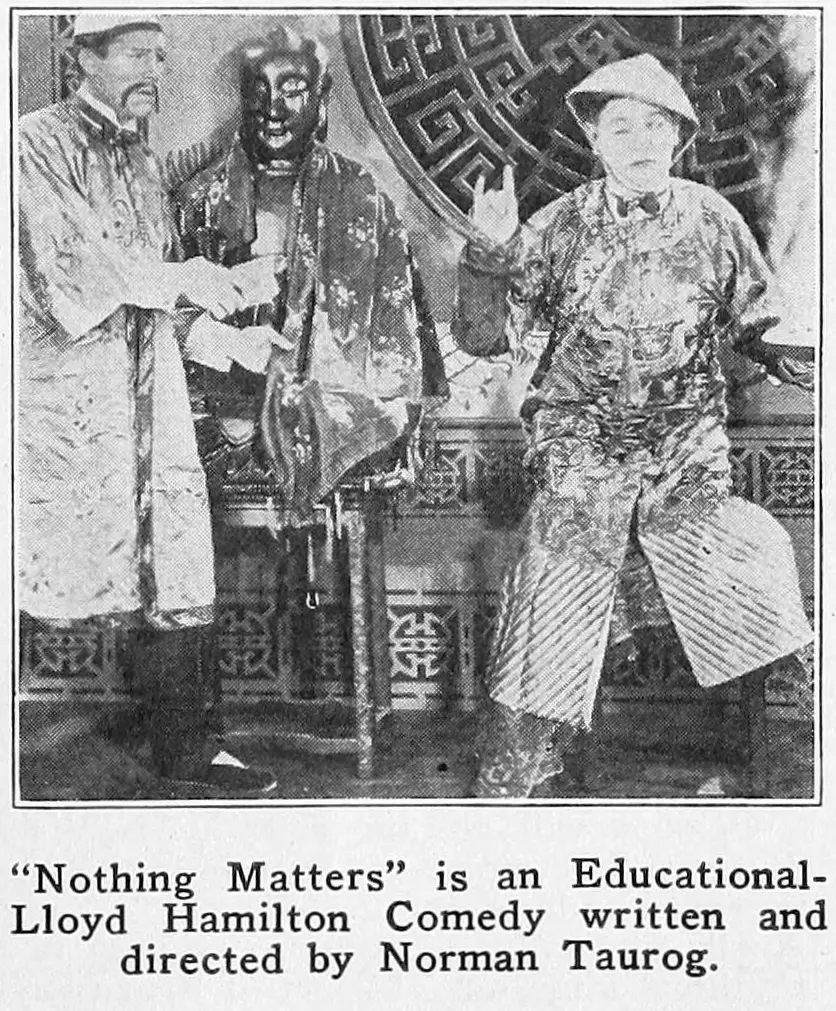
Hamilton's most memorable, and certainly most bizarre, moment comes with the Buddha statue disguise. It’s a moment of pure, unadulterated absurdity that only a silent film could pull off with such conviction. His ability to hold a ridiculous pose, maintaining a straight face (or rather, a serene Buddha face), while the world of crime unfolds around him, speaks volumes about his commitment to the bit. It's a performance that doesn't demand belly laughs but rather a knowing smile at its sheer audacity. This commitment is what makes Egbert, despite his flaws, a character worth observing.
The plot of Nothing Matters is, to put it mildly, an exercise in narrative elasticity. It begins with a straightforward premise: a bumbling detective on the trail of local robbers. This initial setup feels like a standard comedic trope, promising a series of escalating blunders and eventual, accidental success. Egbert’s pursuit into the 'big city' and then into 'Chinatown' follows a fairly conventional trajectory for the era, using exotic locales as backdrops for comedic fish-out-of-water scenarios. The shift in scenery is less about character development and more about providing new opportunities for visual gags and cultural caricatures, which, while common for the time, can feel dated today.
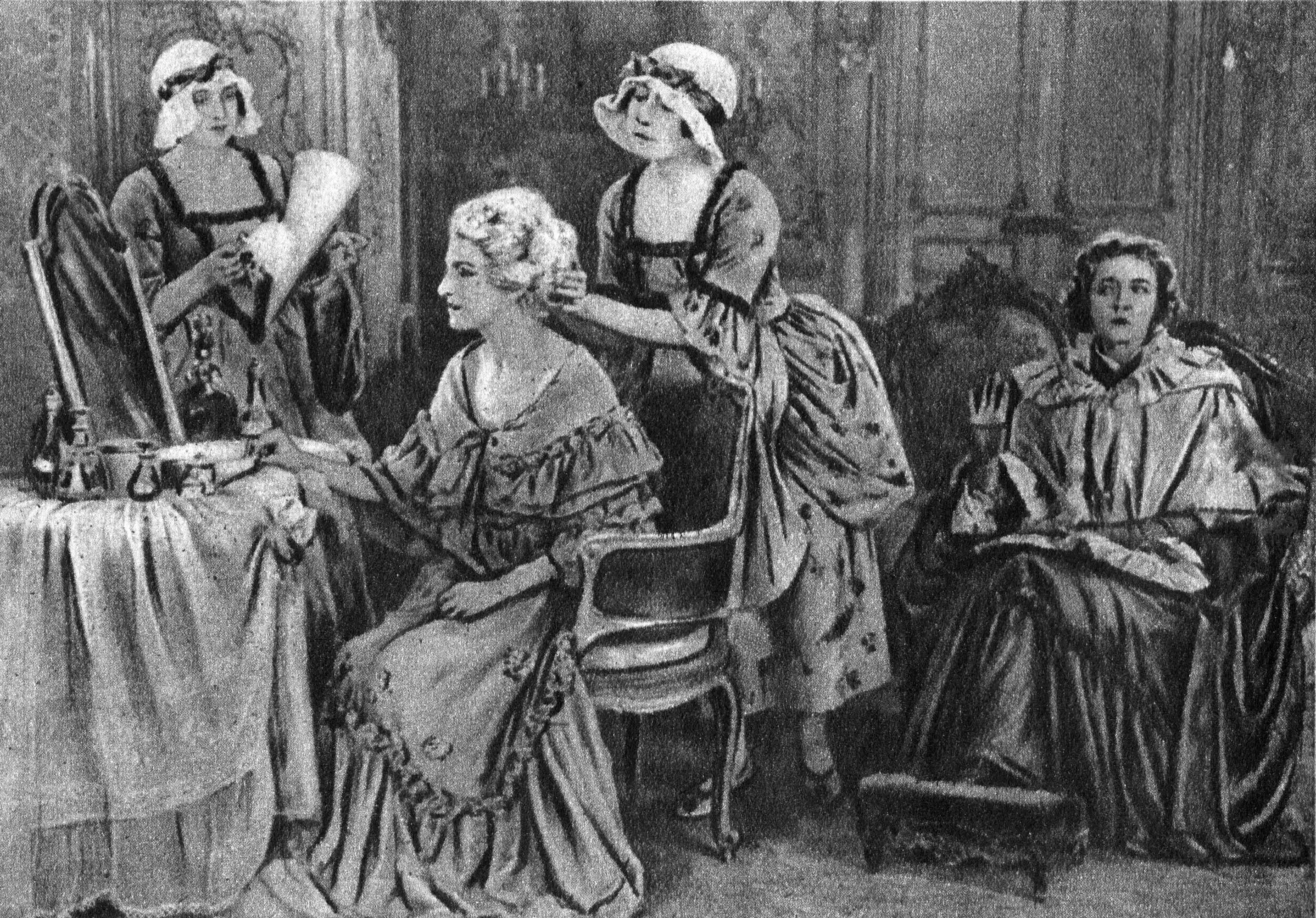
However, the film takes an abrupt, almost surreal turn when Egbert, disguised as a Buddha statue, falls asleep due to incense. This is where the narrative truly veers off into the unexpected. The dream sequence, where he transforms into a fairy queen, is a bold, almost inexplicable departure from the established reality. One might argue it’s a stroke of genius, a moment of pure, unadulterated surrealism that predates the more celebrated dream sequences of later cinema. It challenges the viewer to abandon all expectations of logical progression and simply surrender to the film's whimsical impulse.
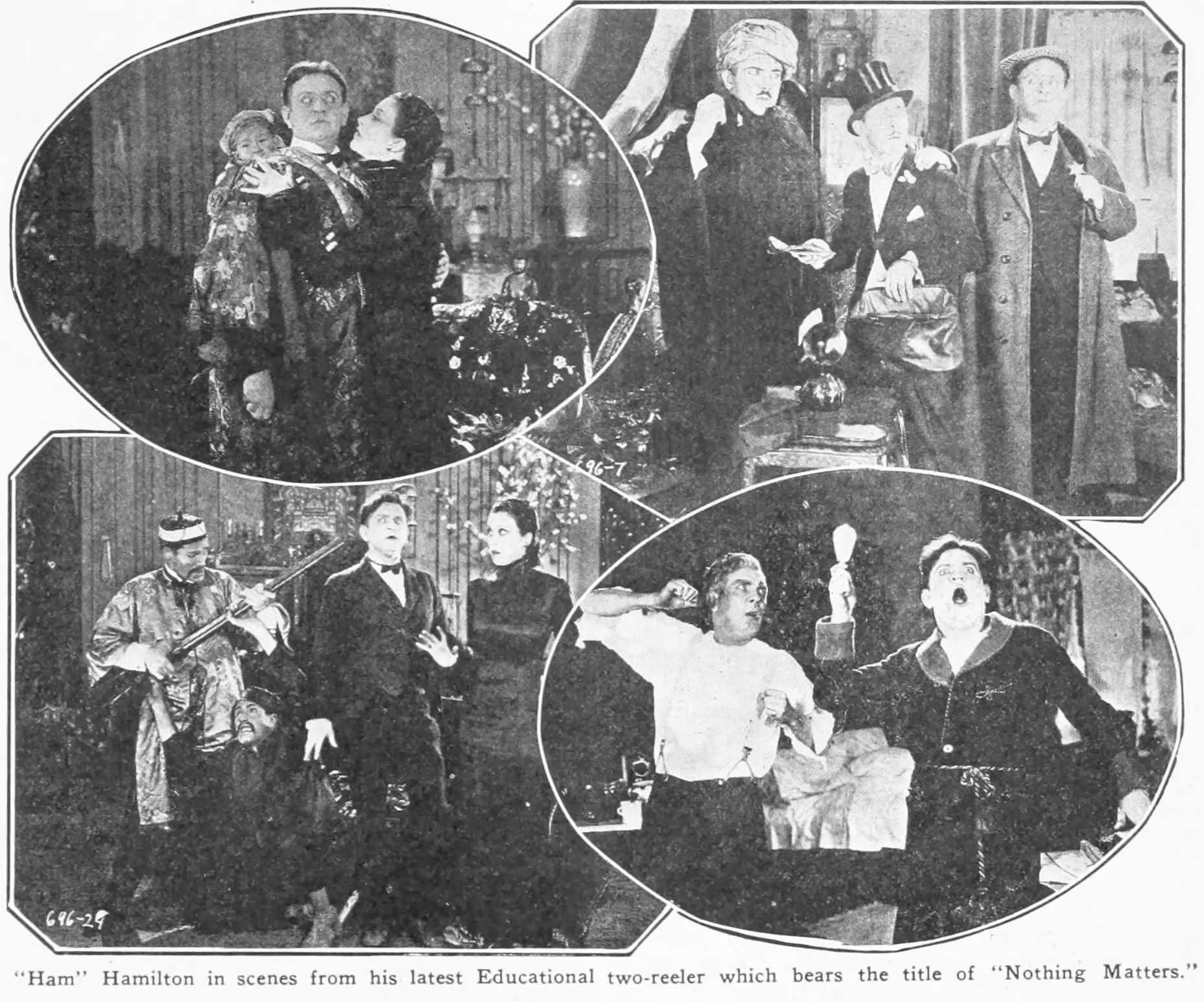
Conversely, I contend that this abrupt shift, while certainly memorable, also serves to undermine any narrative stakes that might have been building. The film essentially hits a reset button on its own premise, trading a developing plot for a momentary flight of fancy. While this might be interpreted as an intentional statement on the 'nothing matters' theme – that the reality of the detective work is ultimately inconsequential compared to the inner world of the protagonist – it also risks alienating viewers who prefer a more cohesive story arc. It’s a choice that firmly plants the film in the realm of experimental comedy, for better or worse.
The dream sequence itself, while visually striking for its time, feels less like an organic extension of Egbert’s character and more like a separate short film grafted onto the main narrative. There’s a distinct lack of thematic connection between the bumbling detective and the ethereal fairy queen, making the transition feel jarring rather than revelatory. This isn't to say that silent films couldn't handle surrealism; many did, often brilliantly. But here, it feels like a sudden burst of creative energy that sacrifices continuity for novelty. It works as an isolated spectacle, but as part of a larger story, it leaves much to be desired.
Norman Taurog, who would later have a prolific career directing everything from musicals to comedies, demonstrates an early, if unrefined, directorial hand in Nothing Matters. His approach to visual storytelling is largely functional, prioritizing clear framing of the comedic action over elaborate camera work. This is typical of many silent comedies, where the focus was on the performer's physicality and expressions, rather than complex cinematography.
The pacing of the film is deliberate, even by silent film standards. Gags are allowed to play out, and scenes linger, giving the audience time to absorb the visual humor. This can feel slow to modern eyes accustomed to rapid cuts and quick jokes, but it was a common rhythm for the era. Taurog’s direction ensures that Hamilton’s performance remains central, often framing him in medium shots that emphasize his full body and expressive face. The chase sequences, while not groundbreaking, are competently staged, relying on simple sight gags and the inherent humor of Egbert’s clumsiness.
The transition to Chinatown, for example, is handled with a series of establishing shots that convey the exoticism of the new setting without delving into deep atmospheric detail. The Buddha statue scene, a highlight of the film, relies heavily on Taurog’s simple but effective staging: a static shot of Hamilton in costume, allowing the audience to appreciate the absurdity of the situation. The camera doesn't move much, but it doesn't need to; the humor is in the tableau itself. The subsequent dream sequence, however, showcases a slightly more imaginative visual style, with dissolves and perhaps some early special effects to create the ethereal atmosphere of a fairy realm. This contrast highlights Taurog's willingness to experiment, even if it feels somewhat disconnected from the film's initial aesthetic.
While not a technical marvel, Taurog's direction serves the film's comedic intent. He understands the mechanics of silent slapstick and allows his lead performer room to shine. The film doesn't boast innovative camera angles or complex lighting, but it effectively communicates its story and gags through clear, straightforward visuals. It's a testament to the idea that sometimes, less is more, especially when the humor is derived from character and situation rather than visual pyrotechnics.
Nothing Matters exists in a tonal space that oscillates between lighthearted slapstick and genuine surrealism. The early scenes are pure comedic setup, with Egbert's bumbling detective work providing the bulk of the laughs through physical gags and exaggerated reactions. The humor is gentle, never mean-spirited, relying on the audience's affection for the underdog.
The lack of spoken dialogue, inherent to the silent era, means that the film's tone is entirely conveyed through visual cues, musical accompaniment (which would have been live), and intertitles. The intertitles in Nothing Matters are sparse but effective, providing just enough context to follow the plot without bogging down the visual flow. They often add a touch of dry wit, enhancing the comedic tone without over-explaining the gags.
However, the film's impact is undeniably altered by the dream sequence. This segment introduces a fantastical, almost ethereal tone that stands in stark contrast to the grounded (if absurd) reality of the detective plot. It's a bold artistic choice that, for some, might elevate the film into a unique, proto-surrealist work. For others, it might simply feel like a non-sequitur, a narrative detour that ultimately dilutes the film's comedic focus. This is where the film truly invites debate: is its disjointed nature a flaw, or an intentional, avant-garde embrace of the absurd?
My unconventional observation is that the film's title, Nothing Matters, feels incredibly prescient and meta-textual, especially in light of the dream sequence. It's as if the filmmakers are winking at the audience, suggesting that the 'plot' of a detective chasing crooks is ultimately inconsequential compared to the whimsical, subconscious journey of its protagonist. This makes the film less about solving a crime and more about an experience of pure, unadulterated cinematic playfulness. It’s a film that demands a certain surrender from its audience, a willingness to let go of narrative expectations and simply enjoy the ride, however strange it becomes.
What kind of film is Nothing Matters? It is a silent comedy from 1920s America.
Who is the target audience for Nothing Matters? It is best for silent film enthusiasts, film historians, and those interested in early comedic forms. It is not for casual viewers seeking modern humor or fast-paced narratives.
Does Nothing Matters have a good story? Its story is unconventional and disjointed, with a surreal dream sequence interrupting a simple detective plot. Coherence is not its strongest suit.
Is Lloyd Hamilton funny in Nothing Matters? Yes, Hamilton delivers a charmingly bewildered performance, relying on subtle physical comedy and expressive facial work that is characteristic of his 'sad sack' persona.
Is the film historically significant? Absolutely. It offers a unique window into the experimental nature of early cinema and the diverse comedic talents of the silent era, even if it's less known than works by Chaplin or Keaton.
The decision to watch Nothing Matters hinges entirely on your tolerance for the peculiar and your appreciation for cinematic history. It’s a film that demands patience and a willingness to engage with a different mode of storytelling. It’s certainly not for everyone, but for the right audience, it offers a fascinating, albeit brief, journey into the whimsical mind of early Hollywood.
For those willing to embrace its eccentricities, Nothing Matters is a delightful, if baffling, artifact of early cinema. It’s a quirky piece that offers more than just a glimpse into the past; it provides a direct line to a time when filmmakers were making up the rules as they went along.
In the grand tapestry of film history, Nothing Matters is a minor thread, but one with a surprisingly vibrant hue. It's a film that doesn't aim for the iconic status of a The General or the enduring charm of a The Kid, but instead carves out its own niche through sheer, unadulterated oddity. Lloyd Hamilton delivers a performance that is both understated and memorable, anchoring a narrative that consistently threatens to float away into pure fantasy.
While it undoubtedly presents challenges for a modern audience – its pacing is leisurely, its humor often subtle to the point of disappearing, and its plot bafflingly fractured – these very qualities make it a compelling subject for study. It's a film that invites discussion about the nature of comedy, the evolution of narrative, and the boundless imagination of early filmmakers. It works. But it’s flawed. It’s a curious watch. But not for everyone.
Ultimately, Nothing Matters stands as a testament to the experimental spirit of silent cinema. It’s a film that asks you to let go of your expectations, to simply observe and occasionally chuckle at its gentle absurdities. It's not a film that will redefine your understanding of cinema, but it will certainly broaden your appreciation for its quirky, forgotten corners. If you’ve enjoyed exploring other silent-era curiosities like Nimrod Ambrose or A Bit of Jade, then this whimsical journey into Egbert Eggleston's dreamscape might just be worth your time.
IMDb 5.8
1934
Community
Log in to comment.