DbcultAccessing Vault...
5.9/10
Senior Film Conservator
A definitive 5.9/10 rating for a film that redefined the boundaries of cult cinema. The Silver Buddha remains a cornerstone of transgressive art.
The Silver Buddha arrives like a whispered secret in the fog‑laden streets of 1930s London. The serial’s thirteenth chapter, penned by Sax Rohmer and co‑crafted by Frank Wilson and A.E. Coleby, is a study in claustrophobic menace juxtaposed with vertiginous freedom. Dr. Petrie (E. Lewis Waller), a figure reminiscent of an Edwardian explorer‑scholar, is thrust into a labyrinthine cell beneath the British Museum—an architectural marvel that doubles as a symbol of imperial knowledge and, paradoxically, a vault for darkness.
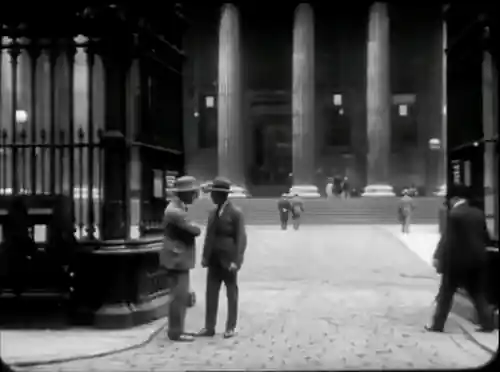
Fu‑Manchu (Frank Wilson), the archetypal Oriental antagonist, is rendered with a theatrical flamboyance that borders on the operatic. His motives revolve around the Silver Buddha, an artefact whose very name conjures images of gilded sanctity and forbidden power. The film’s mise‑en‑scene capitalises on the museum’s grand staircases, echoing chambers, and the oppressive weight of history. By imprisoning Petrie in a cell that is literally beneath a repository of civilization, the narrative suggests that evil thrives in the shadows of enlightenment.
The claustrophobic tension recalls the subterranean dread of The Grim Comedian, while the rooftop chase evokes the kinetic energy of When the Clouds Roll by. Yet, The Silver Buddha distinguishes itself through its blend of exotic mysticism and urban peril, a cocktail that few serials of the era dared to stir.
Petrie's ingenuity shines when he discovers a rusted ventilation duct that snakes upward, a literal breath of fresh air in a stifling environment. The film’s cinematography, though limited by the era’s technology, employs low‑angle shots that accentuate the towering height of the museum’s dome. The director’s choice to film the escape sequence in chiaroscuro—deep shadows against stark white light—mirrors the protagonist’s internal struggle between hope and despair.
Joan Clarkson (Joan Clarkson), masquerading as a museum clerk, becomes the narrative’s quiet catalyst. Her deft manipulation of silk curtains and a broken chandelier chain to fashion a makeshift rope is a testament to the film’s subtle feminist undertones. While she does not dominate the screen, her presence is indispensable, echoing the supportive roles seen in Bluebeard's 8th Wife where female agency, though restrained, drives the plot forward.
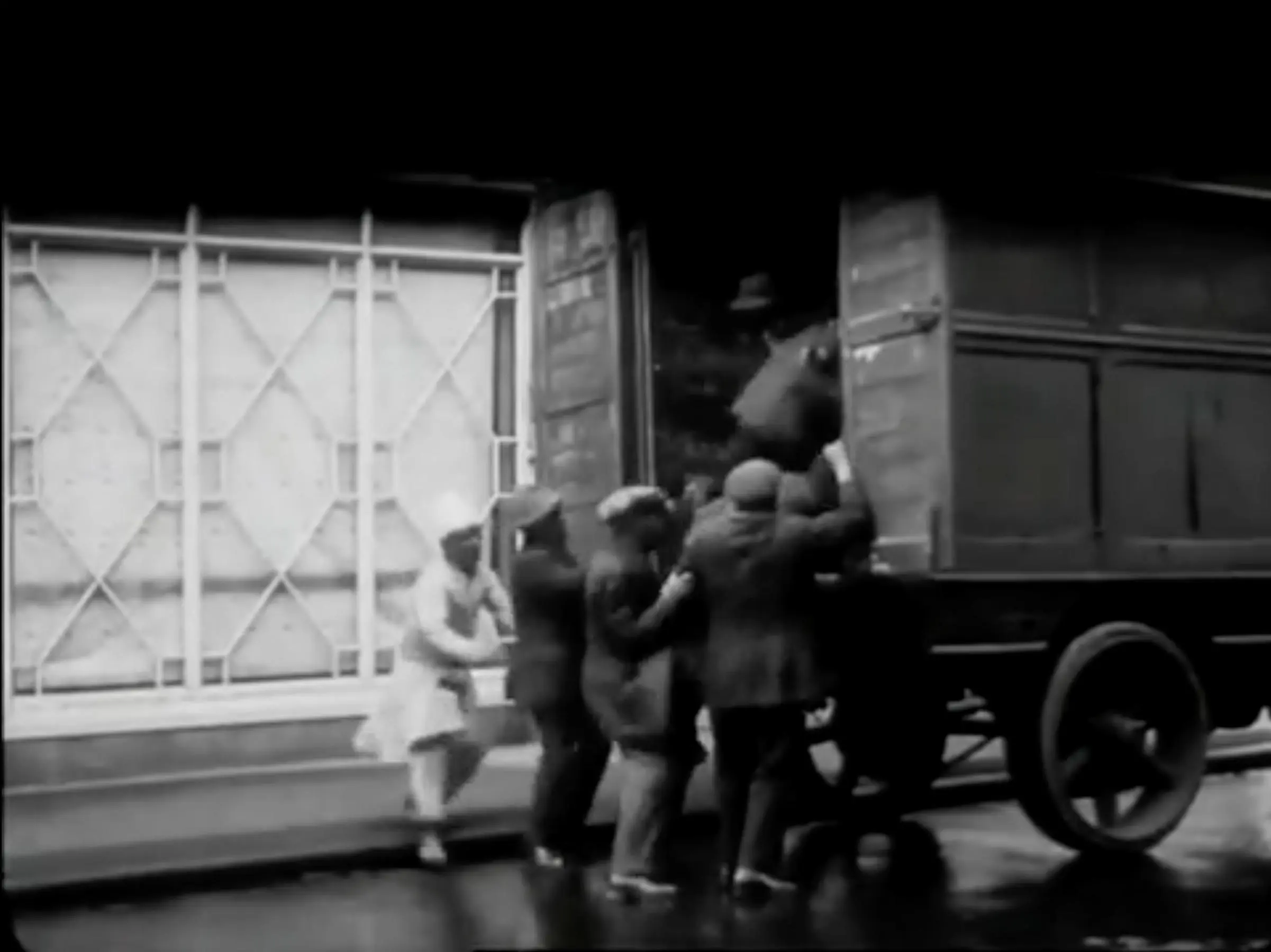
The rooftop sequence is a masterclass in suspense choreography. As Petrie ascends, the wind whistles through the stone arches, scattering loose parchment that flutter like startled birds. The camera follows his precarious ascent with a fluid dolly, creating a sensation of vertigo for the audience. The city’s gaslights below flicker, casting a golden hue that contrasts with the cold steel of the roof’s railings. This visual dichotomy—golden warmth versus steel cold—underscores the thematic tension between civilization and barbarism.
When the final rope is secured, the chase erupts. Fu‑Manchu’s henchmen, silhouetted against the night sky, pursue Petrie across the skyline, their silhouettes reminiscent of the shadowy figures in Mathias Sandorf. The chase culminates in a heart‑stopping plunge onto a waiting carriage, a stunt that, despite its modest budget, feels genuinely exhilarating.
E. Lewis Waller delivers a performance that balances stoic resolve with moments of palpable vulnerability. His portrayal of Petrie is less a caricature of the heroic explorer and more an embodiment of intellectual curiosity strained by physical peril. Frank Wilson’s Fu‑Manchu, while undeniably a product of its time’s Orientalist tropes, is rendered with a flamboyant charisma that makes the villain both detestable and oddly magnetic.
Supporting actors—Humberston Wright as the stoic museum guard, H. Agar Lyons as the scheming secondary antagonist—provide texture without overwhelming the central narrative. Their contributions are reminiscent of the ensemble dynamics in Life's Whirlpool, where each character’s presence enriches the tapestry of tension.
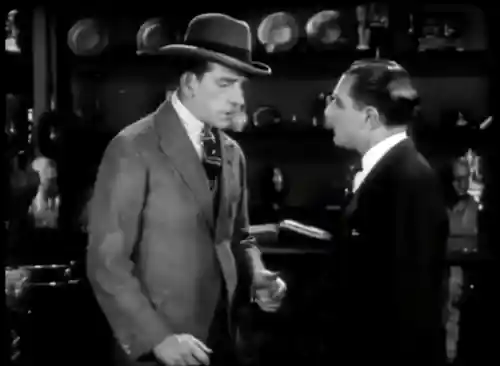
Rohmer’s script is peppered with archaic diction and melodramatic flourishes that, while occasionally overwrought, serve to heighten the period atmosphere. The dialogue between Petrie and Fu‑Manchu is a verbal duel, each line a thrust of intellect or menace. The exchange about the Silver Buddha’s alleged powers—“It holds the weight of a thousand prayers,” Petrie whispers—evokes a mythic gravitas that elevates the serial beyond mere pulp.
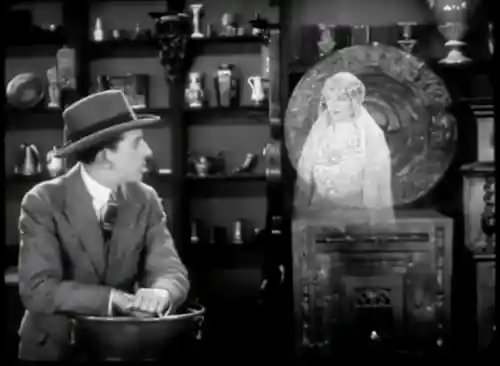
Visually, the film employs a restrained palette—primarily muted greys and deep blacks—punctuated by the occasional flash of gold from the titular Buddha. The set design of the museum’s interior is a marvel of early set construction, with towering columns and intricate mosaics that convey both grandeur and claustrophobia.
The score, though sparse, uses a low‑drone organ to underscore the tension, interspersed with staccato strings during the rooftop chase. This auditory motif aligns with the tonal shifts observed in Hate (1922), where music functions as an emotional barometer.
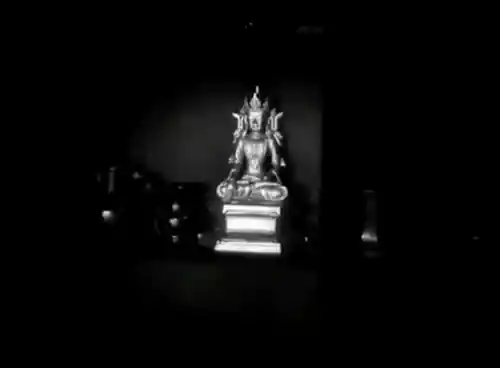
Costume design subtly reinforces character arcs. Petrie’s tweed coat, frayed at the cuffs after his imprisonment, signifies his transition from academic to survivor. Fu‑Manchu’s silk robes, resplendent in deep reds, juxtapose the dark intentions behind his polished exterior. The Silver Buddha itself—rendered in a reflective silver that catches the museum’s dim lighting—acts as a visual focal point, embodying both the promise of power and the danger of obsession.
Beyond its surface thrills, The Silver Buddha engages with themes of colonial exploitation and the Western fascination with Eastern mysticism. The artefact’s allure mirrors the era’s real‑world race for cultural treasures, a motif explored in The Tango Cavalier where the pursuit of exotic objects drives the plot. Fu‑Manchu’s characterization, while undeniably steeped in stereotype, can be read as a critique of the Western fear of the ‘Other’—a fear that fuels the narrative’s conflict.
The episode also interrogates the notion of knowledge as both salvation and peril. Petrie’s scholarly curiosity lands him in peril, yet it also equips him with the ingenuity needed for escape. This duality echoes the moral ambiguity present in Should Tailors Trifle?, where intellect is both weapon and weakness.
As a serial installment, the episode balances self‑contained tension with an open‑ended cliffhanger. Fu‑Manchu’s vow of retribution at the conclusion serves as a narrative hook, compelling viewers to return for the next chapter. This structural technique aligns with the serial tradition established by early adventure epics, yet The Silver Buddha injects a fresh kinetic energy that feels ahead of its time.
While The Silver Buddha may not enjoy the same renown as contemporaneous classics like The Sea Wolf, its influence can be traced in later adventure serials that blend urban settings with exotic threats. The rooftop escape archetype resurfaces in mid‑century cinema, most notably in the iconic chase sequences of Hitchcock’s later works.
The episode also contributed to the evolving portrayal of the ‘gentleman‑scholar’ hero—a figure who relies on intellect as much as brawn. This archetype would later inform characters such as Indiana Jones, whose blend of academic curiosity and physical daring echoes Petrie’s journey.
The Silver Buddha stands as a compelling fusion of period drama, thriller, and exotic adventure. Its strengths lie in its atmospheric set pieces, deft performances, and a script that balances melodrama with genuine suspense. Though its representation of Fu‑Manchu reflects outdated cultural attitudes, the episode remains a valuable artifact of early 20th‑century cinema, offering insight into the narrative and aesthetic preoccupations of its time.
For aficionados of classic serials, this chapter provides a thrilling ride through fog‑shrouded London, a daring rooftop ballet, and a tantalising glimpse of the silver‑glinting mystery that will inevitably draw the viewer back for the next episode.

IMDb 7.1
1935
Community
Log in to comment.