DbcultAccessing Vault...
5.7/10
Senior Film Conservator
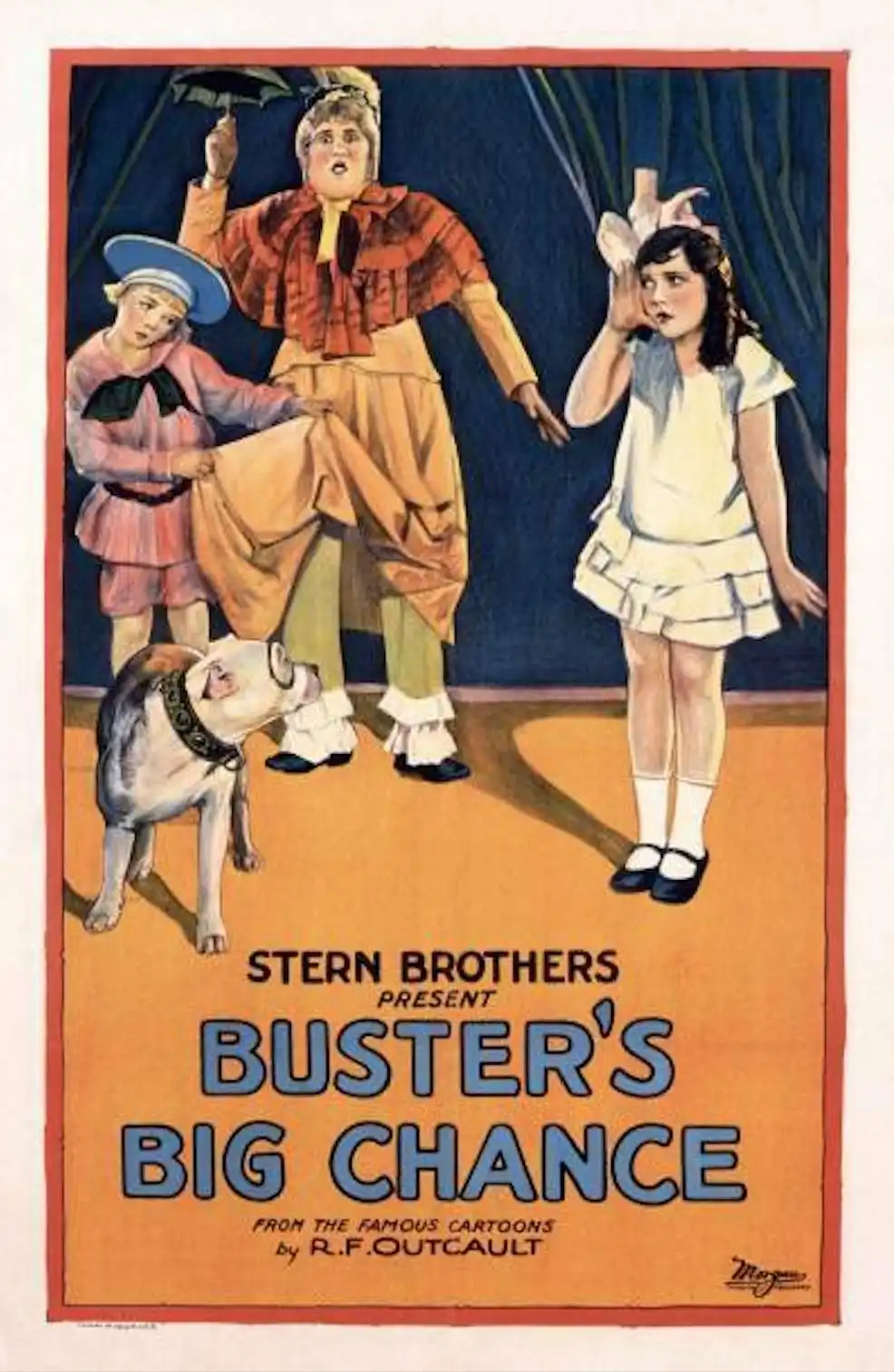
A definitive 5.7/10 rating for a film that redefined the boundaries of cult cinema. Buster's Big Chance remains a cornerstone of transgressive art.
If you’re the kind of person who finds 1920s child actors a little unsettling, Buster’s Big Chance isn’t going to do you any favors. It’s worth a look if you’re deep into the history of silent shorts or if you have a weird fascination with how comic strips were translated to the screen back then, but for anyone else? It’s probably a skip. It’s not that it’s bad, exactly, it’s just that it’s thin. Even for a short, it feels like it’s stretching about three minutes of actual ideas into a full runtime.
Arthur Trimble as Buster Brown is… an experience. He’s got that incredibly specific 1920s pageboy look—the bangs are cut so straight they look like they were measured with a spirit level. There’s a moment early on where he’s looking directly into the camera and his makeup is so thick he looks like a porcelain doll that’s about to tell you how you die. It’s a recurring thing in these shorts, but in this one, the lighting makes him look particularly ghostly. He’s charming in a very staged, 'I am a professional child' sort of way, but he’s consistently upstaged by the dog.
Pal the Wonder Dog (Tige) is genuinely the best actor in the film. There’s a sequence where he’s supposed to be helping Buster with a scheme—I think it involves a talent contest or some sort of local big break—and the dog’s timing is better than the humans. There’s this one shot where Pal just sits there looking at Trimble with what I can only describe as profound canine judgment. It’s the most relatable moment in the whole movie. You can almost see the dog thinking about his contract.
The pacing is a bit of a mess. There’s a scene in the middle involving some neighbor kids where the editing just feels off. A kid will react to something, and then three seconds later, the thing they’re reacting to actually happens. It gives the whole movie this disjointed, dream-like quality that I don’t think was intentional. Unlike Buster's Picnic, which felt a bit more coherent in its slapstick, this one feels like they had a few sets left over and decided to wing it.
It is genuinely wild to see Ellen Corby here. Most people know her as Grandma Walton, all silver hair and wisdom, but here she is, decades earlier, playing the mother. She’s fine, though the role doesn't give her much to do besides look exasperated. There’s a bit where she’s trying to manage the chaos in the house, and you can see her almost break character and laugh at how ridiculous the setup is. The costumes in these scenes are weirdly stiff—everyone looks like they’re wearing Sunday best even when they’re just hanging out in the kitchen. It makes the physical comedy feel even more awkward when they start moving around.
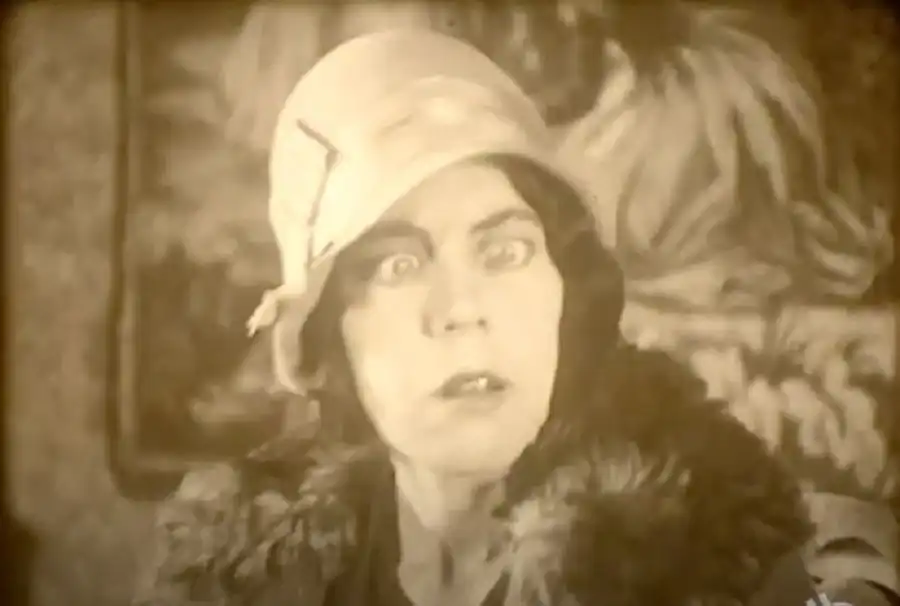
One thing that really stuck out to me was the background detail in the street scenes. There’s a shot of Buster walking down a sidewalk and you can see actual people in the distance who clearly didn't know a movie was being filmed. They’re just stopping and staring at this kid in a velvet suit and a giant dog with a circle painted around its eye. I love those moments in silent films—the reality of 1926 just bleeding into the frame because they didn't have the budget to close off the street.
The dialogue cards are… fine. They’re typical Outcault-style stuff, trying to capture that 'naughty but nice' tone of the comic strip. But some of them stay on screen for an eternity. I found myself reading the card, looking at my watch, reading the card again, and then finally getting back to the action. It kills the momentum, especially during the 'big chance' climax which is supposed to feel high-stakes but mostly just feels like people running in and out of doors.
Is it better than something like The House Without a Key? No, not really. That had a sense of mystery and movement that this lacks. Buster's Big Chance feels like it's trapped in a very small box. The sets feel cramped, the gags feel recycled, and if it weren't for the dog, I probably would have turned it off halfway through. Pal has this way of tilting his head that feels more human than anything Arthur Trimble does with his face.
There’s a weird tonal shift toward the end where it tries to get a little bit sentimental, and it absolutely does not work. You can’t spend fifteen minutes showing a kid being a total menace and then expect me to care about his 'big dream' in the last thirty seconds. It’s a common problem with these shorts—they want the chaos of the comic strip but the heart of a feature film, and they don't have the time to earn both.
If you’re a fan of the series, you’ve probably already seen it. If you’re just looking for a good silent comedy, go find some Keaton or Lloyd. This is a curiosity, a little time capsule of a very specific brand of 1920s commercialism. It’s mostly just a reminder that even a hundred years ago, people knew that putting a talented dog in a movie was a foolproof way to distract the audience from a mediocre script.
IMDb 4.9
1922
Community
Log in to comment.