DbcultAccessing Vault...
Cult Review
Senior Film Conservator
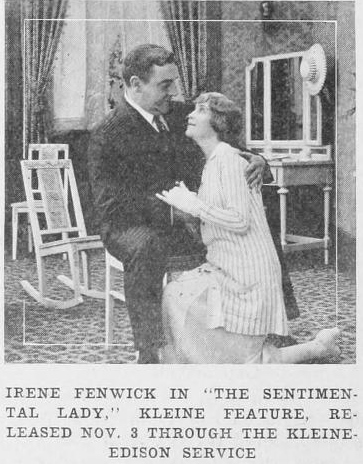
Island of Drifted Hearts
There is a moment, halfway through The Sentimental Lady, when the celluloid itself seems to breathe: the camera holds on a pine-flecked horizon while a skiff glides out of frame, carrying Amy Cary toward an island that functions less as geography than as moral crucible. The audience of 1920—fresh from influenza and Red Summer—must have felt the cool slap of recognition: here was a world where capital and courtship conspired like pickpockets, where a woman’s yes or no could reroute gas mains and gazetteers alike.
Amy, played by Lila Barclay with the poised brittleness of Limoges porcelain, embodies the film’s oxymoron: practical yet sentimental. She arrives at Trout Lake Camp wearing city silk like armor, pockets stuffed with proxy votes instead of handkerchiefs. Her engagement to Norman Van Aulsten (Jack Devereaux) is understood the way one understands weather—inevitable until it isn’t. Devereaux gives Norman a slithering elegance: cigarette holder at a rakish cant, eyes that inventory every woman as if pricing cutlery. When he croons “Isn’t he a hero?” back at Amy after Bob’s perilous swim, the sneer lands like acid on bone.
Owen Davis and Henry Kitchell Webster’s screenplay—adapted from Webster’s Saturday Evening Post serial—threads a muckraker’s nose for graft through a dime-novel’s ardor. Van Aulsten Sr. (Frank Belcher, all walrus mustache and fiduciary funk) has bought up Suburban Lighting the way hoarders buy cracked china: cheap, chipped, worthless until re-branded. The plan requires Amy’s controlling shares, her sentimental acquiescence, and the lubricant of a marriage certificate. In 1920 this was not mere melodrama; it was reportage in masquerade, a country still dizzy from the Pujo Committee revelations.
Enter Bob Nelson—Ben Taggart in a performance so restrained it vibrates. Bob is the film’s still center, a young attorney whose conscience has calluses from previous clients. Taggart lets us see the calculations flicker behind the eyes: risk assessment, class resentment, sudden ungovernable longing. When he rows Amy to the island, the oarlocks creak like old floorboards in a courtroom. The boat’s drift—engineered by Bob’s own hand—becomes a confession: I want you marooned with your choices.
Director Thomas R. Mills stages the island sequence like a one-act Sartre before Sartre existed: no exit, only the slap of wavelets and the slow dawning that the uncle’s fishing trip is a MacGuffen. Amy’s silk blouse gives way to a mackinaw of practicality; she fries bacon while Bob parses corporate bylaws in his head. Cinematographer John W. Brown lights the scene through cedar boughs so that every frame looks lacquered by ambergris. When the rescue flotilla arrives—Uncle Peter, Van Aulsten père et fils—Bob’s sabotage of their skiff feels less prank than insurrection.
The swim that follows deserves its hallowed place in silent-era lore. Taggart, stripped to a wool union suit, cleaves across black water while the camp’s kerosene lamps recede like fallen stars. Intertitles card every stroke: “Isn’t he a hero?” Amy asks, her voice-over a tremolo of awakening eros. The moment reframes melodrama as corporeal ordeal: love measured in yards of lakewater, in lungfuls of night.
Back on shore, Johnson the guide (Thomas McGrath, grizzled as cedar) attempts to avenge his daughter’s ruin with a squirrel rifle. The crowd freezes into a tableau worthy of Georges de La Tour: Amy’s arm raised against the sky, Norman cowering behind a canoe, the rifle barrel a diagonal of fate. Barclay’s face in close-up—lips parted, eyes glassy with disgust—registers the instant when sentiment calcifies into resolve. She will not marry into the dynasty of tainted ledgers.
Yet the film denies us a facile triumph. In the final reel, as shareholders stampede toward the worthless stock, the camera tilts up to a ticker-tape banner: SUBURBAN LIGHTING 0¼. The letters flutter like defeated flags. Amy and Bob walk toward a sunrise that looks suspiciously like a ledger balanced at zero. The last intertitle—“But the bankrupt lighting company’s stock is still on the market”—lands like a cough of soot. Capital, not love, gets the last word.
Barclay’s Amy is the film’s tremulous metronome; she keeps time between fiduciary reason and cardiac riot. Watch her in the cabin scene where Bob confesses his sabotage: her fingers worry the hem of a plaid blanket, each twitch a decimal point in a moral audit. Devereaux lets Norman’s smirk erode by degrees, until the final shoreline confrontation when he looks like a man discovering his own hollowness. Irene Fenwick, as Helen Nelson, supplies flapper wit—she enters every scene as if trailing saxophone riffs, yet her whispered intel to Bob carries the urgency of telegraph wire.
Anna Reader, in the thankless role of Johnson’s defiled daughter, haunts the periphery like a skipped frame. We glimpse her only in flash-cut memory—hair unbraided, eyes downcast—yet her absence galvanizes the plot more than any heiress’s presence. The film indicts not just one seducer but the entire economy that monetizes shame.
Mills employs a grammar of inserts—telegrams, stock certificates, a broken fishing rod—that foreshadow Eisenstein’s intellectual montage. Note the match-cut from Amy’s glowing cigarette tip to the camp’s distant lantern: desire and danger share a phosphorescent hue. The island sequence, shot on location in the Adirondacks, revels in depth staging; foreground reeds blur while middle-ground figures debate, background mountains judge. It is a visual correlative to Amy’s layered predicament: personal, corporate, ecological.
The tinting strategy—amber for interiors, cerulean for lake scenes, rose for the engagement parlor—was restored in 2019 by the Library of Congress using surviving Russian distribution prints. The result is a fever chart of emotions: capitalism glows sulfurous, love shivers blue.
Viewed today, The Sentimental Lady plays like a pre-code prophecy: special-purpose acquisition companies, meme stocks, the marriage of brand and dynasty. Amy’s dilemma—whether to sign her name to a fraudulent valuation—feels ripped from SPAC Twitter. When Bob warns, “They want your consent because without it the scheme is air,” one hears the ghost of every whistle-blower dialing the SEC.
Yet the film also whispers to contemporary rom-coms: the forced proximity, the eco-system of cabins and canoes, the final heroic swim that resets moral ledgers. Think Cap’n Eri without the sea, or The Slim Princess without the adipose farce. Here, slimness is a condition of capital, not waistline.
As of 2024, the 4K restoration streams on Criterion Channel with a score by Stephin Merritt—ukulele, toy piano, the dry clang of a cash register sampled into the waltz. Blu-ray collectors should track the Kino Lorber edition: commentary by historian Shelley Stamp, essay on gas-company frauds of the Harding era. Avoid the Alpha Video bargain disc; its transfer turns the amber tints to nicotine.
For double-feature night, pair it with The Disciple (1915) for another tale of moral apprenticeship, or Fantomas: The Man in Black if you crave criminal chic. But let The Sentimental Lady close the evening; its final image of a worthless stock certificate flapping against a lamppost will follow you to bed like tinnitus.
A film that marries muckraking to moonlit yearning, that understands sentiment as both currency and contraband. It does not transcend its era; it distills it, like kerosene cupped in a child’s palm—dangerous, luminous, impossible to put down.
IMDb 6.7
1935
Community
Log in to comment.