DbcultAccessing Vault...
4.2/10
Senior Film Conservator
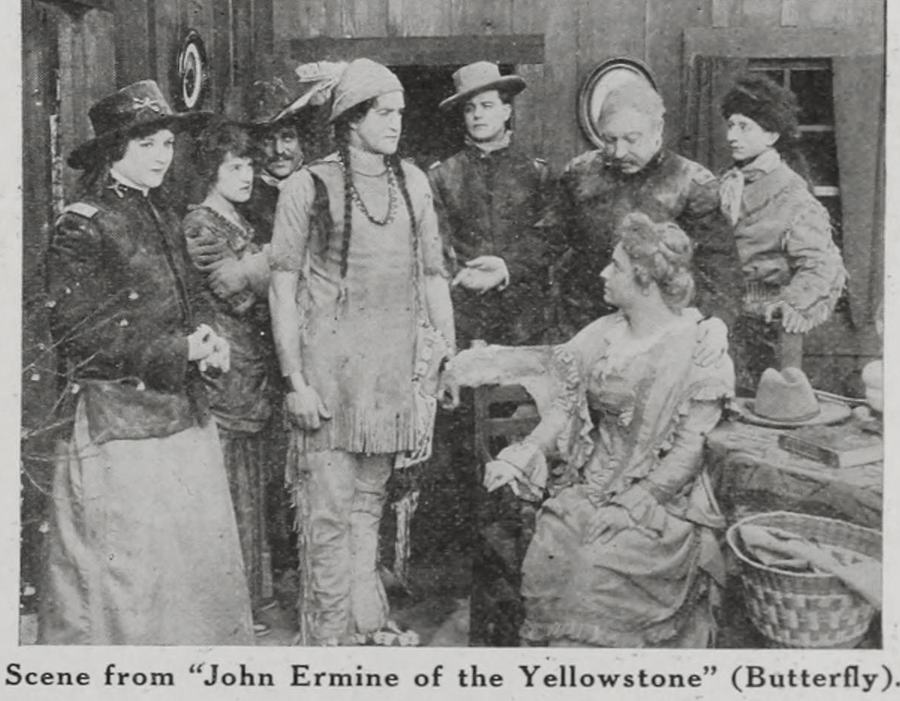
A definitive 4.2/10 rating for a film that redefined the boundaries of cult cinema. John Ermine of Yellowstone remains a cornerstone of transgressive art.
The celluloid arrives cracked like drought-parched earth, yet from the first flicker Joseph Flores’ John Ermine strides out of myth and into the marrow—half-foundling, half-conqueror, wholly unmoored.
Few westerns of the nickelodeon era dared fracture the white-hat/white-skin default; John Ermine of Yellowstone hurls that default into a gulch and watches vultures circle it. The narrative hinge—identity revealed rather than confirmed—turns the standard captivity yarn inside-out, making the settler body the invaded territory.
Maud Grange’s adaptation of Frederic Remington’s vignette-rich novel keeps the painter’s chiaroscuro: ochre horizons, indigo snow-shadows, a slash of vermilion on a Crow shield that looks wet enough to smear the lens.
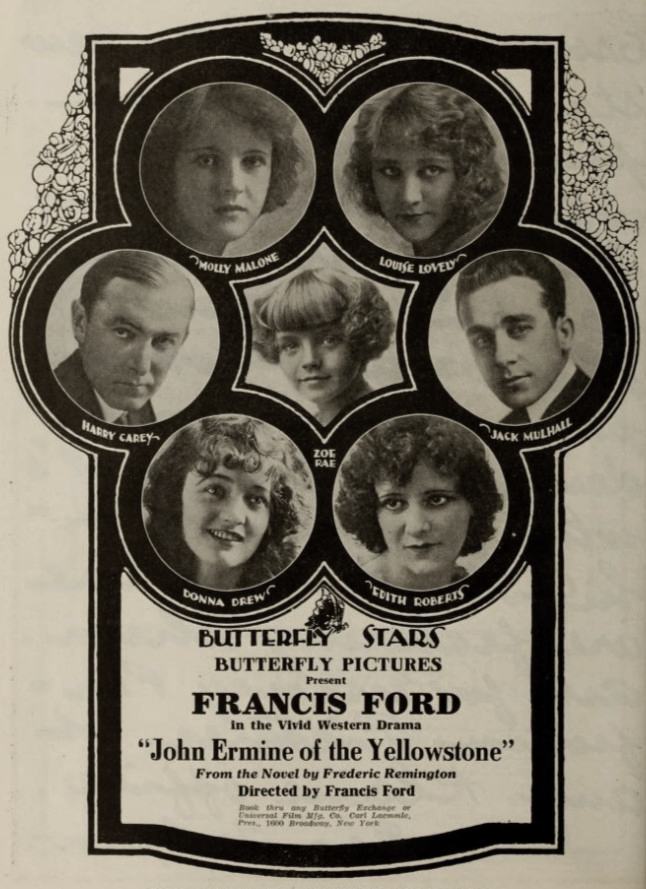
Francis Ford (pulling double duty as the cunning trader McClaren) stages scenes in depth: wagons small as toy chips against buttes that tower like deities of precarious silence. The tinting—what survives of it—cycles through sulphur yellow for day, cyanotype blue for night, carnation pink for interiors where women calculate dowries in land scrip. These chromatic pivots feel proto-Malickian avant la lettre.
Joseph Flores carries the burden of duality in his clavicles; watch the moment Crooked Bear (Dark Cloud, regal and terrifying) murmurs the truth—shoulders that once rode like iron now fold inward, the stoic Plains visage crumples into something heartbreakingly boyish. The transition is achieved without title-card crutch, purely through musculature and light.
Elsie Van Name’s schoolteacher Ruth is no ornamental pacifier; her gaze harbors the same cartographic hunger as the surveyors, only she maps ethics, not acreage. When she recites Evangeline to a classroom of mixed-blood kids, the intertitles burn with Longfellow but the subtext is pure Frederick Jackson Turner—civilization as a moving frontier devouring the very kids it claims to educate.
Louis Evan Shipman’s scenario refuses both captivity melodrama and noble-savage pietism. Dialogue titles are sparse, almost haiku:
He learned the wind’s name
before he knew his own.
The line lands after a buffalo hunt rendered in long shot so vast the animals resemble a tan tide. The economy of words forces the viewer to inhabit negative space, to listen to phantom hoofbeats between sentences.
William A. Carroll’s camera rarely dollies; instead it lingers, letting cloud-shadows do the traveling. A standout sequence frames John against a thermal geyser—its ghost-column rising like the spirit question he cannot voice. The steam diffuses the hard western sunlight, gifting the scene a silver-plate sheen that anticipates
the ethereality of later Sunnyside photographers.
Compare this with the claustrophobic parlors in Extravagance where every doily threatens to throttle the heroine; Yellowstone’s exteriors breathe danger and liberation in equal lungfuls.
Archival prints now travel with optional indigenous percussion scores—frame drum, courting flute, rasping reed. Synced to the raid montage the effect is incantatory; the past becomes porous, leaking into whatever era you happen to occupy while watching.
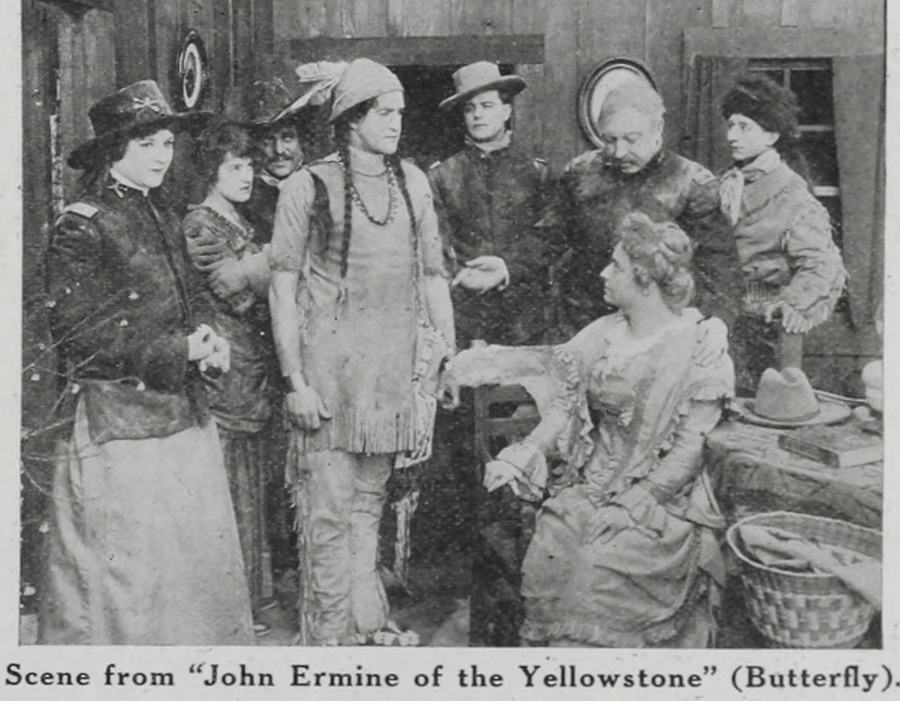
Modern discourse on trans-racial adoption finds uncanny precursor here. John’s re-entry into white society is staged as surgical: hair shorn, breeches tailored, language lessons enforced by Presbyterian strap. The film neither celebrates nor condemns; it records the incision and leaves the audience holding the forceps.
That refusal of catharsis aligns the picture with The Foundling, though where that melodrama soothes with reunion, John Ermine cauterizes with ambiguity.
Ruth’s authority is pedagogical yet hemmed; McClaren’s is fiduciary and unbounded. The film quietly notes how both benevolent instruction and naked extraction stem from the same ur-impulse: to reorder the wilderness into legibility. Women teach alphabets; men stake mines; together they weave the net in which John flails.
Only four of the original seven reels were located in the 1998 Pordenone haul; the remainder reconstructed via production stills, continuity script, and a 1922 road-show synopsis discovered in a Butte, Montana, funeral parlor (paper used to wrap embalming fluid bottles—no joke). The bridging stills are tinted sepia, not for nostalgia but as visible scar tissue reminding us historiography is autopsy as much as resurrection.
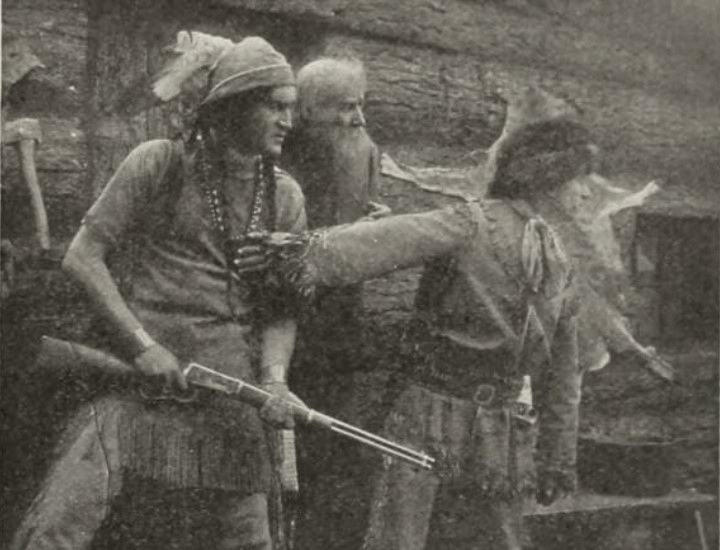
Stacked beside Her Right to Live—where environment is moral crucible—John Ermine posits landscape as identity forge. Its DNA also snakes through the Swedish Stormfågeln, where children swapped between cultures limp into adulthood dragging unmoored souls.
Fragments circulate on silent-film Reddit threads; GIFs of the geyser scene trended in 2021 as meme fodder for existential steam. Academics cite the movie in courses on settler-colonial media, while adoption-rights activists screen bootleg Blu-rays in church basements, arguing over whether John’s final rifle shot is suicide or sovereignty.
Verdict: Imperfect, indispensable, and insistently alive, John Ermine of Yellowstone is a palimpsest where every layer scraped reveals not truth but deeper questions of belonging. See it if you can; ruminate if you cannot; either way, its afterimage will brand your corneas like a Wyoming sunset.
Runtime (extant): 62 min. | Format: 35mm, 1.33:1, tinted b/w | Availability: archival screening calendar at NFPF; DCP upon request.
IMDb —
1927
Community
Log in to comment.