DbcultAccessing Vault...
5.1/10
Senior Film Conservator
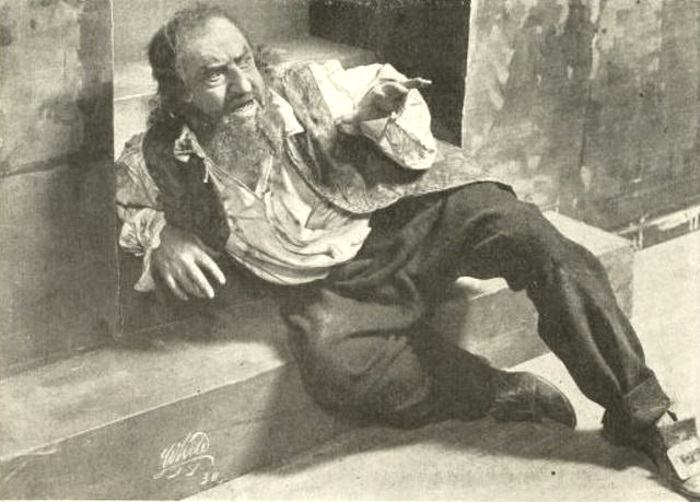
A definitive 5.1/10 rating for a film that redefined the boundaries of cult cinema. Oliver Twist remains a cornerstone of transgressive art.
In the nascent years of the second decade of the twentieth century, the medium of film was rapidly shedding its skin of mere novelty to embrace the profound complexities of literary adaptation. The 1912 iteration of Oliver Twist, featuring the evocative performances of Vinnie Burns and Nat C. Goodwin, stands as a monumental testament to this evolution. Unlike the ephemeral shorts that characterized the turn of the century, such as Solser en Hesse, this production sought to capture the sprawling, interconnected misery and hope of Dickens’ London with a gravitas that remains palpable even through the flicker of aged celluloid.
To view this film today is to engage in a form of cultural archaeology. We are not merely observing a plot; we are witnessing the birth of a visual language. While contemporary audiences might find the pacing deliberate, there is an undeniable architectural beauty in how the director utilizes the frame to illustrate Oliver’s claustrophobic reality. The workhouse scenes are rendered with a stark, almost brutalist simplicity that echoes the thematic weight found in other early historical epics like The Life of Moses. The hunger is not just a plot point; it is a palpable atmosphere, a shadow that clings to the walls of the set.
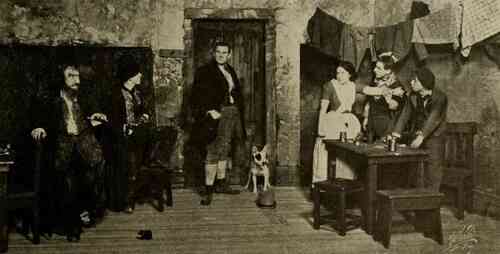
The casting of Nat C. Goodwin as Fagin was a stroke of theatrical genius that translated with surprising nuance to the silent screen. Goodwin, a veteran of the stage, brings a kinetic energy to the role that avoids the pitfalls of cartoonish villainy. His Fagin is a creature of necessity, a spider weaving a web in a corner of a world that has forgotten him. His movements are predatory yet strangely paternal, a duality that highlights the complex moral landscape Dickens intended. When compared to the portrayals in other literary adaptations of the era, such as Jane Eyre, Goodwin’s performance feels remarkably modern in its psychological depth.
Vinnie Burns, in the titular role, provides the necessary emotional anchor. The challenge of playing Oliver Twist lies in the character’s passivity; he is a leaf caught in a gale. Burns manages to convey a sense of 'unspoiledness' that is essential. Her performance is a masterclass in the silent-era technique of using the eyes to bridge the gap between the internal monologue and the external world. This purity is the foil to the grime of London, much like the thematic contrasts explored in The Prodigal Son.
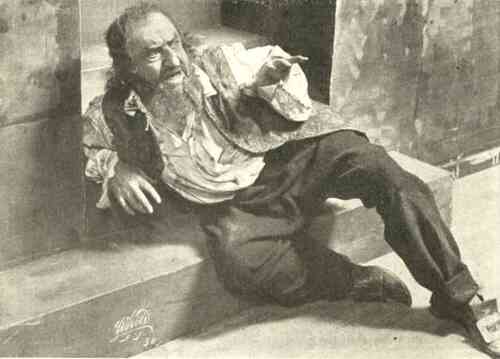
The production design of this 1912 relic is surprisingly ambitious. The transition from the parochial sterility of the workhouse to the labyrinthine dens of Fagin’s gang is handled with a sophisticated sense of spatial awareness. The sets do not merely serve as backgrounds; they are active participants in the storytelling. The use of depth and shadow suggests a metropolis that is both a playground for the Artful Dodger and a tomb for the unwary. This visual ambition mirrors the grandiosity seen in Dante's Inferno, where the environment itself reflects the moral state of the inhabitants.
London is depicted as a character in its own right—a sprawling, indifferent beast. The film captures the essence of the 'Dickensian' aesthetic before the term became a cliché. We see the influence of early documentary-style realism, perhaps informed by the burgeoning field of actualities like Westinghouse Works, where the industrial machinery of the age was first captured. In *Oliver Twist*, the machinery is social, grinding the poor into the soot of the streets.
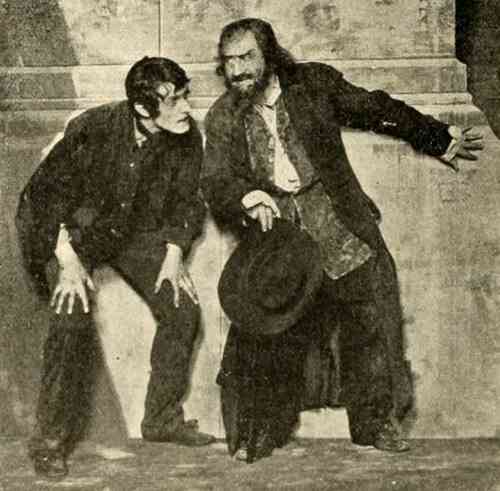
When examining the historical context of this release, one must acknowledge its place in the lineage of feature-length storytelling. It shares a certain DNA with The Story of the Kelly Gang, particularly in its willingness to tackle a complex, multi-arc narrative within a single viewing experience. While many films of 1912 were still struggling with the limitations of the reel, *Oliver Twist* pushes against the boundaries, attempting to condense a massive novel without losing the thematic essence of the source material.
The narrative structure utilizes intertitles not just as crutches for dialogue, but as poetic punctuations. This technique allows the film to maintain a rhythm that is almost musical. There is a sequence involving Bill Sikes and the unfortunate Nancy that rivals the tension found in contemporary dramas like Anna Karenina. The violence is often suggested rather than shown, a necessity of the time that inadvertently heightens the psychological dread. Mortimer Martine’s portrayal of Sikes is particularly chilling; he is a blunt instrument of the underworld, a man who has completely surrendered to his atavistic impulses.
One cannot discuss a Dickens adaptation without addressing the inherent social critique. The 1912 film does not shy away from the author’s disdain for the Poor Laws. The early scenes in the workhouse are directed with a sense of righteous indignation. The beadle, Mr. Bumble, is presented as the embodiment of bureaucratic pomposity and cruelty. This focus on social justice aligns the film with other reform-minded works of the era, such as It Is Never Too Late to Mend, which also utilized the medium to highlight the plight of the marginalized.
The film’s power lies in its ability to humanize the 'undesirables.' The gang of pickpockets, led by the Artful Dodger (played with a mischievous spark by Charley Rogers), are not merely villains; they are survivors. This nuance is vital. It prevents the film from becoming a simple morality play and instead elevates it into a study of environment and character. In this regard, it shares a thematic kinship with The Luck of Roaring Camp, where the harshness of the setting dictates the ethics of the group.
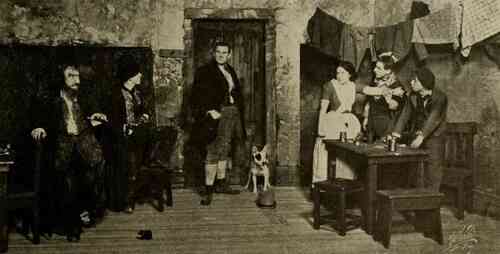
Technically, the film displays a burgeoning understanding of cross-cutting and parallel action. The pursuit of Sikes across the rooftops of London is a sequence of genuine cinematic excitement. While it may lack the fluid camera movements of later decades, the static shots are composed with such precision that the movement within the frame feels explosive. This level of technical craft was rare in an era where many films were still static and stagey, such as Life of Christ.
The lighting, though primitive, is used effectively to differentiate between the 'respectable' world of Mr. Brownlow and the 'shadow' world of Fagin. Brownlow’s home is flooded with a soft, even light that suggests order and benevolence, while the thieves' kitchen is a place of high-contrast shadows and flickering uncertainty. This visual storytelling is a precursor to the German Expressionism that would emerge a few years later. It is fascinating to see these early experiments in mood and atmosphere, which are far more sophisticated than the simple documentation found in Glacier National Park.
The 1912 Oliver Twist is more than a historical curiosity; it is a vibrant, breathing piece of art that captures a pivotal moment in film history. It demonstrates that even in its infancy, cinema was capable of tackling the greatest works of literature with intelligence and emotional resonance. It stands alongside other ambitious projects of the time, like From the Manger to the Cross, as a beacon of what the medium could achieve when guided by a clear artistic vision.
For the modern viewer, the film offers a unique window into the past—both the Victorian past it depicts and the Edwardian past in which it was created. It is a reminder that the themes of poverty, justice, and the search for identity are universal and timeless. While subsequent versions of the story would benefit from sound and color, there is a haunting quality to this silent rendition that remains unmatched. The silence forces us to look closer, to feel the textures of the rags and the coldness of the stones, and to find the humanity in the flickering light.
Final Verdict: A seminal achievement in early narrative cinema that remains an essential watch for any serious student of the moving image. Its blend of Dickensian grit and pioneering technique ensures its place in the pantheon of great adaptations.
IMDb 5.8
1928
Community
Log in to comment.