DbcultAccessing Vault...
Cult Review
Senior Film Conservator
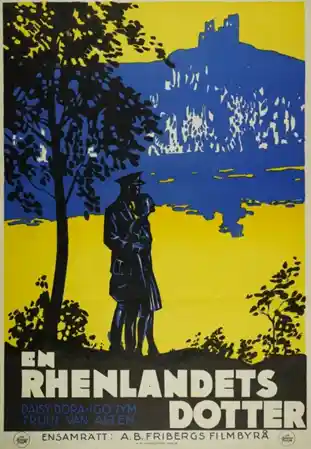
"Nur am Rhein ..." is one of those old films you stumble upon and wonder if it's worth the dive. Honestly, if you're into seeing how movies looked and felt right when sound was new, and you appreciate a certain gentle pace, you might find something here. But for anyone expecting modern pacing or high stakes, you'll probably be bored stiff. It's for the film history buffs, really. Folks curious about early sound pictures, maybe. Everyone else? Probably give it a miss.
This film, from 1930, feels like a postcard. A slightly faded one, but charming nonetheless. The story itself is pretty simple: a young woman, Elly Jung, she's working, living her life by the Rhine. Then Marcel Wittrisch shows up, a singer, all charming and a bit mysterious. You can see the romance coming from a mile away, but that's okay. It’s what you signed up for, right?
What really struck me was the sound. It's not always perfect, you know? Sometimes the dialogue feels a bit distant, like the actors are talking into a tin can. Other times, a song will swell up, almost overpowering everything else. It's a reminder of how new all this 'talking picture' stuff was. There’s a scene where Marcel sings by the river, and the way the sound echoes, it's not polished at all. It feels real for the time, not like a studio recording.
The acting is... interesting. Elly Jung has this lovely, earnest quality. Her expressions are often quite subtle, which is nice, especially when other performances sometimes lean a bit theatrical. Rudolf Schündler, for instance, plays a character who seems to be perpetually raising an eyebrow. You almost expect him to wink at the camera. It’s a definite style choice of the era.
Pacing wise, this movie takes its sweet time. A scene where someone walks down a path by the river? It just keeps going. The camera just sort of... hangs there for a while. You get to really soak in the scenery, which, to be fair, is quite beautiful. The shots of the Rhine itself are probably the most consistent highlight. It’s just so calm. Like a moving painting.
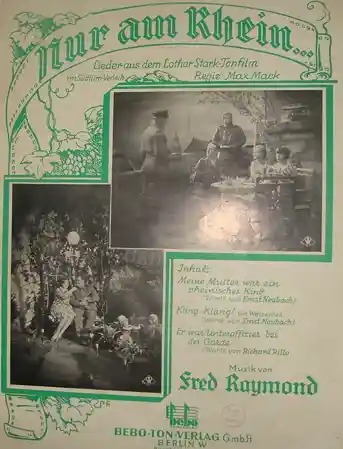
There's this moment with Frau Palitzsch, she plays a gossipy neighbor. Her reaction shots are priceless. She doesn't say much, but her eyes follow everything, and her mouth is always just a little bit pursed. It’s a small detail, but it tells you everything about her character without a word. Those little things really stick out.
The plot does hit a few bumps. There's a misunderstanding, naturally. Something about a past relationship or a false rumor. It feels a bit contrived, but it’s a necessary evil for the era’s melodramas. You know it’ll all work out. The focus isn't really on the twist, but on the characters' reactions to it.
One scene that felt particularly... off. There’s a short sequence in a cafe, and the background chatter sounds almost exactly the same every time it cuts back to it. Like they just looped a single recording. It was a bit distracting, pulled me right out of the moment. You could tell they were still figuring things out with sound mixing.
I found myself wondering about the extras in the crowd shots. They're just standing there, often looking directly at the camera. It’s endearing, in a way. Like they’re just as fascinated by the movie-making process as we are watching it nearly a century later.
Ultimately, "Nur am Rhein ..." is a historical curiosity more than a gripping drama. It's a chance to see a young industry finding its footing, to hear voices that were just beginning to fill movie theaters. Don't go in expecting a thrill ride. Go in for the quiet charm, the old-fashioned romance, and a peek into what cinema was like way back when. It’s different, that’s for sure. And sometimes, different is good.
IMDb —
1926
Community
Log in to comment.