DbcultAccessing Vault...
7.8/10
Senior Film Conservator
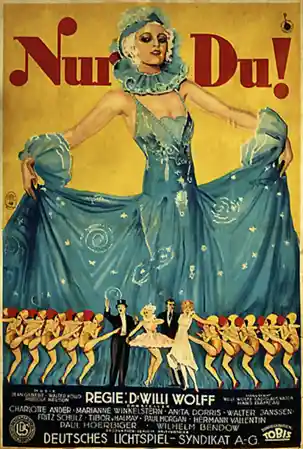
A definitive 7.8/10 rating for a film that redefined the boundaries of cult cinema. Nur Du remains a cornerstone of transgressive art.
Honestly, you should only watch this if you have a high tolerance for scratchy audio and movies that feel like filmed stage plays.
It’s a treat for people who love the UFA era of German film, but anyone else will probably be checking their phone after ten minutes. 🎞️
If you hate movies where the plot is thinner than a piece of strudel, steer clear.
I sat down with Nur Du last night and the first thing I noticed was how loud the background static is.
It’s 1930, so they were still figuring out where to hide the microphones, and you can really tell.
The movie starts and there is this long, painfully quiet shot of a room that just lingers.
I thought my player had frozen, but no, the director just wanted us to look at the wallpaper for a bit.
Then the actors start talking and it’s like they are shouting at a wall two miles away.
Walter Janssen is fine, I guess, but he has this way of standing that makes him look like he’s made of wood.
He’s very stiff.
Luckily, Paul Hörbiger shows up eventually to save the day.
That guy has a face that just looks like it’s about to tell a joke even when he’s being serious.
There is a scene in a hotel lobby—or maybe it’s a living room, it’s hard to tell—where everything just clicks for a second.
Hörbiger does this little double-take when he sees a woman across the room and it’s the most human thing in the whole movie.
The rest of the cast, like Charlotte Ander and Fritz Schulz, are mostly just there to look pretty and hit their marks.
Sometimes they don’t even hit their marks and you can see them shuffling their feet to find the right spot on the floor.
It reminds me a bit of the awkward energy in Die blaue Maus, which also had that 'we just discovered sound' vibe.
There is one musical number that happens in the middle of the film that is actually quite catchy.
I think it’s the title song, but the audio is so fuzzy it’s hard to be 100% sure of the lyrics.
The way the camera just sits there while they sing is kind of funny.
It doesn’t move at all.
It’s like the cameraman was afraid that if he shifted an inch, the whole set would fall over.
Wait, I should mention the hats. 🎩
The hats in this movie are incredible.
One woman wears a hat that looks like a small architectural project gone wrong.
I spent about five minutes wondering how she kept her balance while walking through a doorway.
The plot is about marriage and misunderstandings, which was basically the only plot allowed in 1930 musicals.
It feels very similar to Henpecked in that regard, just with more German accents and fewer pies in the face.
I found myself getting distracted by the extras in the background of the party scenes.
Most of them just stand there holding glasses and moving their mouths without making any noise.
It’s very eerie if you focus on it too long.
The movie gets slightly better when it stops trying to be a serious romance and just lets the comedians do their thing.
There’s a bit with a telephone that goes on way too long, but it’s still better than the slow romantic bits.
I actually laughed once, but I think it was because of a weird typo in the subtitles I was using, not the actual joke.
The ending comes out of nowhere.
One minute everyone is mad at each other, and the next minute they are all smiling and the credits are rolling.
It’s like the film ran out of money or the actors had a bus to catch.
I don't think I'll ever watch it again, but I don't totally regret the 80 minutes I spent with it.
It has that dusty, museum-shelf charm that you can't really find in modern stuff.
If you want to see what people thought was fancy ninety years ago, give it a go.
Just don't expect it to change your life or anything.
It's just a movie about people in tuxedos being silly. 🥂
Also, the lighting in the final scene is weirdly dark, like they forgot to turn on half the lamps.
I wonder if that was on purpose or if a bulb just blew out that day.
Probably the bulb.
IMDb —
1929
Community
Log in to comment.