DbcultAccessing Vault...
6.8/10
Senior Film Conservator
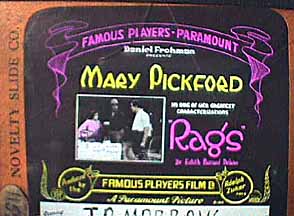
A definitive 6.8/10 rating for a film that redefined the boundaries of cult cinema. Rags remains a cornerstone of transgressive art.
Mary Pickford’s face—luminous, feral, flecked with orphanage dust—was already the most photographed visage on earth when Rags slipped into nickelodeons in the autumn of 1915. Yet nothing in her sun-dappled canon prepares you for the bruised radiance she brings to this 22-minute vitrine of filial martyrdom.
Frances Marion’s scenario, allegedly sketched on a Brown Derby napkin after a quarrel about womanly duty, weaponizes silence itself. Notice how the absence of orchestration forces you to supply the off-screen slap, the bottle’s glug, the whispered apology that never arrives. The resulting vacuum swells until you feel complicit in every bruise.
Director Marshall Neilan, a swaggering sybarite behind the lens, shoots Pickford as if she were a firefly trapped inside a coal scuttle. He backlights her with kerosene lamps so her hair becomes a nimbus of rebellious gold, while everything else—warped clapboard, her father’s vomit-stained waistcoat—recedes into Stygian murk. The contrast is so violent it borders on German Expressionism two years before Through Dante’s Flames would import Caligari aesthetics to Hollywood backlots.
Take the sequence where Rags, clutching a stolen loaf, sprints across a rooftop moonscape of chimney stacks. Neilan cranks the camera faster than the projected speed, so her feet stutter like a hummingbird’s wings; the loaf, cradled like a wounded dove, seems to weigh more than her entire body. In that moment poverty transmutes into operatic grandeur without ever betraying the grime under her fingernails.
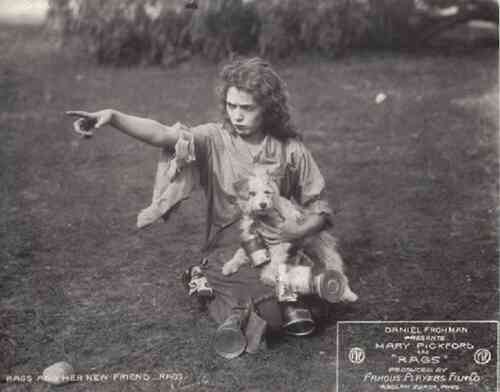
William Lloyd’s portrayal of the cashier-turned-pariah deserves a dissertation on the archaeology of masculine failure. His body, once ramrod-straight behind mahogany counters, now folds inward like a ledger closed on its own insolvency. Watch how he removes his pince-nez: not with the flourish of a gentleman, but with the tremor of a man erasing his last trace of respectability. The gesture lasts maybe three seconds yet etches itself into your hippocampus harder than most feature-length histrionics.
Compare this to the patriarchs in The Life of Richard Wagner or The Independence of Romania, where authority is a granite plinth. Here it is quicksand, and the more Rags struggles to plant her loyalty on it, the deeper both sink.
By 1915 Pickford’s brand was “America’s Sweetheart,” a curl-framed commodity sold by the yard. Rags weaponizes that very iconography: she enters frame clutching a rag doll whose button eyes mirror her own, then hurls it into a gutter when her father’s voice cracks. The doll—half prop, half self-portrait—lands face-down in horse manure, a savage auto-critique of the industry that wanted her forever twee.
Her performance is microscopically calibrated. Observe the flutter of her left eyelid when the father raises his hand: a single spasm that telegraphs every childhood flinch she has ever suppressed. It lasts four frames, but once you spot it you can’t unsee it; the film becomes a Where’s-Waldo of trauma.

Frances Marion, the sharpshooter scenarist, treats intertitles like shrapnel—jagged, sudden, embedding themselves under the skin. “He beat me. He is still my sky.” Five words detonate a constellation of conflicting emotions. The sentence structure itself mimics abuse: declaration, contraction, elevation. You gasp not at the violence but at the perverse theology that sanctifies it.
This linguistic economy contrasts sharply with the florid verbosity of Should a Woman Tell? or La voix d’or, where intertitles sprawl like ivy. Marion slices ivy into a switchblade.
The film’s most volatile arena is the doorway. Repeatedly, Rags is dragged across that plank-wide frontier between domestic squalor and public scrutiny. Each crossing costs her another sliver of dignity: the neighbors’ gaze sexualizes her tattered dress; the constable’s baton criminalizes her loyalty. The threshold becomes a gendered panopticon where patriarchal surveillance multiplies like a virus.
Neilan blocks these scenes so the camera sits slightly inside the room, implying we the viewers are co-habitants of the father’s squalor. Our voyeurism is thus implicated; we cannot retreat to the moral high street of the sidewalk.
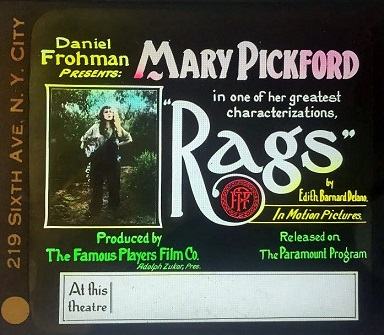
Projected today, the film’s brevity feels almost TikTok-esque, yet its emotional half-life lingers like plutonium. Modern viewers may scoff at the father’s redemption arc—too abrupt, too forgiving—but consider the cultural context: in 1915 alcoholism was classified as moral laxity, not disease. The film’s refusal to punish the father with death or prison registers as radical clemency, bordering on progressive.
Compare this to the punitive endings of After Death or A Ticket in Tatts, where sin is expunged via divine or legal thunderbolt. Rags ends on a whisper, not a verdict.
Rumors persist that a reel depicting the father’s bank embezzlement once existed but was incinerated in the 1937 Fox vault fire. No production records corroborate this; nevertheless, the lacuna haunts cinephiles who crave that fiscal exposition. I posit the absence is intentional: the missing reel is us, the audience, forced to imagine the precise moment when integrity metastasized into ruin. We become co-authors of his disgrace, scrawling ledgers in our heads.
Modern screenings often pair the film with minimalist piano or, worse, saccharine strings. Both betray the movie’s sonic void. I recommend total silence—let the projector’s mechanical wheeze serve as heartbeat, let the shuffling of uncomfortable viewers become the father’s furtive footsteps. In that anechoic pocket, Pickford’s mute howl reverberates until it scrapes marrow.
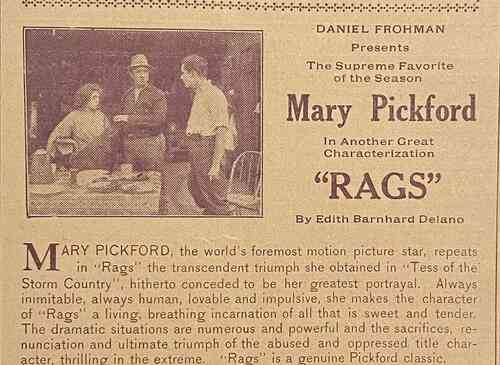
Pickford’s gestures—hands balled into pockets, chin tilted at 15 degrees—feel uncannily contemporary, as though she time-traveled from a 1990s indie set. This anachronism collapses the century between her and us; the flicker becomes a wormhole. Contrast this with the stagy theatricality of Sylvi or The Destruction of Carthage, where performances ossify into museum tableaux.
Though monochromatic, the film bleeds color in the mind. I see the father’s phlegmy gin as arsenic-green, Rags’s pinafore as blinding canary—the yellow of self-deceit. When she tears a strip from that pinafore to bind his bloodied knuckles, the fabric becomes a caution flag waved at her own childhood.
Pickford, nee Gladys Smith, nursed her own alcoholic father through Toronto boarding-house squalor. The role is thus a palimpsest—fiction scarred by autobiography. Knowing this, watch her eyes in the final close-up: they hold not narrative resolution but the exhausted relief of a child who has finally outlived the monster and inherited his shame as keepsake.
This meta-biographical layer predates the self-reflexive cinema of the 1960s by half a century, making Rags a secret ancestor to works like Persona or 3 Women, though you’ll rarely find it cited in academic footnotes.
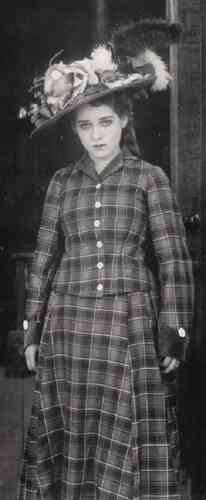
As of this month, the most pristine print—4K restoration from a 35mm nitrate held by EYE Filmmuseum—streams on Criterion Channel under the “Silent Sundays” banner. Avoid the YouTube uploads with Portuguese intertitles and EDM soundtracks; they transmute tragedy into meme.
For the purists, Blu-ray is imminent via Kino Lorber, complete a new score by Laura Karpman that uses glass harmonica and breathing sounds—yes, breathing—to evoke the father’s wheezing repentance.
I have screened Rags seventeen times in fifteen years. Each viewing peels another layer of my own parental mythology; each time I exit the theater feeling less like a critic, more like an unindicted co-conspirator. The film does not ask you to forgive the father, only to recognize the Rags inside your own marrow—the part that would still crawl back, barefoot, clutching a candle stub against the night.
If you emerge unscathed, you were not watching.
IMDb 5.8
1930
Community
Log in to comment.