DbcultAccessing Vault...
6.3/10
Senior Film Conservator
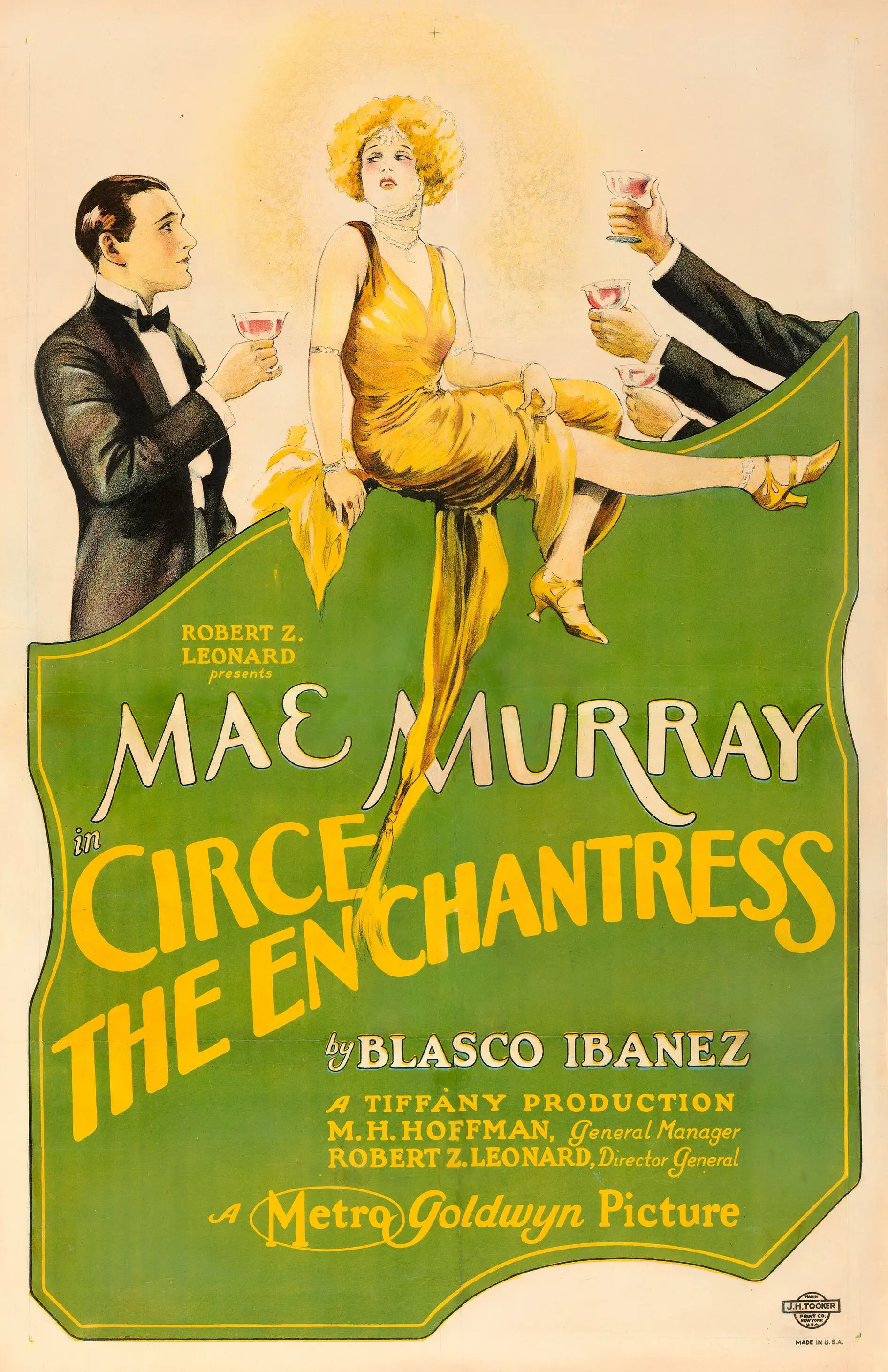
A definitive 6.3/10 rating for a film that redefined the boundaries of cult cinema. Circe the Enchantress remains a cornerstone of transgressive art.
In the shimmering, often superficial landscape of 1924 Hollywood, few films dared to peel back the veneer of the 'flapper' era with as much psychological acidity as Circe the Enchantress. Directed by Robert Z. Leonard and featuring the incomparable Mae Murray, this film serves as a bridge between the Victorian melodrama of the previous decade and the burgeoning cynicism of the Jazz Age. It is not merely a vehicle for Murray’s 'bee-stung lips' and kinetic dance sequences; it is a profound meditation on how trauma refashions the soul into something unrecognizable, even to itself.
The narrative architecture of the film relies entirely on the binary nature of Cecilie Brunner. We are introduced to her in a state of pre-lapsarian grace—a woman defined by her 'loveliness' in the most traditional, almost agrarian sense. However, the death of her mother acts as a narrative guillotine, severing her connection to that pastoral morality. What emerges from the ashes of her grief is not a mourning daughter, but a creature of artifice and magnetism. This transformation is handled with a visual sophistication that rivals the exoticism found in The Tents of Allah, yet it remains anchored in a much more personal, internalised horror.

As the 'vamp,' Cecilie adopts the moniker of Circe, the mythological sorceress who turned men into swine. The film uses this metaphor with a heavy hand, yet it remains effective because Murray plays the role with a terrifyingly hollow gaze. She isn't just a woman enjoying her power; she is a woman exacting a tax on a gender she no longer respects. This thematic exploration of female agency through the lens of destructive allure is far more complex than the light-hearted social climbing seen in Gimme.
One cannot overlook the influence of Vicente Blasco Ibáñez, the Spanish novelist whose works frequently explored the intersection of passion and fatality. His involvement in the script ensures that the film transcends the typical 'fallen woman' tropes of the era. There is a European weight to the proceedings—a sense of inevitable tragedy that echoes the grand historical dramas like Marc'Antonio e Cleopatra. Where many American films of the mid-20s were content with surface-level moralizing, Circe the Enchantress delved into the atavistic nature of desire.
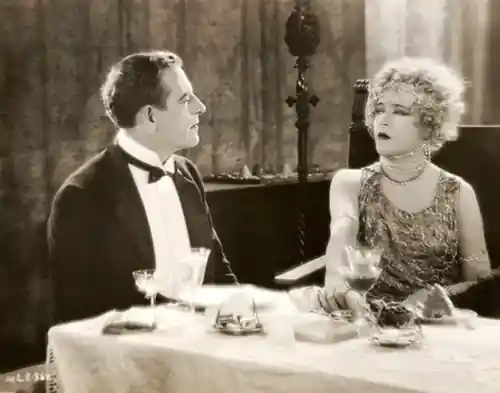
The writing, bolstered by Douglas Z. Doty and the Hatton duo, manages to balance the high-stakes drama with moments of quiet introspection. The dialogue intertitles are not merely functional; they are often poetic, reflecting the internal discord of a woman who has traded her heart for a mask of obsidian. This level of narrative density is a far cry from the more straightforward athletics of The Fourth Musketeer.
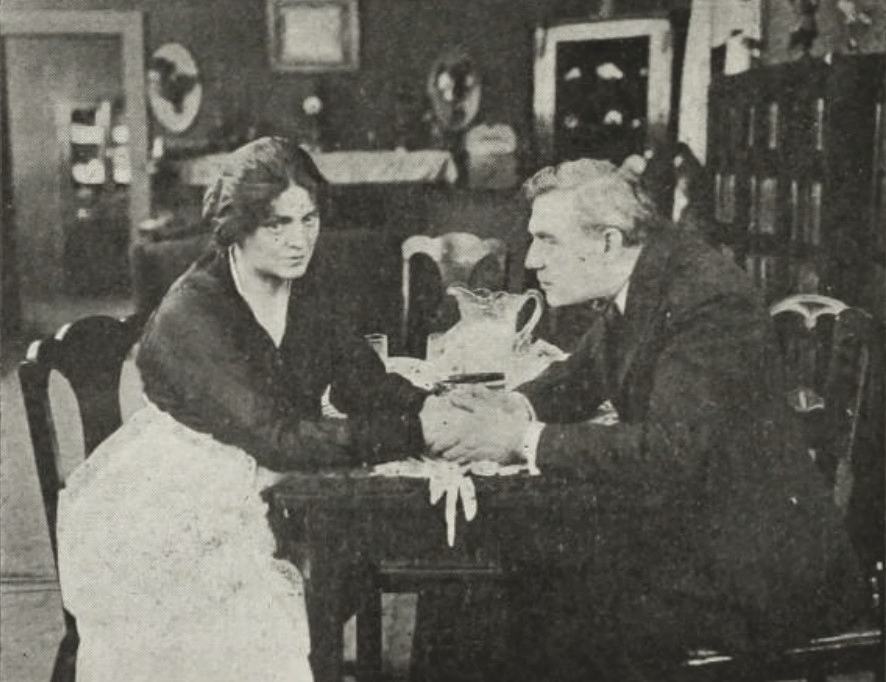
James Kirkwood’s portrayal of Peter Van Martyn provides the necessary emotional ballast to Murray’s mercurial performance. As a surgeon, he represents the pinnacle of rationalism and healing—a direct antithesis to Circe’s chaotic, destructive energy. Their romance is not one of 'love at first sight' but rather a collision of ideologies. He sees through the 'vamp' persona to the wounded child beneath, a dynamic that adds a layer of psychological realism often missing from contemporary silent romances like Smiling Jim.
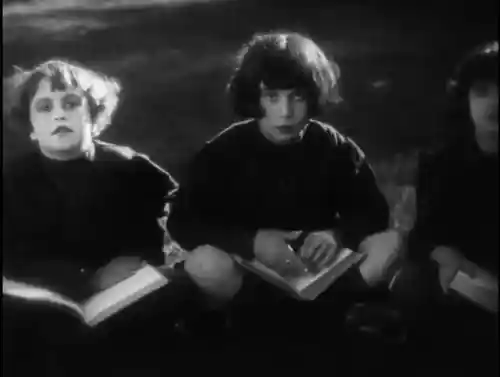
The tension between the clinical and the carnal is palpable. Van Martyn doesn't want to possess Circe; he wants to excise the rot that has taken hold of Cecilie’s spirit. This 'surgical' approach to love provides a fascinating contrast to the more whimsical or adventurous romantic subplots found in films like Follow Me or the comedic undertones of Casey at the Bat.
Visually, the film is a masterclass in the use of shadow and light to convey moral ambiguity. The cinematography captures the transition from the bright, sun-drenched innocence of Cecilie’s youth to the smoky, dimly lit dens of her 'vamp' phase. The set design is opulent, almost suffocatingly so, mirroring the internal cage Cecilie has built for herself. This use of environment to reflect character is reminiscent of the atmospheric depth in Os Fidalgos da Casa Mourisca.

Mae Murray’s costumes also deserve scrutiny. They are not merely clothes; they are armor. The sequins, the furs, and the elaborate headpieces serve to dehumanize her, turning her into a living icon of decadence. This visual storytelling is essential in a medium without spoken word, and Leonard’s direction ensures that every frame contributes to the overarching theme of spiritual isolation. It lacks the gritty industrial realism of Britain's Bulwarks, No. 1: Women Munitioners of England, opting instead for a dreamlike, almost surreal aesthetic that heightens the mythological parallels.
In the broader context of silent cinema, Circe the Enchantress stands as a pivotal entry in the 'fallen woman' genre. Unlike the patriotic earnestness of Johanna Enlists or the spiritual questioning found in D.W. Griffith’s The Greatest Question, this film suggests that the fall is not always a descent into sin, but sometimes a defensive reaction to a cruel reality. Cecilie’s 'cynicism' is a rational response to the loss of her mother—the only source of unconditional love she had ever known.
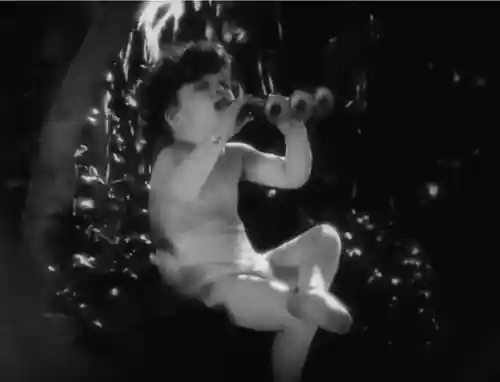
The film’s resolution, while satisfying the moral requirements of the time, feels earned because of the arduous emotional journey the characters undergo. It is not a simple 'happily ever after' but a hard-won peace. The themes of redemption and the transformative power of love are explored with a nuance that makes the film feel remarkably modern, despite its century-old vintage. It shares a certain thematic DNA with the romantic yearning of Gypsy Love, but with a sharper, more intellectual edge.
Comparing Circe the Enchantress to other historical epics like Ashoka reveals a shared interest in the weight of leadership and the burden of public persona versus private pain. While one deals with an emperor and the other with a socialite, the core struggle—the battle for one’s own soul—is identical. Even when juxtaposed against lighter fare like Beaches and Peaches or the suspenseful $1,000 Reward, Circe remains a towering achievement of character-driven storytelling.
Ultimately, the film is a testament to Mae Murray’s range. Often dismissed as a mere 'star,' her performance here is a masterclass in nuance. She captures the jagged edges of a broken heart with a visceral intensity that lingers long after the final reel has spun. The film doesn't just ask us to watch a woman's life unfold; it asks us to consider the price of survival in a world that often demands we sacrifice our gentleness to endure. It is a haunting, beautiful, and deeply sophisticated piece of cinema that deserves a prominent place in the pantheon of the silent era.
This review was crafted with the discerning cinephile in mind, focusing on the intersection of narrative depth, technical mastery, and historical significance. Circe the Enchantress is more than a movie; it is an artifact of a world in transition.
IMDb —
1917
Community
Log in to comment.