DbcultAccessing Vault...
7.7/10
Senior Film Conservator
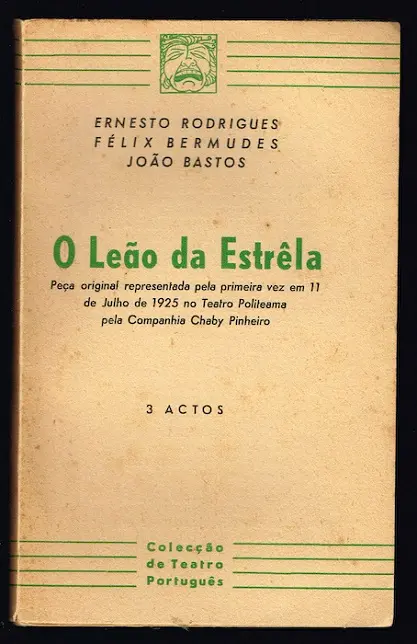
A definitive 7.7/10 rating for a film that redefined the boundaries of cult cinema. O Leão da Estrela remains a cornerstone of transgressive art.
Is O Leão da Estrela, a relic from Portugal's silent film era, truly worth seeking out in the modern age of cinema? The short answer is yes, but with significant caveats. This film is an essential watch for cinephiles, historians, and anyone fascinated by the genesis of national cinema, offering a unique window into Portuguese storytelling and performance traditions of the 1920s. However, it is decidedly not for those accustomed to contemporary pacing, intricate narrative complexity, or pristine visual fidelity, as its charm lies firmly in its historical context and the raw, earnest performances that define it.
Stepping into the world of O Leão da Estrela is akin to opening a dusty, cherished family album. It’s a film that speaks in broad strokes and exaggerated gestures, a common language of its time, yet manages to convey a deeply human story of pride, family, and social aspiration. For a film of its vintage, particularly one from a less internationally recognized film industry of the period, its ambition is palpable, attempting to capture the very essence of a specific culture and locale.
The film’s central conceit, that of a patriarch desperately trying to maintain appearances, is timeless, but its execution is very much a product of its era. This isn't a film designed for casual viewing; it demands an engaged audience willing to meet it on its own terms, to appreciate the nuances of silent acting and the often-minimalist set design that characterized early cinema. To dismiss it as merely 'old' would be to miss the vibrant, beating heart of its cultural significance.
This film works because of its compelling central performance by Chaby Pinheiro, whose larger-than-life portrayal anchors the narrative with genuine emotion and comedic timing. It fails because its pacing can be sluggish by modern standards, and some of the narrative resolutions feel overly simplistic, even for a silent film. You should watch it if you possess a keen interest in silent cinema, Portuguese cultural history, or the evolution of comedic storytelling.
Central to the film’s enduring appeal, and indeed its very title, is Chaby Pinheiro's portrayal of Manuel, 'The Lion of Estrela.' Pinheiro, a name synonymous with early Portuguese cinema and theatre, delivers a performance that is both robust and remarkably nuanced for the silent era. His Manuel is not just a caricature of boastful pride; he is a man driven by love for his family and a deep, if sometimes misguided, sense of duty to his community.
Pinheiro's physicality is astounding. Every gesture, from the booming laugh that shakes his entire frame to the subtle furrow of his brow when a plan goes awry, is meticulously crafted to convey emotion without the aid of dialogue. There's a particular scene where Manuel attempts to hide a broken vase behind his back while greeting his future in-laws, his face a contorted mask of forced composure and internal panic. It’s a masterclass in silent comedic timing, reminiscent of the great physical comedians of the global stage, yet distinctly Portuguese in its emotional resonance.
His performance elevates what could have been a simplistic narrative into something genuinely engaging. He imbues Manuel with a vulnerability that makes his desperate schemes not just funny, but also poignant. Pinheiro’s ability to switch from bluster to genuine anxiety in a blink is a testament to his stage training and an argument for his lasting legacy as a performer. He doesn't just act the part; he embodies the spirit of a neighborhood and an era.
The direction in O Leão da Estrela, while perhaps not as groundbreaking as some of its international contemporaries, demonstrates a clear understanding of silent film aesthetics and narrative construction. The use of intertitles is judicious, providing necessary exposition without overwhelming the visual flow. The director understands that in silent cinema, the camera is as much a narrator as the written word.
Cinematographically, the film relies on established techniques of the period: static wide shots to establish scenes, medium shots for character interaction, and occasional close-ups to emphasize emotional beats. While it lacks the avant-garde experimentation seen in films like The Fugitive Futurist, its strength lies in its clarity and directness. The framing often emphasizes the social dynamics, such as when Manuel’s family is clustered together, visually contrasting with the more rigid, formal arrangement of the aristocratic family.
One striking element is the portrayal of the Estrela neighborhood itself. Though often depicted through rudimentary sets, there’s an authentic sense of place conveyed, a bustling community spirit that serves as a vital backdrop to Manuel’s personal drama. The director effectively uses the confined spaces of Manuel's home to heighten the comedic chaos, making the domestic setting a character in itself.
The pacing of O Leão da Estrela is, by modern standards, deliberate. Early silent films often allowed scenes to unfold at a slower rhythm, giving audiences time to absorb the visual information and the actors' expressions. This can be a challenge for contemporary viewers accustomed to rapid-fire editing and constant narrative propulsion. There are moments where the comedic setups feel drawn out, almost laboriously so, waiting for the audience to catch up.
However, this slower pace also allows for a greater appreciation of the performances and the subtle tonal shifts. The film expertly juggles broad physical comedy with moments of genuine pathos. Manuel's pride might be a source of laughter, but his underlying fear of disappointing his family is treated with sincere empathy. This balance prevents the film from descending into mere slapstick, elevating it to a more thoughtful, albeit still lighthearted, social commentary.
Thematically, the film explores universal ideas of social class, family honor, and the struggle to maintain one's identity in the face of societal expectations. Manuel’s desire to present a perfect image for his daughter’s marriage speaks volumes about the pressures of upward mobility and the cultural emphasis on reputation. It’s a surprisingly poignant examination of how far one might go to protect their loved ones and their name, even if it means sacrificing a bit of personal dignity in the process.
Absolutely, O Leão da Estrela holds significant value for today's audience, especially those with an appetite for film history. It's not just a historical artifact; it's a vibrant piece of Portuguese cultural heritage. Its worth lies in its ability to transport you to a specific time and place, to witness early filmmaking techniques, and to appreciate the raw talent of performers like Chaby Pinheiro.
It's a foundational text for understanding Portuguese cinema and offers a unique perspective on universal themes through a distinct cultural lens. The film’s humor, while occasionally dated, often transcends language barriers through its reliance on physical comedy and relatable human predicaments. It works. But it’s flawed.
For those who appreciate the charm of silent films and are willing to engage with a different cinematic rhythm, this is a rewarding experience. It provides context, entertainment, and a glimpse into a world long past, offering insights into human nature that remain relevant.
O Leão da Estrela is more than just a film; it is a cultural artifact, a vibrant snapshot of a bygone era, and a testament to the universal power of storytelling. While its vintage demands a certain level of patience and appreciation for historical context, it richly rewards those willing to engage with it. Chaby Pinheiro's magnetic performance alone is worth the price of admission, offering a window into the soul of a proud nation and its people. It's a foundational text for anyone serious about understanding the evolution of cinema beyond Hollywood. Go in with an open mind, and you might just find yourself charmed by the roar of this forgotten lion. It’s a piece of history that deserves to be seen, discussed, and celebrated, not just for what it is, but for what it represents in the grand tapestry of world cinema.
IMDb 6.9
1932
Community
Log in to comment.