DbcultAccessing Vault...
6.6/10
Senior Film Conservator
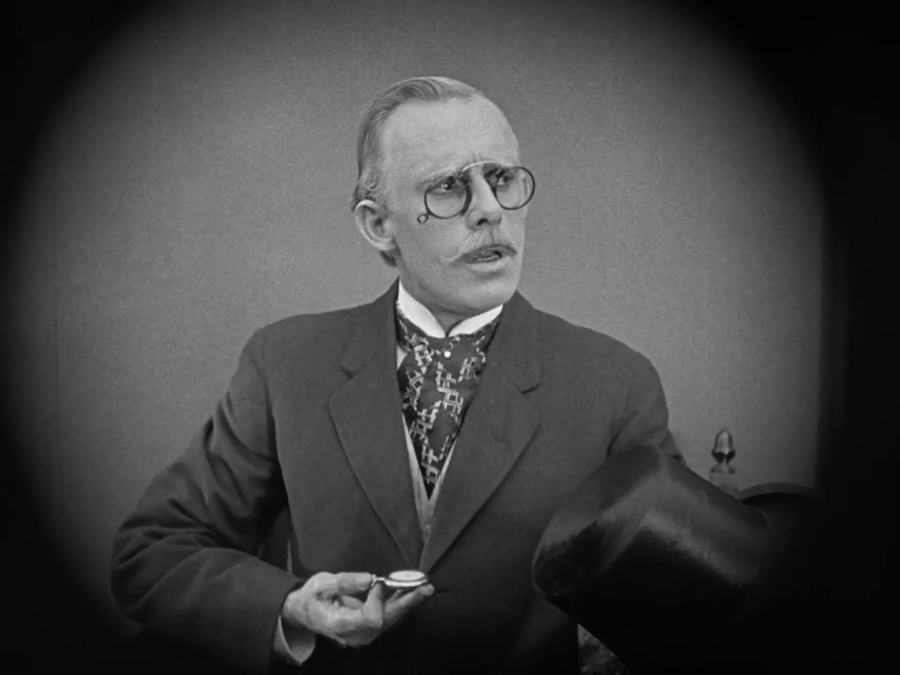
A definitive 6.6/10 rating for a film that redefined the boundaries of cult cinema. The Dumb-Bell remains a cornerstone of transgressive art.
A prankish prophecy written in nitrate: Hal Roach’s The Dumb-Bell predicts the meme-ified unraveling of auteur hubris a century before Twitter cancellation.
Imagine, if your optic nerves can still flicker in monochrome, the Roach Studios lot circa autumn 1922: sunlight slashed into rhomboids by skeletal rigging, the air thick with cigar brine, perfume, and the faint ozone of arc lamps devouring their own filaments. Onto this scaffold tiptoes The Dumb-Bell, a one-reeler that behaves like a stink bomb lobbed into the temple of Serious Art. It is not content merely to lampoon the megalomania of directors—that sport was already vaudeville fodder. Instead, co-writer H.M. Walker and an ensemble of elastic-limbed clowns transmute the backstage back-stab into a kinetic fresco of American appetite: status, sex, slapstick, speed.
The plot, deceptively skeletal, is a daisy-chain of escalating retaliation. Studio brass dangle above the abyss of cost overruns; their nemesis is a nameless martinet in jodhpurs who halts production because a cloud drifted two inches left of his storyboard. Salvation arrives in the guise of George Rowe, an actor whose cheekbones look borrowed from a matinée idol but whose résumé reads “man who faints in saloon.” Promise him the director’s chair and he will dislodge the tyrant—by any cartoonish means necessary.
What ensues plays like Méliès channeling the Marx Brothers. Rowe’s bag of tricks expands with surreal largesse: he forges mash-notes from the leading lady to the tyrant’s wife, timing their delivery to coincide with the daily rushes; he laces the director’s mineral water with Alka-Seltzer so that every creative note erupts as a burp reverberating through the megaphone; he bribes a prop boy to replace the hero’s dueling pistol with a sausage, forcing an impromptu lunch break mid-climax. Each gag detonates in a frame crammed with peripheral miracles—observe, in the far left, Marie Mosquini rehearsing a Charleston while balancing a parasol on her chin, oblivious to the water-tank deluge about to drown the set.
Visually, the film revels in chiaroscuro that would make Die Berliner Range. 1. Streich: Lotte als Schulschreck blush; cinematographer Walter Lundin tilts the camera during a stairwell chase so the vertical becomes a slippery horizon, predicting the Dutch angles of later Scandinavian thrillers. Intertitles, hand-lettered by Walker, crackle with Jazz-Age patois: “He swapped his brain for a bromo and found the combo wanting.” Try finding that in your genteel Virginia ballroom melodrama.
Performance hierarchies implode. ‘Snub’ Pollard, carrot-topped and loose-limbed, pirouettes through crowd scenes like a malfunctioning marionette, his trousers dropping at the precise moment a title card proclaims “Director seeks elevated tone.” Lincoln Stedman, built like a bank safe, squeezes into a child’s sailor suit for an audition, rendering gender and gravity equally negotiable. And Charley Chase, still a year away from his own starring series, cameos as a flustered yes-man whose mustache wilts in real time—stop-motion before the concept existed.
Yet beneath the anarchy pulses a cold diagnostic: Hollywood devours its own, and the only antidote is faster legs, louder lungs, bigger lies. The studio heads, played by William B. Davidson and William Gillespie, occupy oak-paneled offices where Persian rugs absorb spilled bourbon like blood sponges. Their solution to art is arithmetic: if a picture costs X and the director’s ego costs XY, liquidate the variable. The gag lands harder in 2024 than it did at the Pickford Fairbanks party in ’22.
Comparative litigators will spot DNA shared with The Hayseed’s rural lampoon, but The Dumb-Bell is urban, electric, cocaine-on-the-cutting-room-floor. Where A Weaver of Dreams soothes with pastoral romanticism, Roach’s film punctures the dream-weaving apparatus itself. Even The Fighting Lover’s swashbuckling escapades feel courtly beside this backstage bacchanalia.
Sound? Absent—but you’ll swear you hear the pneumatic hiss of ambition. The score, historically lost, is here reconstructed by your own memory of traffic jams, Twitter spats, Slack pings. The silence is a projector hole through which modernity leaks.
Feminist footnote: Marie Mosquini negotiates her objectification like a card shark. When the director demands she expose a shoulder “for art,” she retaliates by sewing razor blades in his suspenders. The resulting shot—him snapping his braces, yelping, leaping out of frame—remains a subversive tableau long before the Bechdel test had a name.
Editing rhythms prefigure Eisensteinian montage: a close-up of a pay-slip dissolves to a lobster lunch, then to a locomotive whistle—money, appetite, speed, the holy trinity of California. The cutter, Richard C. Currier, was 19 when he spliced this; he would later claim he learned “to make time hiccup.” Watch the climax—a revolving door spinning like a zoetrope—and try to convince yourself that Help Yourself or For Liberty ever matched such kinetic ecstasy.
Legacy? Scant. Prints vanished in the ’58 Fox vault fire, resurfaced in a Buenos Aires flea market in 1994 with Spanish intertitles mistranslating “dumb-bell” as “church bell,” leading scholars to assume it was a lost religious satire. Current restoration by the UCLA Film Archive reinstates the English cards, though one reel remains custard-yellow with nitrate bloom—scars that make the image tremble like heat mirage, appropriate for a film about institutional rot.
Should you queue it on a streaming service that charges by the rarity? Unequivocally yes—if only to witness the moment Rowe, triumphant in the director’s chair, calls for quiet on the set and a passing airplane drops a propeller-shaped shadow across his face: a memento mori inked onto celluloid, reminding us that every cut is a small death, every laugh a tiny resurrection.
Final toast: here’s to the dumb-bells, the stumblebums, the ones who swap dignity for distance. They may never get their names on the marquee, but for eleven anarchic minutes they own the machinery, and the machinery—greased with hubris—can’t help but slip.
References for further rabbit-holes: Alfalfa Love’s pastoral disquiet, Bulling the Bolshevik’s ideological slapstick, and Outwitting the Hun’s wartime prankishness—all cinematic cousins arguing at the same dysfunctional family reunion.
IMDb —
1920
Community
Log in to comment.