DbcultAccessing Vault...
Cult Review
Senior Film Conservator
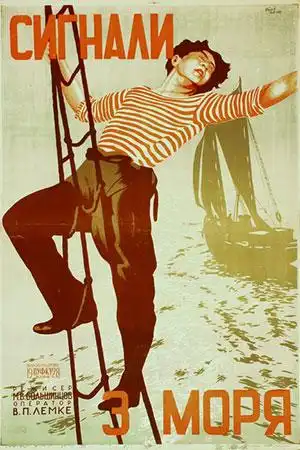
Alright, let’s talk about Odna noch, which means 'One Night' for those of us not fluent in Russian. Is this one for your watchlist today? 🤔 Well, it’s a tricky recommendation. If you’ve got a soft spot for the intense, early dramas, where every emotion is practically painted on the actors’ faces, then yes, you might really dig into this. But if you’re looking for snappy dialogue, a quick pace, or a story that holds your hand, honestly, you’re probably going to be a bit bored. It’s definitely a specific vibe.
The whole thing, as the title suggests, takes place over just one night. And boy, what a night. The film throws you right into a tense situation with a few characters, and it really just lets them stew. There’s a quiet desperation that hangs over everything, like a thick fog you can’t quite shake.
One of the first things that struck me was Konstantin Fyodorov’s performance. He’s got this way of just *looking* at the camera, or really, past it, that makes you feel the weight of whatever decision his character is facing. It’s not about big gestures all the time; sometimes it’s just the slow blink, the way his eyes dart. You feel his character’s inner turmoil, even when the external action is pretty minimal. 🤯
The setting itself felt very confined. Most of the action, or lack thereof, happens in what seems like a single, dimly lit room. Maybe a couple of hallways and a dark street scene. This really amps up the claustrophobia. You get the sense these people are trapped, not just by circumstance, but by the very walls around them.
There’s a scene where Fyodorov’s character is just pacing. Back and forth. For what felt like an eternity. And the camera just stays on him. No cuts, just this relentless, almost hypnotic movement. It’s a bold choice, and it really forces you to sit with his anxiety. *It’s not subtle*, but it works in a strange, compelling way.
Vladimir Shakhovskoy, too, brings a certain intensity, but it’s more coiled, more suppressed. He’s the counterpoint to Fyodorov’s visible anguish. You get the feeling he’s holding back a storm, and that tension between the two really drives a lot of the film’s energy. Their interactions, even without much dialogue (or any, if this is a silent film, which I suspect), speak volumes. You can almost feel the movie trying to convince you this moment matters.
The lighting in *Odna noch* is really something to note. Lots of deep shadows, with harsh light often catching just half a face. It’s super dramatic, almost theatrical. You see a lot of this in older films, sure, but here it feels particularly deliberate, almost a character in itself. Like the shadows are literally weighing on them.
I kept wondering about the motivations of Mikhail Arbenin’s character. He’s kind of lurking in the background for a while, then suddenly he’s making these crucial demands. His presence felt a bit like a sudden shift in tone, honestly, almost out of nowhere. It made me lean forward, though, like, "Okay, what’s *he* going to pull now?"
There’s this one shot of a clock on the wall. 🕰️ It just sits there, ticking (or implying a tick, if it’s silent). The camera lingers for a beat too long. It’s not just showing time passing; it’s screaming about *lost time*, or *running out of it*. A simple prop, but it carries a lot of weight.
The film does get noticeably better once it stops trying to build up to something vague and just lets the emotional fallout happen. The first third is a bit of a slow burn, establishing the mood. But once the pressure really starts to mount, around the halfway mark, that’s where it finds its stride. The performances become even more raw.
Gavriil Marinchak’s role felt a little understated, but his reactions often anchor the more explosive moments. He’s the one who often looks like he’s just trying to make sense of the chaos, which, honestly, felt relatable. Sometimes you just need someone to look confused and worried, you know?
The pacing is… well, it’s not for everyone. Some scenes go on about 20 seconds too long, and the silence starts to feel awkward rather than emotional. You just want someone to *do* something. Anything! But then, that’s probably the point, isn't it? That unbearable wait.
When the film reaches its… let's say, *conclusion*, it doesn’t offer easy answers. It just sort of *ends*. You’re left with the residue of those intense emotions, and a lot of questions. It’s not neat, not tidy. And maybe that’s the strength of it. It respects the idea that some nights don’t wrap up with a pretty bow.
Is it a forgotten masterpiece? Probably not. Is it an interesting artifact, a snapshot of a particular style of filmmaking that digs deep into human drama? Absolutely. If you’re a film student, or just someone who appreciates the raw power of early cinema, give it a shot. Otherwise, maybe grab something a bit more modern.

IMDb —
1936
Community
Log in to comment.