DbcultAccessing Vault...
Cult Review
Senior Film Conservator

Imagine, if you will, the gas-lamp glow of 1916 Manhattan flickering across the silver nitrate of Officer 666, a film that treats identity like a pocket-watch—whipped out, polished, and pawned in the space of a single reel. What we have here is not merely a mistaken-cop romp but a celluloid carnival where every social mask slips, revealing the hungry grin beneath.
The narrative pirouettes open on Travers Gladwin—youthful, monied, and weary of grand tours—returning stateside with his enigmatic valet Bateato, a figure who floats through scenes like incense, sowing mayhem with the faintest bow. Unbeknownst to Travers, the docks have also disgorged Al Wilson, a picture-thief whose tailored smile could slice bonds. Wilson brandishes duplicate keys to the Gladwin manse, filched from a disgruntled footman, and proceeds to become Travers in the eyes of Helen Burton, a romantic whose heart beats in watercolor hues.
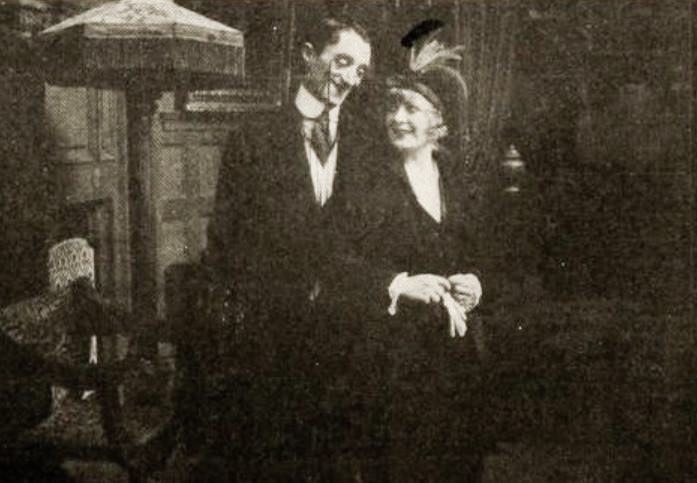
Cue Phelan, badge #666, a beat cop whose Irish bluster is matched only by his appetite for uniform starch. Once Bateato’s kimono flutters across the stoop, Phelan’s suspicion meter spikes; yet a few bows and broken-English pleasantries placate him—proof that xenophobia in 1916 could be soothed by theatrical politeness. Enter Whitney Barnes, Travers’ collegiate confidant, who barrels into the drawing room with the heedless momentum of a Yale fight song. Minutes later, the real Travers steps through his own portal, and the funhouse mirrors properly align: two men answering to the same name, one virtuous, one larcenous, both fated to swap destinies like playing cards.
The hinge of the tale is Helen’s plan to bolt at 10:30 with her Travers—except the man she believes to be her betrothed is busy upstairs slicing Rembrandts from their frames with the delicacy of a butcher. Our genuine millionaire, desperate to shield Helen from scandal, commandeers Phelan’s uniform, slaps on a dime-store mustache, and metamorphoses into the titular Officer 666. What follows is a domino-fall of entrances and exits: Sadie Small and her battle-axe aunt arrive wielding moral outrage like parasols; patrol wagons disgorge blue-coated reinforcements; Wilson chloroforms Phelan and steals the stolen uniform, escaping on the driver’s seat of an empty police wagon—a flourish so brazen it feels pirouetted straight from Méliès’ lunar fantasies.
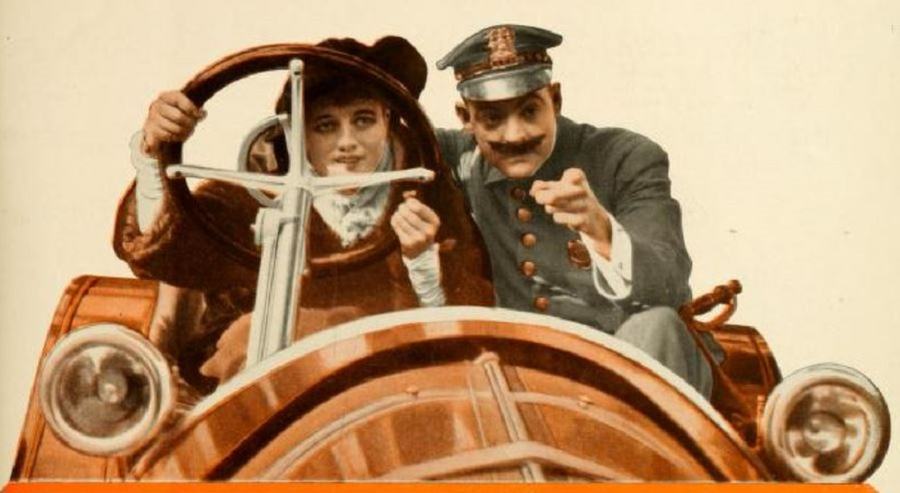
Sydney Seaward plays Travers with the lithe agility of a man who’s tangoed through European salons: every eyebrow lift calibrated, every handshake a contract. Opposite him, Harold Howard’s Wilson exudes serpentine charm—watch how he pockets a cravat pin as if bestowing a favor. The real scene-grabber, though, is Dan Moyles as Phelan; his rubber-legged indignation when he awakens inside a cedar chest is Pierre of the Plains meets Keystone Cops.
Della Connor’s Helen glimmers with the fragility of nitrate itself—her close-ups hold a tremor that anticipates the medium’s inevitable decay. Meanwhile, Makoto Inokuchi as Bateato sidesteps the era’s cringe-inducing caricature by injecting a sly wink; his bow at curtain-fall feels less subservient than conspiratorial, as though he alone recognizes the absurdity of the entire colonial pantomime.
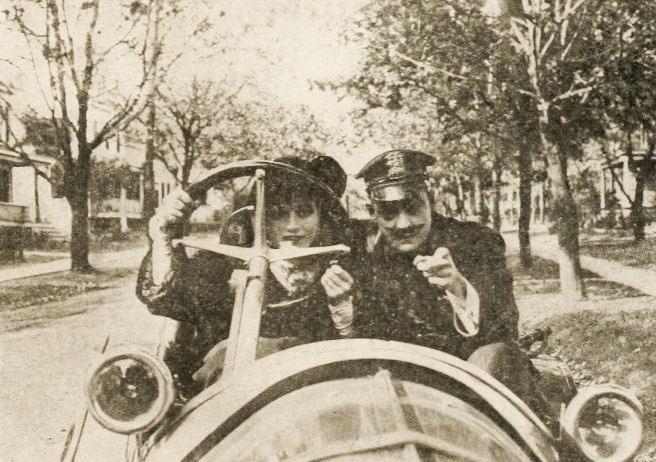
Director Augustin MacHugh—working for the long-defunct Apollo Pictures—relishes chiaroscuro like a noir poet before the genre existed. Note the sequence where Wilson slices canvases: the blade glints ochre against obsidian backgrounds, each severed frame dropping like a guillotined sunset. Intertitles arrive sparingly, often superimposed over bustling street scenes, so text and traffic merge—urban signage becomes dialogue.
Compare this to the pastoral escapism of 'Neath Austral Skies or the moral fatalism of På livets ödesvägar: Officer 666 is urban, electric, caffeinated. Its camera rarely pans, yet sets feel cavernous thanks to layered staging—servants skulk foreground while lovers quarrel mid-ground and police burst background, a triptych of tension.
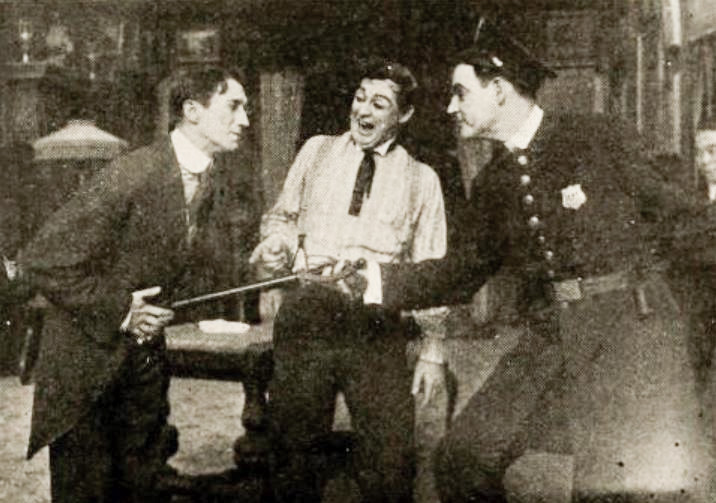
Contemporary exhibitors would have commissioned anything from brassy ragtime to Haydn minuets. Modern archival screenings favor frenetic piano—think Alkan on amphetamines—but I project a different score: muted trumpets quoting Gershwin’s future Rhapsody in Blue during Wilson’s escape, a winking anachronism that underscores how this film pre-figures the Jazz Age’s cynicism.
Helen’s planned elopement is no mere narrative spark; it’s a middle-finger to patriarchal real estate. Her aunt, brandishing umbrella like scepter, embodies dowager terror, yet the script denies her the last word—scandal evaporates once love is re-routed to the authentic millionaire. Class mobility here is a revolving door: Wilson ascends from deck-hand to faux-patrician on charisma alone, while Travers willingly descends into beat-cop drudgery, savoring anonymity like absinthe.
Modern eyes will flinch at Bateato’s pidgin dialogue cards—yet within the era’s constraints, Inokuchi weaponizes physical comedy to undercut Orientalist clichés. His final tug that exposes Helen from the closet is less villainous reveille than communal catharsis, a reminder that minorities in early cinema survived by seizing the gag, redirecting the joke toward the oppressor’s panic.
Stack it beside One Wonderful Night—another pre-Jazz identity swap—and you’ll notice Officer 666 trades that film’s Versailles opulence for chrome-edged modernity. It lacks the apocalyptic fervor of Dante’s Inferno or the proto-feminist rage of Strejken, yet its velocity makes Hands Across the Sea feel like tea at Windsor.
Sadly, no complete 35 mm print is known to survive; the Library of Congress holds a 9.5 mm Pathescope condensation (12 minutes) seized from a defunct Montana collector. Yet even this fragment—scored with ghosted French intertitles—crackles with the film’s anarchic spirit. A 4K reconstitution, grafting stills and continuity scripts, could resurrect the missing rooftop chase, the chloroform haze, the final handshake between Travers and Phelan—cinema’s earliest buddy-cop covenant.
Officer 666 is more than a curio; it is the Rosetta Stone of American screwball logic, predating the Sturges fireworks by two decades. It whispers that identity is costume, love a gambit, authority a paper badge soaked in chloroform. In an age when our avatars proliferate faster than shadows, this 1916 time-capsule feels downright prophetic. Seek the fragments, project them against a brick wall at midnight, and watch the past grin back—mustache askew, revolver gleaming, uniform borrowed, soul unmistakably modern.
IMDb 5.4
1936
Community
Log in to comment.