DbcultAccessing Vault...
4.8/10
Senior Film Conservator
A definitive 4.8/10 rating for a film that redefined the boundaries of cult cinema. Official Opening of McTaggart Esplanade remains a cornerstone of transgressive art.
Is "Official Opening of McTaggart Esplanade" worth your time in an era saturated with high-definition narratives and complex storytelling? Short answer: yes, but with significant caveats. This isn't a film designed for broad entertainment, but rather a compelling artifact for specific audiences.
This historical footage is an absolute must-see for historians, archivists, New Zealand studies scholars, and anyone deeply invested in the visual anthropology of early 20th-century community life. However, it is decidedly not for those seeking a traditional cinematic experience, narrative arcs, or character development. Expect a raw, unedited window into the past, not a polished documentary.
Early in its existence, cinema served many masters, and often, its primary role was simply to record. "Official Opening of McTaggart Esplanade" is a prime example of this foundational purpose, stripping away the artifice of later filmmaking to deliver pure, observational documentation. There's a certain purity in this approach, a stark authenticity that modern, highly produced content often lacks.
This film works because it offers an unfiltered, direct connection to history, preserving a local event that would otherwise be lost to time. It acts as a primary source, allowing viewers to interpret the body language, fashion, and social norms of a bygone era. The sheer rawness is its strength.
This film fails because its lack of narrative structure and modern production values makes it inaccessible to a general audience. Without contextualization, the footage can feel slow, uneventful, and visually challenging due to its age and technical limitations. It demands patience and a specific intellectual curiosity.
You should watch it if you possess a deep appreciation for historical documents, early cinema, or New Zealand's regional heritage. It's a valuable educational tool and a fascinating subject for academic study, offering a unique opportunity to witness a community's past through the lens of its own time.
To review "Official Opening of McTaggart Esplanade" as one would a contemporary feature film would be a disservice, akin to judging a historical photograph solely on its aesthetic composition without considering its documentary value. This is not a work of deliberate artistic expression in the modern sense, but rather a raw, unmediated capture of reality, making its 'direction' and 'cinematography' functions of necessity rather than choice.
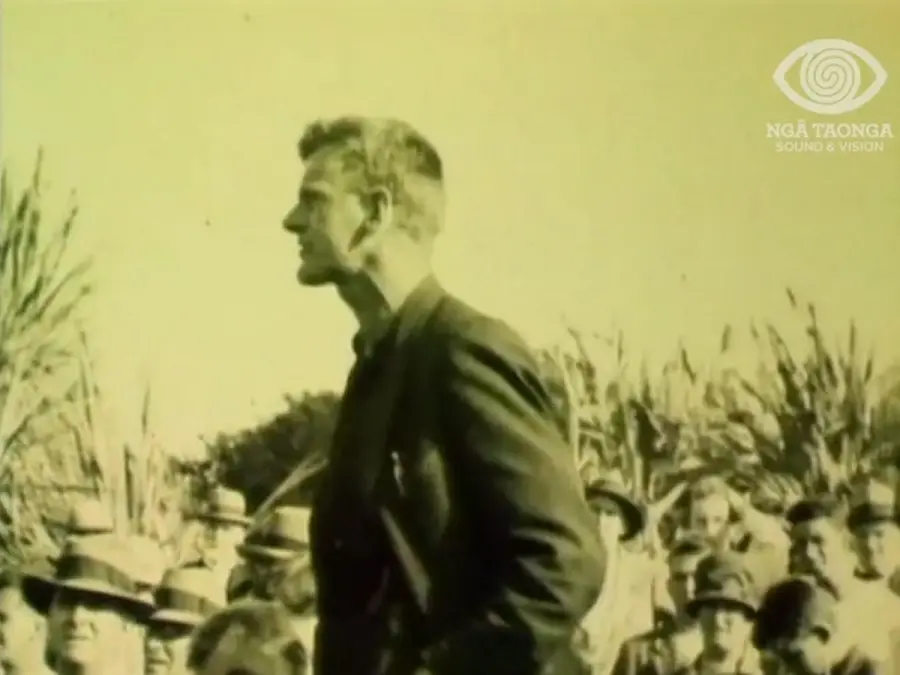
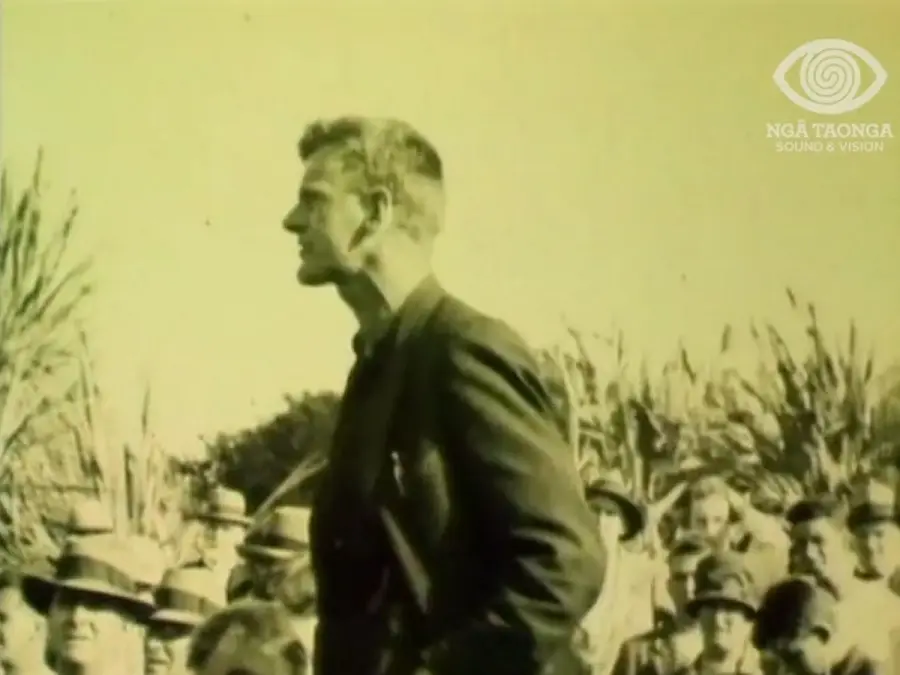
The individual behind the camera, likely an anonymous local or itinerant filmmaker, functioned more as an archivist than an auteur. Their 'direction' was dictated by the event itself: positioning the camera to capture the arrival of dignitaries, the unveiling, or the assembled crowd. There’s a utilitarian quality to the framing, focusing on the central action without much artistic flourish. For instance, the camera often remains static, capturing wide shots that encompass the entire scene, giving a sense of the scale of the gathering against the vastness of Rapahoe Beach.
This lack of sophisticated camera movement or dynamic editing, while perhaps dull to contemporary eyes, offers its own form of integrity. It feels honest. There’s no manipulation, no attempt to heighten drama. It simply presents what was there. This stark honesty is a refreshing counterpoint to the hyper-stylized narratives we often encounter today, where every shot is meticulously planned to elicit a specific emotional response.
"The true art of this footage lies not in its intentional design, but in its accidental preservation of human behavior and environmental context."
The cinematography, if we can call it that, is rudimentary. The quality of the film stock, the limitations of early cameras, and the prevailing weather conditions on the West Coast all contribute to a visual texture that is distinctively antique. Grainy, often slightly out of focus, and with a narrow dynamic range, the images are a far cry from the crisp clarity of modern digital capture. Yet, these very imperfections are what lend the footage its profound historical weight.
The choice of location, Rapahoe Beach, is itself a character. The rugged coastline, the expanse of sand, and the implied sound of the Tasman Sea crashing nearby provide a powerful, untamed backdrop to the civic formality unfolding. One can almost feel the coastal wind whipping through the attendees' attire. This environmental context is perhaps the most deliberate and effective element of the 'cinematography,' grounding the human event in a specific, wild corner of the world.
Compare this raw capture to the more polished, yet still early, efforts seen in films like The Merchant of Venice (1914) or The Wild Olive (1915), where narrative and performance were already taking precedence. "McTaggart Esplanade" reminds us of cinema's humble beginnings as a simple recording device.
The pacing of "Official Opening of McTaggart Esplanade" is, by modern standards, glacially slow. Events unfold in real-time, without the benefit of rapid cuts or narrative compression. This deliberate, unhurried rhythm allows the viewer to absorb the details of the scene: the way people stand, their interactions, the period clothing, and the general atmosphere of the occasion. It's an exercise in patience, rewarding those who are willing to slow down and observe.
The tone is one of earnest, respectful documentation. There's no evident editorializing or sensationalism. It's celebratory in its subject matter, but the film itself maintains a neutral, observational stance. This creates a sense of authenticity, as if we are truly peering through a window rather than watching a constructed narrative. The lack of sound, common for films of this era, further emphasizes this observational quality, forcing the viewer to project their own understanding onto the silent gestures and expressions.
While there are no 'actors' in the traditional sense, the individuals captured on film – the local dignitaries, community leaders, and everyday citizens – are, in effect, performing their roles in a public ceremony. Their 'acting' is entirely naturalistic, an unselfconscious display of civic duty and community pride. One can observe the formal postures of the speakers, the polite applause of the crowd, and the curious gazes directed towards the camera. There’s a genuine human element here, a collective performance of belonging.
This contrasts sharply with the deliberate, often exaggerated, performances seen in early narrative films like The Smilin' Kid (1920) or The Silent Lie (1917). Here, the 'performers' are simply being themselves, or at least, their public selves, caught in the act of participating in a significant local event. This provides an invaluable sociological insight, offering clues about social hierarchies and public decorum of the time.
The real value of "Official Opening of McTaggart Esplanade" extends far beyond its technical merits. It is a vital piece of New Zealand's cinematic and social history. Such local footage, often overlooked in favor of grander narratives, paints a picture of everyday life and regional development that no textbook alone can convey.
It serves as a tangible link to a time when communities were more isolated, and local events held immense significance. The construction and opening of an esplanade would have been a major infrastructural achievement, symbolizing progress and connection. To see the faces of those who witnessed and celebrated this moment offers a powerful connection to the past.
One unconventional observation is how this film, despite its simplicity, evokes a profound sense of place. The wild, untamed beauty of the West Coast is ever-present, reminding us that even civic ceremonies are dwarfed by the power of nature. This interplay between human endeavor and the natural world is subtly, yet powerfully, conveyed.
"Official Opening of McTaggart Esplanade" is not a film in the way most people understand the term today. It is a historical document, a window, a snapshot. Its value is immense, not for its artistic flourishes or dramatic tension, but for its sheer existence. It works. But it’s flawed.
For those willing to engage with it on its own terms – as a direct, unmediated connection to a specific moment in New Zealand's past – it offers a profound experience. It reminds us of cinema's earliest power: to simply record. While it won't win over audiences accustomed to the intricate plots of 3 Keys or the emotional depth of Sonho de Valsa, its quiet power lies in its unvarnished truth.
Ultimately, this footage is a testament to the enduring importance of local history and the accidental magic of early filmmaking. It's a film that demands you bring your own context and curiosity, and in return, it offers an irreplaceable glimpse into a world long gone. It is highly recommended for its historical significance, but approach it with the right expectations – this is less a movie, and more a precious fragment of time itself. It's a quiet triumph of preservation, not narrative.
Community
Log in to comment.