DbcultAccessing Vault...
Cult Review
Senior Film Conservator
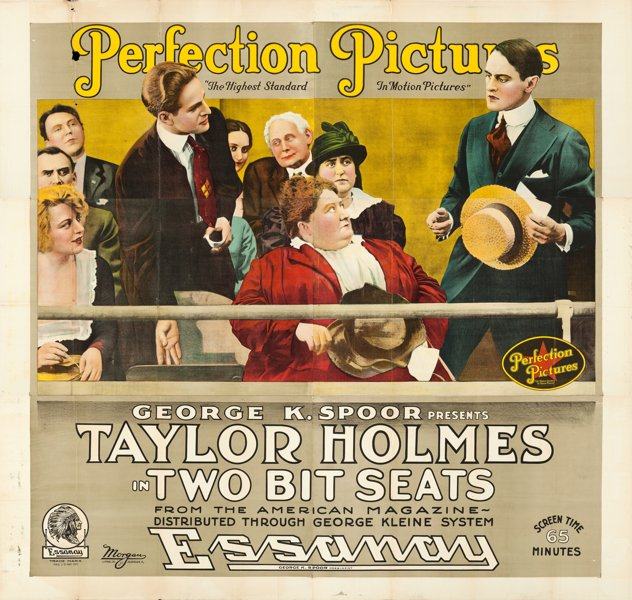
In the pantheon of early silent cinema, few films capture the rhythmic anxieties of the pre-war American middle class with as much sincerity and wit as Two-Bit Seats. Released in 1917, a year defined by global upheaval, this Essanay production turns its lens inward, focusing on the micro-economies of the heart and the crushing weight of social perception.
The film opens with a premise that feels strikingly contemporary: the struggle to maintain appearances in the face of rising costs. Jimmy Mason, played with a frantic, endearing energy by Taylor Holmes, is the quintessential 'everyman' of the 1910s. He is a man who wants the best life has to offer but is constrained by the reality of his paycheck. The 'Two-Bit' seat—the twenty-five-cent gallery ticket—is presented not merely as a physical location in a theater, but as a psychological state of being. To sit in the gallery is to admit a certain level of economic defeat, yet it is precisely in this space of 'defeat' that Jimmy finds his greatest victory.
The contrast between the orchestra and the gallery is a recurring visual motif. While films like The Chorus Lady often focused on the glamor of the stage itself, Two-Bit Seats focuses on the audience. The gallery is crowded, chaotic, and vibrant. It is the place where the real people live, far removed from the stiff, performative elegance of the orchestra boxes. It is here that Jimmy meets Alice, portrayed by the luminous Marguerite Clayton. Their meeting, facilitated by a stray hatpin, is a masterclass in silent comedy timing. It grounds their romance in a physical reality that is often missing from the more ethereal romances of the period, such as those found in Graustark.
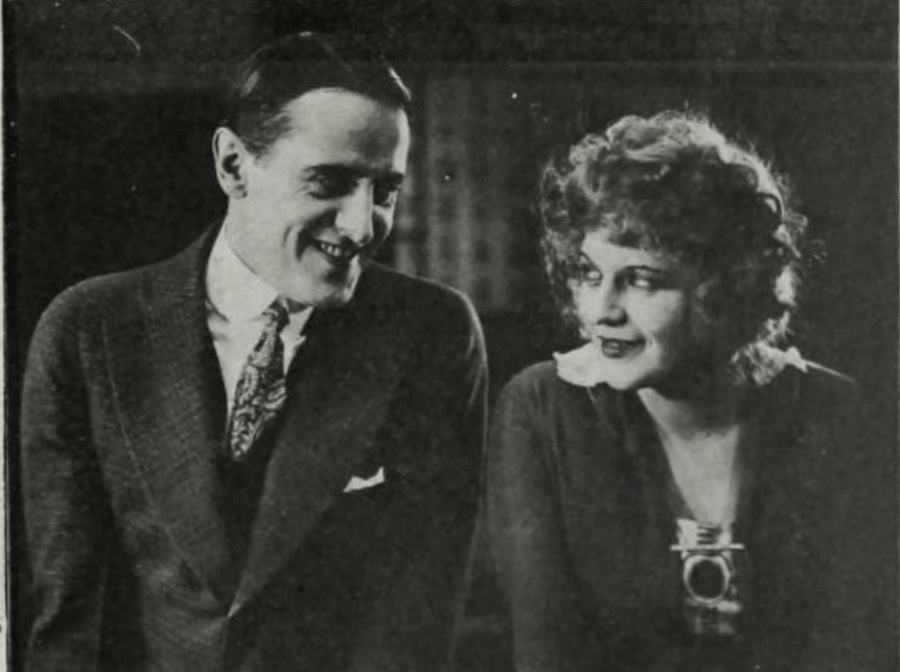
One of the most compelling aspects of the screenplay by Gladys Johnson and James Campbell is the character of Faulkner, Jimmy's boss. In the rigid hierarchy of 1917 corporate culture, the boss was more than an employer; he was a moral arbiter. Jimmy’s paralyzing fear that Faulkner will see him in the 'cheap seats' speaks volumes about the era's conflation of wealth and character. We see a similar exploration of moral standing in The Conscience of John David, though here it is played for both tension and eventual irony.
Jimmy’s internal monologue—conveyed through expressive title cards and Holmes’ elastic facial expressions—reveals a man caught between two worlds. He wants to impress Alice with the luxury of an orchestra box, yet Alice, in a subversion of the 'gold-digger' trope prevalent in films like Young Romance, flatly refuses. Her insistence on the gallery is the film’s central mystery. Is she merely frugal, or is there a deeper philosophy at play? The tension builds as they continue to frequent the gallery, with Jimmy constantly looking over his shoulder, a man terrified of being caught in the act of saving money.
Directorially, Two-Bit Seats utilizes the limitations of its setting to create a sense of profound intimacy. The gallery is dark, the frames are tight, and the focus remains squarely on the interaction between Holmes and Clayton. Unlike the sweeping historical epics like Potop or the dramatic intensity of The Pillory, this film finds its power in the small gestures: the way Alice leans in, the way Jimmy nervously adjusts his tie, the shared glances that ignore the spectacle on the stage below. The film argues that the 'show' is not what’s on the stage, but what’s happening in the seat next to you.
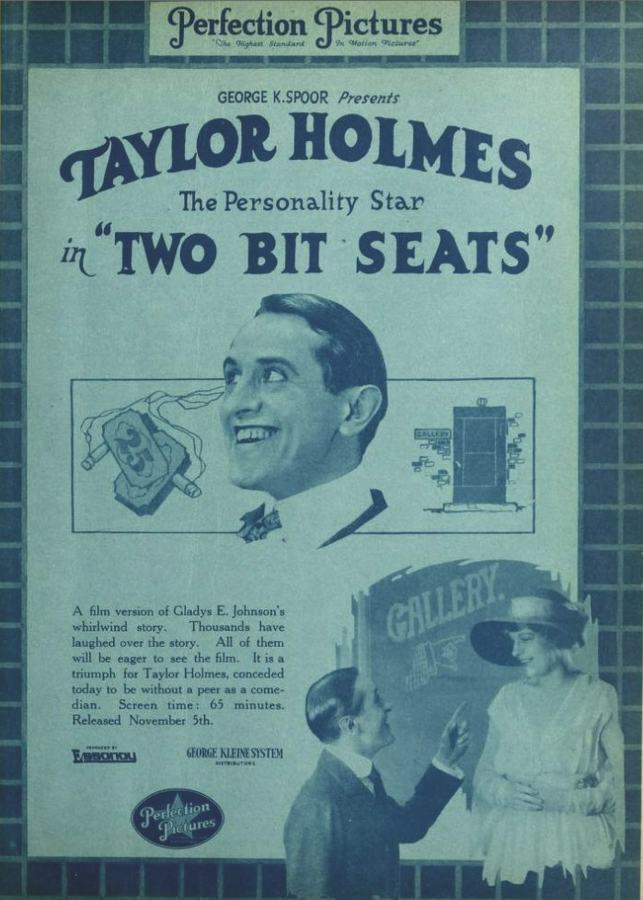
The cinematography captures the soot and soul of the city. There is a grit here that contrasts sharply with the polished artifice of Her Sister's Rival. The use of shadows in the theater gallery creates a sanctuary for the two protagonists, a place where they can be themselves away from the prying eyes of the 'orchestra' society—until the inevitable moment of exposure.
When the 'blow falls' and Faulkner finally spots Jimmy exiting the gallery, the audience expects a tragedy of social demotion. We have been conditioned by films like The Dormant Power to expect the worst when a secret is revealed. However, Two-Bit Seats takes a refreshing turn. Faulkner’s reaction—approving of Jimmy’s thrift—is a fascinating window into the American Protestant work ethic of the time. In Faulkner’s eyes, a man who saves money on theater seats is a man who can be trusted with the company’s capital. It is a moment of profound validation that reframes the entire narrative from a story of shame to a story of strategic prudence.
This leads to the final revelation: Alice’s 'definite idea.' The twist is both charming and structurally sound. Alice wasn’t just being cheap; she was testing Jimmy’s character and ensuring that their future was built on a foundation of financial wisdom rather than fleeting vanity. It’s a thematic cousin to the social critiques found in Nobleza gaucha, albeit in a much more lighthearted, urban American context.
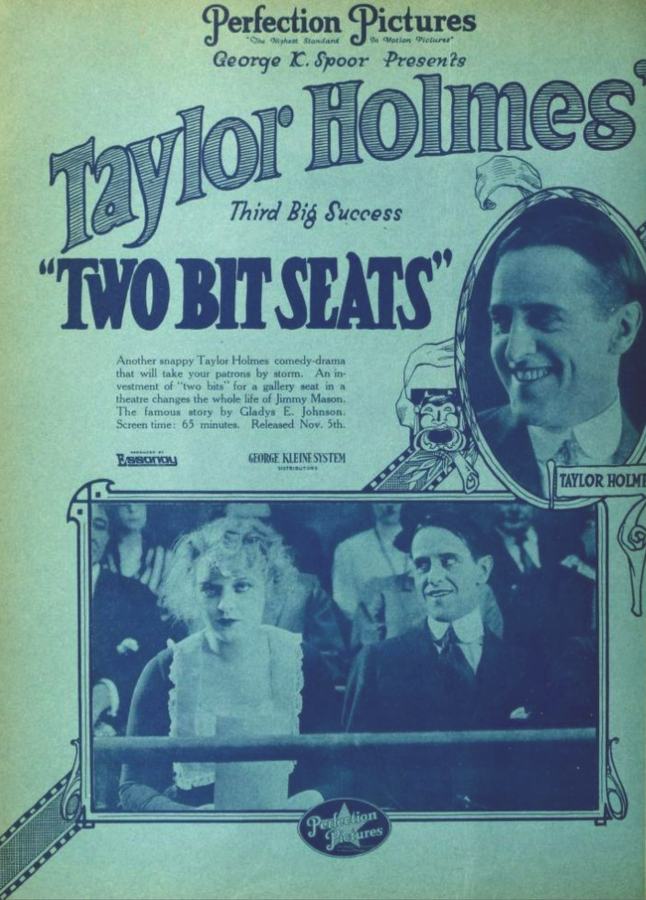
As we look back at Two-Bit Seats from over a century later, its relevance is startling. In an age of digital streaming and the decline of the traditional movie palace, the 'Two-Bit' seat represents a lost era of communal experience. Yet, the core conflict—the struggle to balance personal desire with social expectation—remains universal. The film stands as a testament to the talent of the Essanay players, particularly Taylor Holmes, whose career would span decades, and Marguerite Clayton, who remains one of the most underrated stars of the silent screen.
While it may lack the technical bombast of The Crimson Wing or the historical scope of The House of Temperley, Two-Bit Seats succeeds because it is fundamentally human. It doesn't try to change the world; it tries to change the way we look at a twenty-five-cent coin. It reminds us that sometimes, the best view isn't from the front row, but from the very back, where you can see the whole world—and maybe, if you're lucky, the person sitting right next to you.
Further reading on the era's social dynamics can be found in our reviews of Her Own People and the controversial Race Suicide. For a different take on 1915-1917 entertainment, see our coverage of the 1915 World's Championship Series or the Hungarian classic A peleskei nótárius.
IMDb —
1919
Community
Log in to comment.