DbcultAccessing Vault...
5/10
Senior Film Conservator
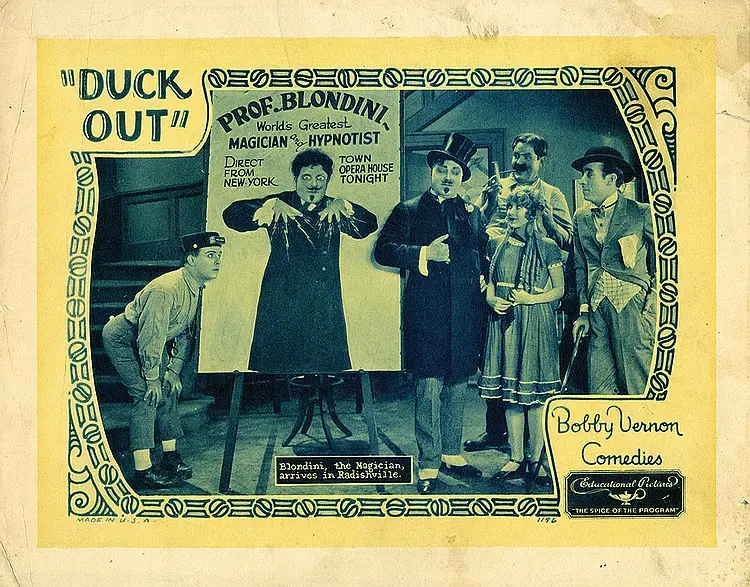
A definitive 5/10 rating for a film that redefined the boundaries of cult cinema. Duck Out remains a cornerstone of transgressive art.
Is Duck Out the hidden gem of 1927 silent comedy? Short answer: Yes, but only if you appreciate the specific, mechanical rhythm of vaudeville-style slapstick. This film is a tight, energetic burst of physical humor for fans of the Christie Comedies era; it is not for those who require high-concept narratives or the emotional gravity found in contemporary dramas like J'accuse!.
This film works because the internal logic of the magic show is consistently subverted by a character who is fundamentally at odds with the physical world. This film fails because the secondary characters, particularly the magician’s assistants, are given very little to do other than look exasperated. You should watch it if you want to see a masterclass in how to use a single stage set to generate a dozen distinct, escalating visual gags.
The premise of Duck Out is deceptively simple, but its execution relies on the kind of timing that modern CGI-heavy comedies often forget. Bobby Vernon plays the 'Volunteer,' a role that requires him to be both the victim and the catalyst of chaos. When he steps onto Blondini’s stage, he isn't just a participant; he is a wrecking ball in a suit. The first major sequence involving the stage curtain is a perfect example of this. Vernon doesn't just trip; he becomes entangled in the very fabric of the theater, turning a simple piece of scenery into a predatory entity. It is a tactile, heavy brand of humor that feels grounded in a way modern digital slapstick never could.
William Irving, playing Blondini, provides the necessary 'straight man' energy to anchor the madness. His mounting frustration is the engine that drives the film's second act. Every time a duck emerges from the wrong trapdoor or a prop fails to materialize, Irving’s facial expressions—a mix of professional pride and existential dread—sell the stakes. Without his grounded performance, Vernon’s antics might feel untethered. Instead, we get a delightful friction between the magician's desire for order and the volunteer's innate ability to create entropy.
While names like Keaton and Lloyd dominate the conversation around silent comedy, Duck Out reminds us that Bobby Vernon was a formidable talent in his own right. His physicality is less about the grand, life-threatening stunts of The Law of the North and more about the micro-clumsiness of the everyday man. In the scene where he is confronted with the 'sawing a woman in half' illusion, his reaction is priceless. He doesn't play it for a wink to the camera; he plays it as if he is witnessing a literal homicide. This commitment to the character’s reality is what makes the comedy land.
The film’s pacing, directed with a brisk hand, ensures that no gag overstays its welcome. Unlike some longer features of the era, such as Rose of the Tenements, Duck Out understands that brevity is the soul of wit. The ducks themselves—often a difficult 'prop' to manage—are used with surprising precision. Their unexpected appearances through various trapdoors create a rhythmic, almost musical quality to the film's middle section. It is a testament to the writing of Sig Herzig that such a thin premise can sustain fifteen minutes of escalating laughter.
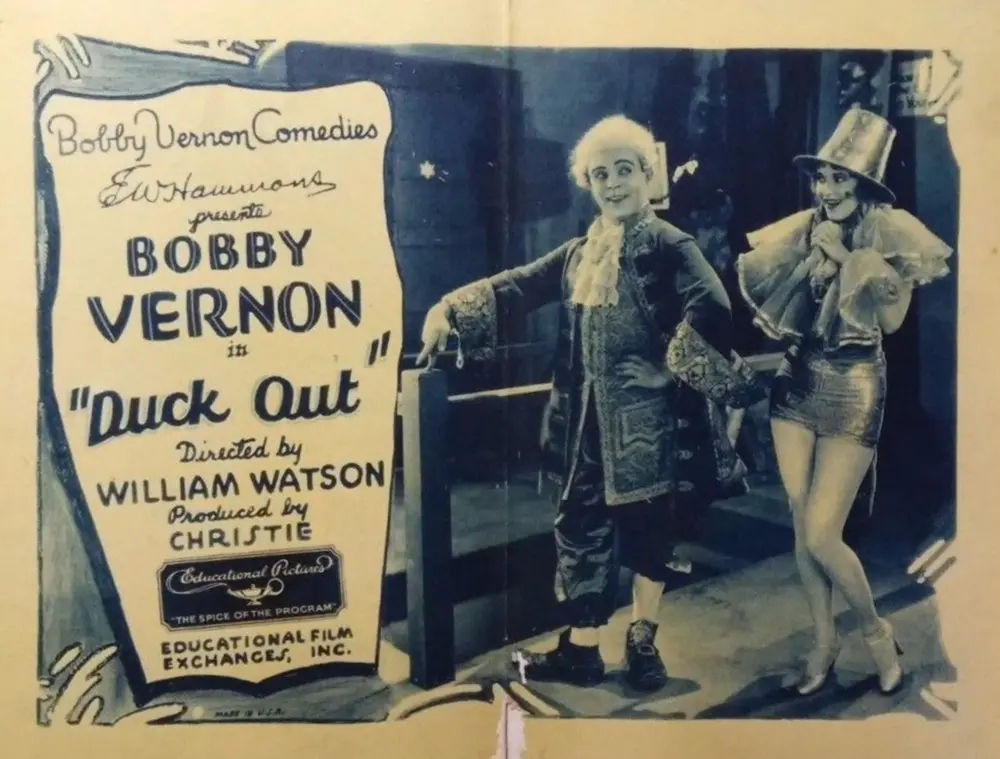
Duck Out is absolutely worth watching for anyone interested in the evolution of the 'audience plant' trope. It serves as a historical document of how 1920s audiences viewed the art of stage magic—partly with awe, and partly with a cynical desire to see the whole thing fall apart. It is a short, sharp shock of comedy that remains surprisingly effective nearly a century later. It is a film that values the 'how' of a joke more than the 'why,' making it a refreshing palate cleanser between more serious cinematic endeavors.
Technically, the film is more sophisticated than it first appears. The coordination required for the trapdoor sequences suggests a high level of rehearsal. In one specific moment, Vernon has to time a fall exactly as a duck is launched from a hidden compartment. If the timing is off by a second, the gag is ruined. This level of mechanical precision is what separates the Christie Comedies from cheaper, more improvised shorts of the period. It has the same 'clockwork' feel as some of the better sequences in Her Sturdy Oak.
The cinematography by the uncredited cameraman is functional but effective. It stays wide enough to capture the full scope of the stage, allowing the audience to see the 'magic' and the 'failure' simultaneously. This dual perspective is crucial. We need to see what Blondini wants us to see, and what Vernon is actually doing. By keeping the camera static during the most complex gags, the film allows the physical performance to take center stage without the distraction of rapid editing. It is honest filmmaking.
There is a streak of dark humor in Duck Out that feels modern. The sawing-in-half sequence, while played for laughs, taps into a primal fear of bodily harm. Vernon’s intervention—attempting to 'save' the woman—is both heroic and incredibly stupid. This blend of misguided chivalry and total incompetence makes his character more than just a caricature. He is a man trying to do the right thing in a world he doesn't understand. This same theme of the 'lost man' can be seen in a much more dramatic light in Die suchende Seele, though Duck Out obviously keeps things light.
Pros:
The chemistry between Bobby Vernon and William Irving is electric. The film moves at a breakneck pace that prevents boredom. The use of live animals adds an element of unpredictable energy that enhances the comedy. It is a perfect example of the Christie Comedy house style: clean, professional, and genuinely funny.
Cons:
The female lead, Frances Lee, is unfortunately relegated to being a mere prop in the magic tricks. The film relies on a few 'tripping' gags that feel a bit dated compared to the more inventive trapdoor work. The musical scores used in modern restorations can sometimes be hit-or-miss, affecting the comedic timing.
Duck Out is a loud, proud, and feathered success. It works. But it’s flawed in its simplicity. While it doesn't aim for the high-art status of Alraune or the complexity of Shuchû nikki, it succeeds perfectly at what it sets out to do: make the audience laugh at a man failing to navigate a stage. Bobby Vernon’s performance is a masterclass in reactionary acting, and the film serves as a potent reminder that sometimes, all you need for a good movie is a magician, a fool, and a box full of ducks. It is a minor classic that deserves a spot in any silent comedy marathon, sitting comfortably alongside other lighthearted fare like Cupid à la Carte.

IMDb 3.8
1933
Community
Log in to comment.