DbcultAccessing Vault...
Cult Review
Senior Film Conservator
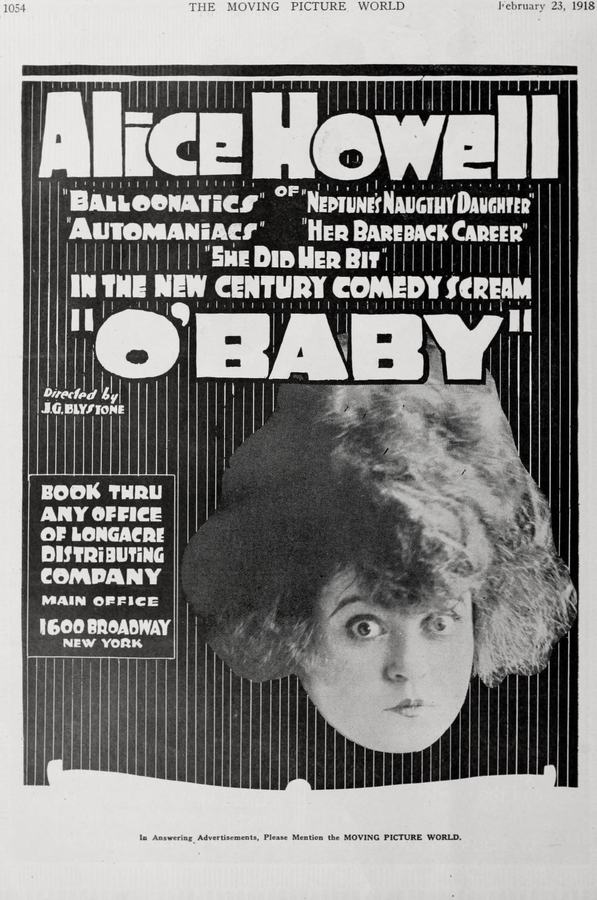
In the shimmering, often chaotic tapestry of early silent cinema, certain figures emerge with an incandescent glow, their comedic genius cutting through the sepia tones of history. Alice Howell is undeniably one such luminary, and her performance in the 1917 short, Oh, Baby!, stands as a testament to her unique, anarchic spirit. Far from being a mere relic, this film is a vibrant, kinetic explosion of physical comedy, a masterclass in the art of the quick-change and the subversive chuckle. It’s a delightful reminder that laughter, in its purest, most unadulterated form, transcends the spoken word, finding its voice in exaggerated gestures, contorted expressions, and the sheer audacity of character.
To speak of Oh, Baby! without first extolling the virtues of Alice Howell would be a critical oversight of monumental proportions. Howell, often overshadowed by her male contemporaries, possessed a distinctive brand of humor – a blend of wide-eyed innocence and mischievous cunning, delivered with an almost balletic physicality. She wasn’t merely performing gags; she was embodying a comedic philosophy, one that challenged societal norms with a wink and a pratfall. Her Minnie Grabit is not just a character; she’s a force of nature, a woman for whom the rules of polite society are mere suggestions, easily discarded or twisted to her advantage. This audacious approach to characterization is what elevates Oh, Baby! beyond a simple series of comedic incidents into a fascinating study of identity and subversion.
Minnie Grabit’s journey begins with her release from prison, a moment that, for most, would signify a fresh start, a return to legitimate life. For Minnie, however, it’s merely a costume change. Her first act of freedom is to shed the stigma of incarceration and adopt the guise of a Salvation Army girl. This initial transformation is brilliant in its simplicity and its cynical humor. The uniform, typically associated with piety and charity, becomes a tool for opportunistic panhandling. Howell’s portrayal here is sublime; she doesn't play Minnie as overtly villainous, but rather as a pragmatist with a skewed moral compass, utterly devoid of self-reproach. The casualness with which she exploits public sentiment for a few loose coins is both shocking and hilariously relatable, tapping into a universal skepticism about outward appearances.
The narrative of Oh, Baby! is essentially a showcase for Howell’s versatility in inhabiting a rapid succession of disparate roles. From the pseudo-saintly Salvation Army lass, Minnie swiftly transitions into the crisp, starched uniform of a nurse. This particular transformation offers a fertile ground for humor, as the inherent trust placed in medical professionals is gleefully undermined by Minnie’s antics. One can almost picture the chaos she wreaks in a hospital setting, her ineptitude or perhaps her deliberate mischief creating a delightful pandemonium. It’s a classic comedic trope – the fish out of water, or more accurately, the wolf in sheep's clothing, but Howell's unique brand of physical comedy ensures it feels fresh and exhilarating.
Her final metamorphosis, that of a servant girl, grounds Minnie in a more domestic, perhaps even subservient, role. Yet, even within the confines of a household, Minnie's irrepressible spirit cannot be contained. The humor here likely stems from the disruption of household order, the clash between Minnie's unconventional methods and the expected decorum of a domestic employee. This progression of roles – from public charity worker to caregiver to domestic laborer – subtly comments on the limited societal avenues available to women of the era, while simultaneously showcasing Minnie's refusal to be confined by any of them. Each disguise is not just a plot device but a canvas upon which Howell paints another layer of Minnie's audacious, shape-shifting personality. It reminds one of the playful subversion of expectation seen in films like Set Free, where characters often break from prescribed roles, albeit usually with more dramatic intent.
The core comedic engine of Oh, Baby! is its reliance on the 'knockabout sort' of incidents. This term perfectly encapsulates the boisterous, often violent, yet ultimately harmless physical comedy that defined the silent era. It’s a world where gravity is an enemy, inanimate objects conspire against their users, and every interaction has the potential to devolve into a chaotic chase or a spectacular tumble. James Finlayson, a master of the double-take and the slow burn, alongside Eddie Barry, William Irving, Neal Burns, Russ Powell, Bert Roach, and Eva Novak, form a robust ensemble that provides the perfect foil to Howell’s whirlwind of activity. Finlayson, in particular, with his expressive face and exasperated demeanor, is a joy to behold, a living embodiment of the victim of slapstick, enduring Minnie's antics with a wonderfully understated agony that only heightens the humor.
The beauty of knockabout comedy lies in its universality. It transcends language barriers and cultural nuances, appealing directly to our primal understanding of cause and effect, of pain and surprise. The incidents in Oh, Baby! are constructed with a meticulous understanding of comedic timing and visual rhythm. Each pratfall, each near-miss, each frantic scramble is orchestrated to elicit maximum laughter. It's a style that prioritizes visual gags over intricate dialogue, making it incredibly effective for the silent medium. This raw, energetic form of humor is something that connects films like Oh, Baby! to the broader tradition of physical comedy, from the commedia dell'arte to modern cartoons. The sheer kinetic energy of the film is palpable, drawing the viewer into a whirlwind of delightful mayhem.
Beyond Howell's central performance, the film truly shines through its gallery of 'eccentric characterizations.' Each supporting player contributes to the overall comedic tapestry, creating a world populated by delightful oddballs and exasperated straight men. James Finlayson, a future stalwart of Laurel and Hardy films, brings his signature blend of bewildered authority and simmering frustration. His interactions with Minnie are particularly memorable, as he often finds himself the unwitting recipient of her chaos. Eddie Barry, William Irving, Neal Burns, Russ Powell, Bert Roach, and Eva Novak, though perhaps given less screen time, each carve out distinct, amusing personalities that enrich the film's comedic landscape. Their reactions, often exaggerated and wonderfully over-the-top, amplify Minnie’s impact, turning minor incidents into laugh-out-loud moments. This collective effort in portraying idiosyncratic individuals is what gives Oh, Baby! its distinct flavor, making it more than just a one-woman show.
The collaborative nature of silent comedy, where reactions and physical presence are paramount, is beautifully demonstrated here. Each actor understands their role in the comedic ecosystem, whether it's to instigate the chaos or to react to it with bewildered horror. This ensemble work is crucial in sustaining the film's energetic pace and ensuring that the humor never falters. It's a testament to the directorial vision, even if uncredited, that these diverse personalities coalesce into a coherent and uproarious whole. The film’s strength lies not just in its star, but in the vibrant interplay between all its characters, echoing the ensemble brilliance seen in other era comedies such as Tillie Wakes Up, where Marie Dressler's larger-than-life persona is complemented by a rich supporting cast.
While Oh, Baby! is undeniably a film designed for pure, unadulterated entertainment, there's a subtle undercurrent of social commentary woven into its fabric. Minnie Grabit, through her constant shape-shifting, highlights the superficiality of social roles and the ease with which appearances can be manipulated. Her journey from convict to 'respectable' citizen (albeit a fraudulent one) and then to various working-class roles can be seen as a playful critique of societal expectations and the performative nature of identity. It's a film that, perhaps inadvertently, celebrates the resourceful outsider, the individual who refuses to conform to prescribed boxes. This theme of identity fluidity, while presented comically, resonates with broader cinematic explorations of character transformation, even if in a vastly different genre, like the intricate deceptions in Under Suspicion (1916).
The enduring appeal of Oh, Baby! lies not just in its historical significance as a silent-era gem, but in its timeless humor. Alice Howell's performance is a masterclass in comedic timing and physical expression, a vibrant reminder of the power of non-verbal storytelling. The film's relentless pace, its inventive gags, and its wonderfully eccentric characters ensure that it remains as fresh and funny today as it was over a century ago. It serves as a vital piece in understanding the evolution of cinematic comedy, showcasing how early filmmakers harnessed the nascent medium to create spectacles of joy and laughter. For anyone interested in the foundational elements of slapstick, the brilliance of pioneering female comedians, or simply in experiencing a good, old-fashioned, uproarious romp, Oh, Baby! is an absolute must-see.
It’s a film that eschews grand narratives for immediate, visceral humor, proving that sometimes, the most profound insights into the human condition can be found in a well-timed fall or a perfectly executed double-take. Alice Howell, with her unforgettable Minnie Grabit, cemented her place as a true innovator, a comedic architect who built laughter from chaos. The film’s legacy is not just in its individual gags, but in its contribution to the very language of screen comedy, influencing generations of performers and filmmakers. It’s a joyful, energetic, and surprisingly insightful piece of cinematic history that continues to charm and entertain, proving that true comedic genius, like true art, never truly fades.
In a world often too serious, Oh, Baby! offers a delightful escape, a reminder of the simple pleasure of watching skilled performers create magic out of mayhem. It’s a film that deserves wider recognition, not just as a historical artifact, but as a living, breathing testament to the power of laughter. The sheer audacity of Minnie Grabit, the impeccable timing of the knockabout sequences, and the wonderfully exaggerated reactions of the supporting cast – particularly the inimitable James Finlayson – combine to create a comedic experience that is both exhilarating and deeply satisfying. This short film encapsulates the very essence of silent comedy: boundless energy, inventive visual humor, and characters whose eccentricities resonate across time. It's truly a gem that continues to sparkle.
IMDb —
1926
Community
Log in to comment.