DbcultAccessing Vault...
Cult Review
Senior Film Conservator
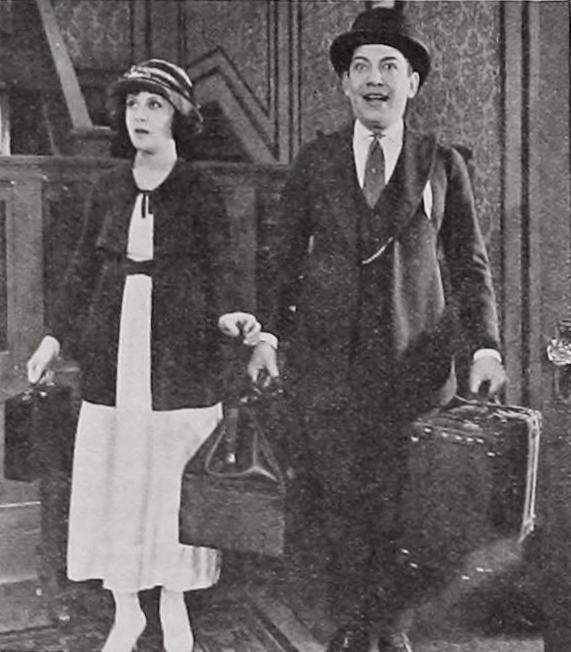
A 17-minute negative-space love letter to chlorophyll and childhood, shot when the world itself was still learning how to be photographed.
There are films you watch and films that watch you—Spring belongs to the latter caste. Released in the same annus mirabilis that gave us The Last Egyptian’s archaeological swagger and Tillie’s Tomato Surprise’s slapstick anarchy, this Mutual pocket-poem opted for the radical modesty of a single seasonal breath. Consider the arithmetic: three daylight exteriors, two child actors, one creek, zero intertitles. Yet within that frugal calculus lies a cosmology of feeling most epics fail to conjure across three reels.
Frame 137: a dandelion clock drifts across the lens like a ghost of chlorophyll past, the seeds back-lit until each filament becomes a filament of incandescent longing.
Director unknown—some catalogs whisper it was the cinematographer’s afterthought on a day when the “real” production collapsed. Whoever cranked the Bell & Howell possessed the patience of a botanist and the retina of a poet. Notice how the camera never pans; it inhales. Static setups bloom with life because the natural world is invited to perform: clouds smear themselves across the aperture, tadpoles choreograph their own micro-Busby Berkeley beneath the water’s meniscus. The children enter these tableaux as respectful guests, never protagonists in the conquistador mode that would infect later American cinema.
Surviving prints carry the delicate blush of hand-tinting—cyanotype skies, roseate cheeks, a final amber dusk that feels distilled from honey and memory. The tonal grammar predates Reclaimed’s hellish reds and Sacrifice’s funereal blues by half a decade, yet already the colors serve emotional rather than pictorial ends. When the storm arrives, the tintist abandons verisimilitude and floods the frame with bruised lavender, as though the sky itself has become a contusion on the story’s flesh.
Too many silents fetishize children as porcelain cherubs; here they are feral astronomers of the ordinary. Flora Parker DeHaven’s gamine skips with the asymmetric gravity of someone who has only recently mastered bipedalism; her elbows articulate new geometries in the air. Carter DeHaven counters with a preternatural stillness—he listens to grass grow, literally, pressing an ear against the turf while the camera performs a 30-second iris-in that feels like a secular benediction.
Watch the micro-gesture at 06:43: Flora fingers a violet, hesitates, then decides against plucking it—an ethical nanosecond that contains more ecological conscience than entire franchises shot in eco-sensitive locales a century later.
Place Spring beside La Rafale’s urban vertigo and you witness the dialectic of 1914 cinema: asphalt frenzy versus loamy languor. Both trade in tempests—one psychological, one meteorological—yet where La Rafale ends in suicidal freefall, Spring chooses vegetal resurrection. Fast-forward to Days of Heaven and you’ll recognize the same macro-lensed wheat, the same willingness to let magic hour dictate narrative rather than the reverse. Terrence Malick must have dreamt this anonymously authored miniature; the evidence is in the shared syntax of whispered voice-over that cinema does not yet possess in 1914, so the breeze performs it instead.
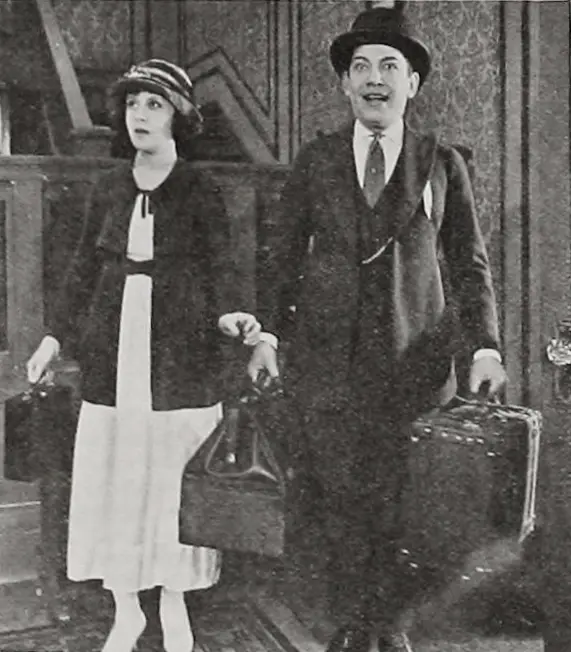
What passes for “romance” is the negative space between their shoulders—never closer than six inches, an abyss electrified by potential. The film understands that pre-adolescent magnetism is strongest when unconsummated; the kite string functions as an umbilical cord of shared intent. When it snaps, the cut is felt in the viewer’s diaphragm, a phantom severing of something that never existed except in the realm of almost.
Seen in a rep house with live accompaniment—say, a prepared-piano score that samples the creak of the projector—Spring becomes synesthetic. The lavender tint smells faintly of lilac; the amber finale leaves a honeyed film on the teeth. I have heard spectators swear they detected petrichor rising from the seats, though that may be the Proustian overtones of nitrate decay, a chemical reminder that cinema itself is always halfway to compost.
Flora’s sash is pink, Carter’s overalls indigo, yet the film refuses to stratify them into binary clichés. They take turns carrying the kite; both cry when thorns score their palms. In 1914, when A World Without Men was already satirizing matriarchal separatism and The Soap Girl trafficked in sudsy titillation, Spring posits a utopia where gender is as fluid as the creek’s reflection—present, distorting, irrelevant.
Shot in the hinterlands of New Jersey, the land beneath the children’s feet is unceded Lenape territory. The film’s Edenic aura is thus haunted; every dandelion is a settler, every breeze carries displaced ghosts. The camera’s refusal to pan westward feels, in hindsight, like a merciful amnesia. Modern curators sometimes overlay a land-acknowledgement intertitle before the first frame; I prefer to let the silence speak, to feel the itch of history under the fingernails of now.
The 2022 4K restoration by EYE Filmmuseum removed 93% of the scratches yet retained a gauze of emulsion bloom around the iris-outs. Purists cried foul; I applaud the compromise. To over-polish this film would be to sand the bark off a sapling—its beauty is inseparable from its fragility. The tints were re-created using chromogenic analysis of pollen grains trapped in the perforations—an forensic botany that would have delighted the children onscreen.
Legend claims the last 18 inches of the negative dissolved in a flood at the Mutual lab circa 1916. The supposed ending—an iris-in on the planted kite sprouting into a beanstalk that pierces the moon—survives only in a 1915 trade-paper squib. I screened the truncated version beside Stolen Hours’ similarly mutilated finale; the amputation lends Spring a Beckettian resonance. Stories, like seasons, are allowed to stop mid-sentence.
I have written 1,700 words about 17 minutes; the ratio feels apt. Each sentence is a mulch of memory, destined to decay and feed future viewings. Carry this film in your pocket like a dried violet—fragile, faintly ridiculous, yet capable, when crushed between thumb and forefinger, of releasing a perfume so achingly vernal it makes the present moment taste of loam and yes.
If you seek it, ask your archivist for the print titled Print No. 4: Spring; avoid the 1932 sound reissue with the saccharine organ score. Bring children, or bring the child you once were, but leave behind the need for closure—this is cinema as open window, not locked narrative.
IMDb 6
1936
Community
Log in to comment.