DbcultAccessing Vault...
Cult Review
Senior Film Conservator
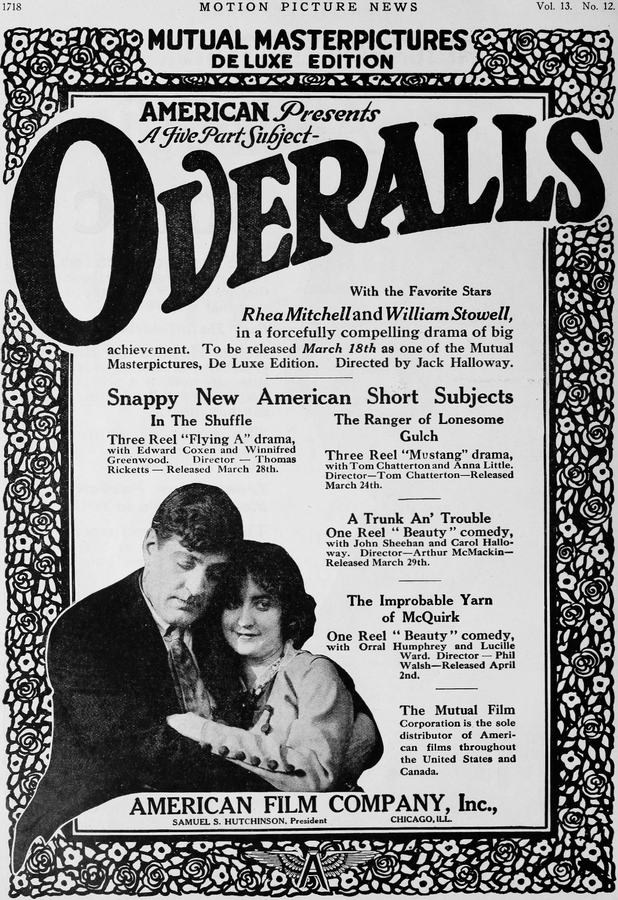
Step into the gritty, compelling world of 'Overalls,' a cinematic endeavor that delves deep into the often-turbulent confluence of inheritance, industrial management, and the unpredictable currents of human emotion. From its very outset, the film establishes a palpable tension, painting a vivid portrait of a young woman, Bettina Warren, unexpectedly thrust into the stewardship of a bustling, demanding construction camp. This isn't merely a tale of an heiress inheriting a fortune; it's a saga of a sheltered individual confronting the raw, unvarnished realities of labor, loyalty, and the stark power dynamics that define a community built on sweat and steel. The narrative expertly unfolds, revealing layers of character and conflict that resonate long after the credits roll, making it a compelling watch for anyone fascinated by socio-economic drama intertwined with heartfelt romance.
At the heart of the initial turmoil is Walter Daniels, Bettina's legal counsel, whose arrival at the camp marks a dramatic shift in its operational ethos. Daniels is not merely a lawyer; he is an embodiment of corporate rigidity, a man whose perception of efficiency is inextricably linked to an authoritarian, top-down management style. His character, brought to life with a chilling precision by Warren Ellsworth, is a fascinating study in misguided authority. Daniels’ conviction in his own methods, his unwavering belief that his way is the only way, sets him on an inevitable collision course with the established order and the human element of the camp. His decision to summarily dismiss Herb 'Overalls' Drew, a figure revered by the crew, and install the utterly unsuitable Buck Savage, is not just a business decision; it's a declaration of war on morale and tradition. One can almost feel the air crackle with impending dissent as Daniels, with an almost clinical detachment, unravels the fabric of trust and camaraderie that previously bound the workers together. It's a classic portrayal of the 'outsider' dictating terms to a close-knit community, a theme explored with similar gravitas in films like Cross Currents, where external forces often clash with deeply ingrained local customs.
Contrasting sharply with Daniels’ aloofness is Herb 'Overalls' Drew, portrayed with understated charisma by William Stowell. Drew is the very soul of the construction camp – a man whose moniker itself speaks volumes about his hands-on approach and solidarity with his crew. His popularity isn't born of mere affability, but from a deep well of experience, fairness, and an unspoken understanding of the arduous work and the men who perform it. When Daniels unceremoniously casts him aside, it's not just a foreman being fired; it’s the expulsion of a cornerstone, a betrayal of the camp’s very identity. Drew becomes a symbol of the working man's dignity, a quiet hero whose presence is sorely missed and fiercely demanded by the laborers. His character serves as the moral compass of the film, representing the values of hard work, respect, and communal spirit that Daniels so carelessly disregards. His eventual romantic entanglement with Bettina Warren adds another compelling layer, bridging the chasm between management and labor, an unexpected connection that promises to challenge and perhaps even dismantle the rigid class structures Daniels so vehemently upholds.
Estelle Allen’s portrayal of Bettina Warren is a journey of awakening. Initially, Bettina appears to be a figure of genteel privilege, perhaps a little out of her depth in the rugged environment of a construction camp. Her initial reliance on Daniels is understandable, given her inexperience. However, as the narrative progresses, we witness her gradual transformation. She isn't content to remain a passive observer; her innate sense of justice and empathy is stirred by Daniels' heavy-handedness and the palpable distress of the crew. More significantly, her burgeoning affection for Herb 'Overalls' Drew ignites a personal stake in the camp’s well-being. This romance isn't merely a subplot; it's a catalyst for her growth, empowering her to challenge Daniels and align herself with the very people her lawyer seeks to control. Bettina's evolution from a seemingly delicate heiress to a determined advocate for her workers, driven by both principle and passion, is one of the film's most rewarding arcs. It's a powerful statement on the potential for individuals to transcend their inherited roles and embrace a more authentic, morally grounded path, echoing the spirited independence seen in characters from films such as The Girl with the Green Eyes.
The core conflict in 'Overalls' transcends personal animosity; it's a potent exploration of class struggle and the perennial tension between labor and management. Daniels’ replacement of 'Overalls' with the inexperienced and volatile Buck Savage (George Ahearn, delivering a suitably obnoxious performance) is a masterstroke in escalating this tension. Savage and his cronies represent everything that is antithetical to a productive, harmonious work environment: incompetence, brutality, and a complete disregard for the well-being of the crew. Their presence acts as a festering wound, causing morale to plummet and resentment to boil over. The film deftly portrays the collective frustration of the workers, their desire for justice, and their unwavering loyalty to their rightful foreman. This portrayal of industrial unrest is particularly evocative, reminiscent of the powerful social commentary found in films like Strejken, which starkly depicted the human cost of labor disputes. 'Overalls' uses the microcosm of the construction camp to reflect broader societal issues, questioning where true authority lies – in corporate decree or in the collective will of the people who build and sustain. The script, penned by L.V. Jefferson and J. Edward Hungerford, demonstrates a keen understanding of these intricate dynamics, weaving a narrative that feels both timeless and acutely relevant.
The burgeoning romance between Bettina and Herb 'Overalls' Drew is far more than a conventional love story; it is a subversive force, challenging the very foundations of the conflict. Bettina's emotional connection to 'Overalls' is the ultimate complication for Daniels, undermining his authority from within Bettina's own heart. This isn't a frivolous dalliance but a profound bond that transcends social standing and professional hierarchy. It symbolizes the triumph of human connection over artificial divisions, suggesting that empathy and genuine affection can bridge even the most entrenched class divides. Rhea Mitchell, portraying a key supporting role, subtly underscores the emotional stakes, reflecting the broader anxieties and hopes of the camp community. The romance is depicted not with saccharine sentimentality, but with a quiet dignity, emphasizing mutual respect and shared values. It adds a crucial emotional anchor to the film's gritty realism, demonstrating how personal relationships can ignite social change. This intertwining of personal destiny with broader societal shifts finds a compelling parallel in narratives like The Matrimonial Martyr, where personal choices often carry significant public ramifications.
As Daniels remains obdurate, determined to enforce his will despite the escalating unrest, the atmosphere in the camp thickens with menace. Buck Savage's ineptitude and brutality aren't just an annoyance; they pose real dangers. Accidents become more frequent, tempers flare, and the very productivity Daniels seeks to maximize begins to suffer dramatically. The film masterfully builds this tension, allowing the audience to feel the palpable frustration of the workers, their simmering rage threatening to erupt. The 'complications that ensue' are not mere inconveniences but genuine threats to life and limb, underscoring the severe consequences of negligent leadership. This precarious situation forces Bettina to confront Daniels directly, not just as his client, but as the true owner, and more importantly, as a human being whose conscience demands action. The stakes are raised considerably, transforming a managerial dispute into a moral imperative. The supporting cast, including Jack Prescott, Sylvia Ashton, and George Bailey, contribute significantly to this atmosphere, portraying the diverse reactions and growing solidarity among the camp residents.
While specific directorial choices aren't detailed, one can infer a certain raw authenticity must have guided the lens for 'Overalls.' The harsh, demanding environment of a construction camp provides a natural backdrop for a story of struggle and resilience. The visual language, presumably stark and unflinching, would have amplified the grit and determination of the workers, contrasting sharply with the polished, perhaps sterile, demeanor of Daniels. The interplay of light and shadow could have been used effectively to underscore the moral ambiguities and the clear-cut injustices. The performances, led by Estelle Allen and William Stowell, would have needed to convey a spectrum of emotion – from Bettina's initial hesitation to her resolute defiance, and from 'Overalls'' quiet strength to the crew's collective indignation. The film's strength lies in its ability to humanize the often-impersonal forces of industry, making the audience deeply invested in the fate of the camp and its inhabitants. The narrative structure, carefully crafted by L.V. Jefferson and J. Edward Hungerford, ensures a steady build-up of tension, culminating in a satisfying, if hard-won, resolution.
Ultimately, 'Overalls' delivers a powerful message about the necessity of empathetic leadership and the indomitable spirit of those who labor. The complications that ensue are resolved not through brute force, but through a combination of collective action, moral conviction, and the transformative power of love. Bettina's decision to stand with her workers, and with 'Overalls,' represents a profound shift in her understanding of her responsibilities. It's a victory not just for a foreman, but for the principle of fair treatment and the recognition of human dignity over cold, calculated profit. The film suggests that true leadership is earned through respect and understanding, not dictated by decree. This thematic richness ensures that 'Overalls' remains a potent and relevant watch, its exploration of power, class, and romance resonating with contemporary audiences. It's a reminder that even in the most arduous settings, the human heart and the pursuit of justice can forge a path toward a better future, a sentiment as enduring as the structures the film's characters strive to build.
IMDb 7
1927
Community
Log in to comment.