DbcultAccessing Vault...
Cult Review
Senior Film Conservator
Stepping back into the flickering glow of early cinema, we encounter Oh! Min!, a delightful comedic romp from 1918 that, despite its vintage, still resonates with surprisingly contemporary themes. This is not merely a historical curiosity; it’s a vibrant snapshot of anxieties and aspirations that, in many ways, persist over a century later. The film plunges us headfirst into the existential quandary of Andy, played with a wonderfully relatable everyman exasperation by Mark Hamilton. Andy is a man under siege, not by external enemies or grand societal forces, but by the relentless march of time and the even more relentless harping of his boss. This employer, a character whose sole purpose seems to be to embody the cruel indifference of corporate youth worship, constantly reminds Andy of his waning prime, dangling the Sword of Damocles – a younger replacement – over his head like a particularly cruel office prank.
The pressure on Andy isn't just professional; it's deeply personal. The fear of obsolescence, of being deemed 'past it,' gnaws at him. It’s a fear many can still identify with, perhaps even more acutely in our fast-paced modern world. This fertile ground of insecurity makes him ripe for exploitation, and into this void steps the utterly preposterous promise of Fanny Fair. Fanny, whose name itself hints at a certain theatricality, advertises a 'youth-making' course, a miraculous elixir for the ravages of age. It's a classic trope, one that finds its echoes in countless stories of human gullibility, from the patent medicine shows of yesteryear to the anti-aging industry of today. Andy, desperate for a reprieve from his boss's scorn and the specter of retirement, clutches at this straw with the fervor of a drowning man.
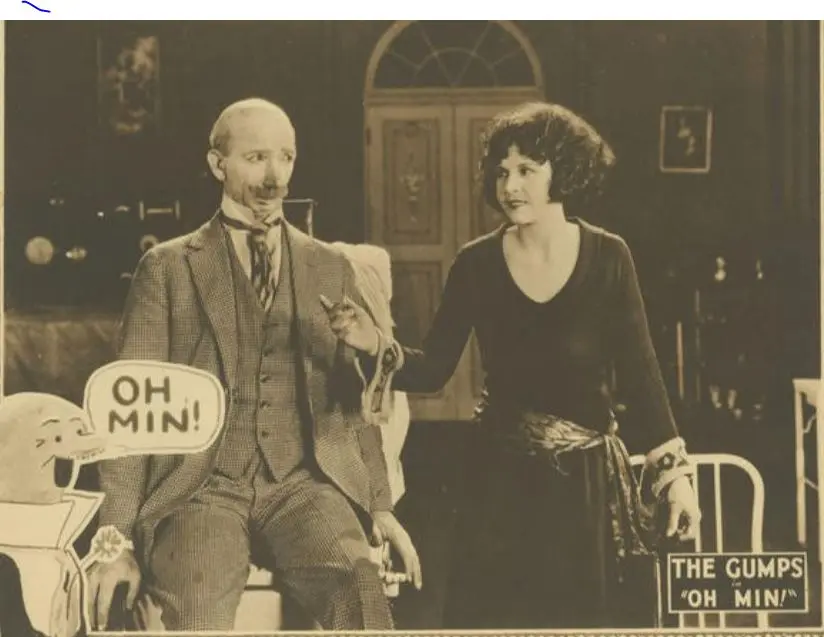
The brilliance of Sidney Smith's writing, even in this early silent format, lies in its ability to weave multiple threads of comedic misunderstanding. While Andy is off pursuing his ill-conceived quest for rejuvenation, domestic drama unfolds at home. A casual note from Fanny, detailing Andy's appointment, falls into the hands of his wife, Min, portrayed with a charming blend of innocence and spirited indignation by Fay Tincher. Min, seeing the name 'Fanny' and the clandestine nature of the note, immediately jumps to the most dramatic, yet understandable, conclusion: her husband is having an affair. It’s a testament to the film's observational humor that such a simple misreading can ignite a powder keg of marital suspicion, highlighting the fragile nature of trust and communication, even in the most loving relationships.
Min's reaction is entirely human. Hurt, confused, and feeling betrayed, she confides in a neighbor, a character who, like many well-meaning but ultimately misguided friends in comedies, offers advice that only serves to further complicate matters. The neighbor's suggestion? Dancing lessons. This seemingly innocuous recommendation, intended perhaps to boost Min's spirits or give her a 'revenge body' before the term even existed, sets the stage for the film's climactic domestic confrontation. The parallel narratives of Andy's deception and Min's imagined betrayal begin to converge, building a delightful tension that promises an explosion of farcical proportions. It’s a classic setup that we’ve seen in more contemporary works, where a simple misunderstanding balloons into an elaborate, almost theatrical, crisis of trust, perhaps akin to the domestic squabbles and eventual reconciliation seen in films like A Regiment of Two, albeit with a different central conflict.
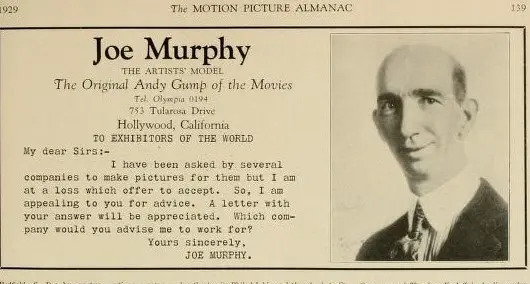
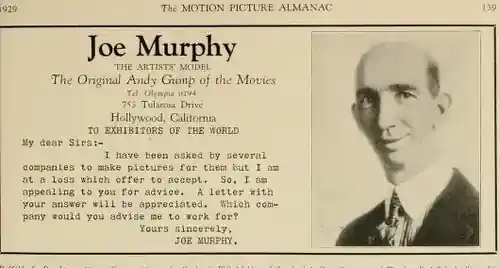
Andy's experience at Fanny Fair's institute is where the film truly leans into its comedic potential, showcasing the visual humor inherent in silent cinema. He's subjected to an 'awful deal' – a series of ludicrous treatments that are clearly designed to bilk him of his money rather than restore his youth. The culmination of this elaborate charade is a moment of pure, unadulterated deception. After enduring the indignities of the 'treatment,' Andy is directed to gaze into a mirror, where he expects to see a miraculously younger version of himself. What he actually sees, thanks to the ingenious trickery orchestrated by Joe Murphy (presumably playing the man behind the frame), is merely a frame with a handsome, youthful actor on the other side. This actor, a master of mimicry, perfectly imitates Andy's movements, convincing our protagonist that the impossible has happened. It's a beautiful piece of visual storytelling, demonstrating how easily perception can be manipulated when desperation takes hold. This kind of elaborate, almost theatrical deception finds its distant cousins in films like Tainted Money, where deceit is central, though the tones are wildly different.
The moment of truth arrives on Andy's journey home. Buoyed by his newfound 'youth,' he decides to take a second look, pulling a small mirror from his pocket. The stark reality staring back at him – his own, unchanged, aging visage – shatters the illusion instantly. The comedic joy of his earlier belief transforms into a furious, almost primal rage. This is where Mark Hamilton's performance truly shines, transitioning from hopeful gullibility to incandescent fury with a flick of a facial muscle. His immediate reaction is not rational thought, but a visceral need for retribution. He storms back to Fanny's institute, armed with a brick, and delivers a satisfying, if somewhat violent, comeuppance to the man behind the deceptive frame. This act of immediate, physical justice is a hallmark of early slapstick comedy, a cathartic release for both character and audience, and a stark contrast to the more psychological deceptions explored in something like The Devil's Double.
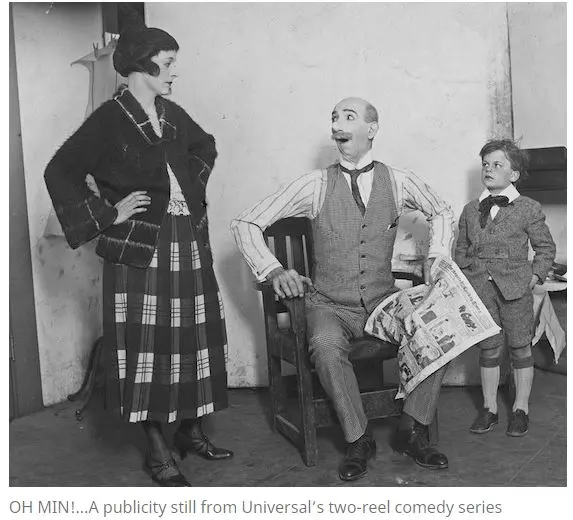
The narrative then pivots back to the domestic sphere, where Andy, still fuming from his encounter with the charlatan, arrives home only to find his wife, Min, in the company of the dancing master, presumably played by Jack Morgan. For Andy, whose mind is already reeling from one betrayal, this sight is the final straw. His earlier rage, momentarily sated by the brick incident, reignites with a new, intensely personal fervor. He remonstrates with Min, demanding to know the identity of this strange man in their home. The scene is ripe for physical comedy and exaggerated expressions, typical of the era, but also grounded in a very real emotional misunderstanding. It’s a situation that could easily spiral into genuine tragedy, but the comedic framework ensures that the audience anticipates the eventual, humorous resolution.
Min, however, is no shrinking violet. Her own sense of betrayal, fueled by the 'Fanny' note, empowers her to stand her ground. She fires back, revealing the note she found, the one that sparked her suspicions of infidelity. This is the pivotal moment of clarification, where the two separate threads of misunderstanding finally intertwine and begin to unravel. The audience, having been privy to both Andy's delusion and Min's mistaken jealousy, can appreciate the comedic irony of the situation. The ensuing explanations, delivered with a flurry of gestures and perhaps intertitles, clarify the entire farcical chain of events. Andy's quest for youth, Fanny's deception, Min's misinterpretation, and the dancing lessons all fall into place, revealing a tapestry of charming, if chaotic, human folly.
The resolution is swift and satisfying, if a little neat, as is often the case in these early comedies. Everyone is happy once more, the marital equilibrium restored, and the lessons learned – presumably about vanity, communication, and the dangers of quick fixes. Oh! Min! is more than just a series of gags; it’s a commentary on the human condition, particularly our susceptibility to vanity and the insecurities that drive us. Sidney Smith's script, even without spoken dialogue, manages to convey complex motivations and emotions through action and expression, a true testament to the power of silent film storytelling. The film's charm lies in its simplicity and its universal themes. While the specific context of a 'youth-making institute' might seem quaint, the underlying anxieties about aging and appearance are timeless. Similarly, the breakdown in marital communication due to misunderstanding is a narrative wellspring that continues to be tapped in cinema today, from romantic comedies to domestic dramas.
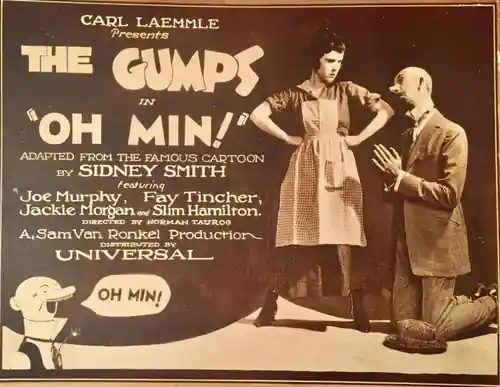
The performances, particularly from Mark Hamilton and Fay Tincher, are crucial to the film's success. Their exaggerated yet sincere expressions and physicality carry the emotional weight and comedic timing of the narrative. Hamilton’s transition from beleaguered employee to hopeful dupe, then to enraged victim, and finally to bewildered husband, is a masterclass in silent film acting. Tincher, too, navigates Min’s emotional journey from loving wife to suspicious spouse and back again with commendable grace and comedic flair. The supporting cast, including Joe Murphy and Jack Morgan, ably fulfill their roles in propelling the plot and enhancing the comedic effect. The film's pacing is brisk, a necessary attribute for silent comedies to maintain audience engagement without the benefit of dialogue. Each scene contributes to the escalating misunderstandings, building towards a satisfying crescendo of revelation and reconciliation. One could even compare the pursuit of an ideal, however misguided, to the aspirations of characters in films like Pop Tuttle's Movie Queen, where a different kind of societal ideal drives the narrative.
In a broader sense, Oh! Min! serves as a fascinating historical document, illustrating the nascent stages of film as a popular art form. The use of intertitles, the exaggerated acting styles, and the reliance on visual gags are all characteristic of the era. Yet, within these conventions, there's a timeless quality to the storytelling. The film expertly balances slapstick with genuine human emotion, never allowing the absurdity to completely overshadow the underlying anxieties of its characters. It reminds us that even in the early days of cinema, filmmakers were adept at tapping into universal experiences – the fear of aging, the desire for acceptance, the complexities of marital relationships, and the ever-present danger of deception. While not as grand in scope as some epics of its time, its intimate focus on domestic comedy gives it a lasting appeal. The film's legacy lies not just in its historical significance, but in its ability to still elicit chuckles and nods of recognition from an audience over a century removed from its original release. It's a charming reminder that sometimes, the simplest stories, told with heart and humor, are the ones that endure. The clarity of its narrative, despite the visual medium, is a testament to the skill of its creators, much like the direct storytelling found in something such as The Bottom of the Well, though the genres differ significantly.
The film also subtly critiques societal pressures. Andy's boss isn't just a minor antagonist; he represents a pervasive cultural emphasis on youth and productivity that can render older individuals feeling worthless. This pressure is what makes Andy vulnerable to Fanny Fair's scam. It’s a societal critique delivered with a light touch, wrapped in a comedic package, but it’s there nonetheless. The film, therefore, is not just a comedy of errors but also a commentary on the anxieties of modernity, even in 1918. The quest for eternal youth, while presented comically, touches upon a deeper human yearning to defy the inevitable. The resolution, where Andy accepts his true self and reconciles with Min, suggests that genuine happiness comes not from fabricated youth, but from honesty and understanding within one's most intimate relationships. It’s a heartwarming message, delivered through a series of increasingly absurd and hilarious events.
In conclusion, Oh! Min! is a delightful relic that transcends its age. It’s a testament to the enduring power of simple, well-executed comedic storytelling. The performances are engaging, the plot is cleverly constructed, and the themes remain relevant. For anyone interested in the origins of cinematic comedy, or simply in need of a good laugh, this film offers a charming glimpse into a bygone era, proving that laughter truly is timeless. The film’s ability to create a complex web of misunderstandings and then expertly untangle them is a hallmark of good comedic writing, something that would continue to evolve in films for decades to come. It’s a small, unassuming film, but one that leaves a lasting impression through its wit and warmth, much like the charming simplicity of Ma Hoggan's New Boarder, which also focuses on domestic humorous situations. The film, in its essence, captures the universal human desire to be seen, to be valued, and to find happiness amidst the chaos of life, even if that chaos is self-inflicted or due to hilariously bad communication. It's a joyful, energetic piece of cinema that reminds us of the foundations upon which generations of comedic films have been built.
IMDb —
1920
Community
Log in to comment.