DbcultAccessing Vault...
7.3/10
Senior Film Conservator
A definitive 7.3/10 rating for a film that redefined the boundaries of cult cinema. Vacation remains a cornerstone of transgressive art.
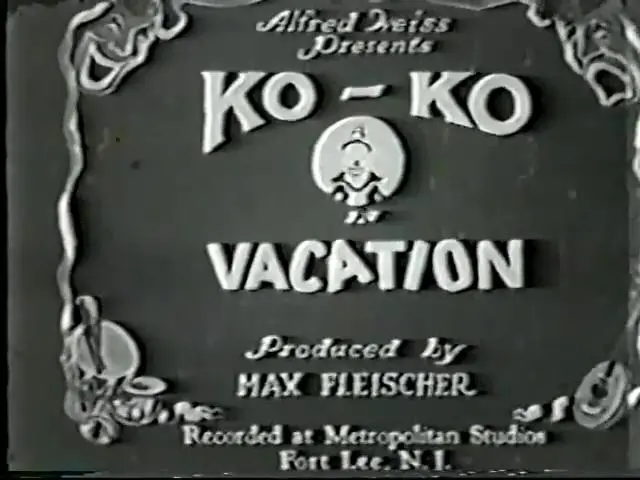
Stepping back into the silent era of cinema, one often conjures images of slapstick heroes, dramatic narratives, or grand spectacles. Yet, nestled within this vibrant period, a different kind of magic was unfolding, one inked onto celluloid frames and brought to life through sheer ingenuity. Max Fleischer’s 1924 animated short, Vacation, featuring the iconic Ko-Ko the Inkwell Clown, stands as a fascinating artifact of this pioneering spirit. It’s not merely a cartoon; it’s a philosophical statement on the very nature of animation, a playful deconstruction of reality through the lens of boundless imagination.
The premise, deceptively simple, hides a world of surrealist delight: Ko-Ko, the very embodiment of the animator’s handiwork, takes a vacation at a rubbery amusement park. This isn't just a setting; it's a character in itself, an environment that flexes, stretches, and morphs with an almost mischievous sentience. Fleischer, a titan of early animation, was already pushing boundaries with his 'Out of the Inkwell' series, showcasing the interplay between the animator’s world and Ko-Ko’s animated one. Vacation extends this meta-narrative, allowing Ko-Ko to exist purely within his animated realm, yet one that still feels like a fantastical escape.
To truly appreciate Vacation, one must understand the stylistic and technical innovations Fleischer brought to the table. His studio was renowned for its 'rubber hose' animation style, where characters and objects possessed an incredible elasticity, bending and stretching in ways that defied natural anatomy. This technique is on full, glorious display in Ko-Ko’s amusement park. Everything from the roller coaster tracks to the very ground beneath his feet seems to be made of highly pliant material, reacting to his every movement with exaggerated bounces and wiggles. This isn't just a visual quirk; it's a deliberate artistic choice that emphasizes the inherent artificiality and boundless potential of the animated medium.
Furthermore, Fleischer was a pioneer in rotoscoping, a technique where animators trace over live-action footage, allowing for incredibly fluid and realistic movement. While Vacation leans heavily into the more stylized rubber hose aesthetic for its environmental gags, the underlying principles of precise, deliberate motion, even in its most exaggerated forms, speak to a deep understanding of movement dynamics. The way Ko-Ko navigates his bizarre surroundings, the way he bounces off a spring-loaded floor or slides down a serpentine slide, all feel uncannily real despite their absurdity. It's a testament to Fleischer’s ability to ground the fantastical in a believable, albeit animated, physics.
Ko-Ko the Inkwell Clown, a character often depicted as emerging from or interacting with the real world, here exists entirely within a constructed dreamscape. His 'vacation' isn't a break from work; it's an exploration of animation's purest form. He's not simply visiting an amusement park; he's becoming one with it, a participant in a symphony of visual gags. A slide might suddenly become a series of undulating waves, a funhouse mirror might stretch his limbs to impossible lengths, or a merry-go-round might spin him into a dizzying vortex of lines and shapes. The film revels in these transformations, using them not just for comedic effect but to showcase the medium's unique capacity for metamorphosis.
Unlike the more narrative-driven live-action comedies of the era, such as The Essanay-Chaplin Revue of 1916, where the humor often arises from character interaction and situational irony in a recognizable world, Vacation's comedy stems from the sheer impossibility of its environment. Ko-Ko’s reactions are often those of mild surprise or playful engagement, rather than genuine distress, because he is, after all, an inhabitant of this fluid reality. His very existence is defined by the elasticity and unpredictability of his animated surroundings. This distinction is crucial; while Chaplin's Tramp navigates a world of human foibles, Ko-Ko navigates a world of pure, unadulterated visual invention.
The 'rubbery amusement park' isn't just a setting; it's a profound metaphor for the creative process itself. It's a space where rules are suspended, where the ordinary becomes extraordinary, and where the animator's hand is visibly (or invisibly) shaping every moment. The elasticity of the park mirrors the elasticity of ideas, the way a concept can be stretched, twisted, and reformed into something entirely new. It’s a celebration of the freedom that animation offers, a stark contrast to the physical limitations inherent in live-action filmmaking, even experimental ones like The Witching Hour which delves into supernatural themes but remains bound by the tangible world of its actors and sets.
Every gag, every contortion, serves as a mini-lesson in the principles of animation: squash and stretch, anticipation, timing. Fleischer doesn't just animate; he teaches us how animation works by demonstrating its most fundamental principles in a delightful, entertaining way. The film becomes a masterclass, subtly educating its audience about the craft while simultaneously immersing them in its whimsical results. One could even draw a parallel to the intricate Rube Goldberg-esque contraptions of early cinema, where the mechanical ingenuity was part of the spectacle, much like the animated ingenuity here.
Vacation, despite its brevity, leaves an indelible mark. It’s a testament to the early ambition of animation to carve out its own unique space in the cinematic landscape, distinct from its live-action counterparts. It shows how animation could create worlds that were not merely representations of reality, but entirely new realities, governed by their own delightful logic. This was a crucial step in establishing animation as a legitimate art form, capable of expressing complex ideas and emotions, even through seemingly simple gags.
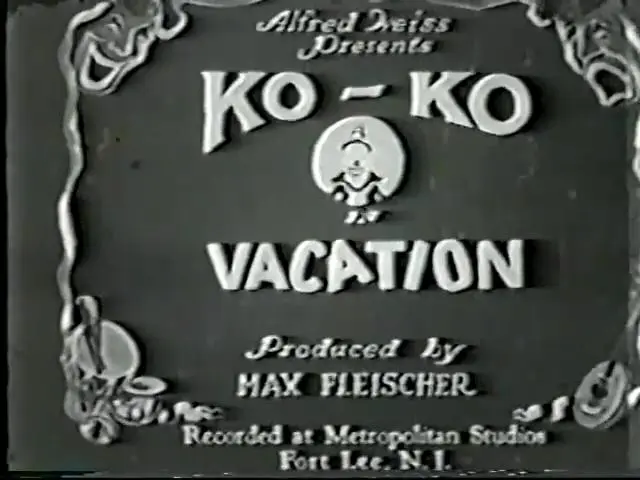
The film’s influence, while perhaps not as overtly documented as later Disney or Warner Bros. productions, is undeniable. It contributed to the visual vocabulary of animation, solidifying the idea that characters and environments could be fluid, expressive, and utterly divorced from naturalistic constraints. This freedom would be embraced by countless animators in the decades to follow, from the zany antics of Looney Tunes to the more avant-garde experiments in the medium. It's a foundational text for understanding the evolution of animated physics and character interaction with their malleable surroundings.
Considering the broader cinematic landscape of 1924, a year that also saw films like God's Law and Man's or Colomba, both live-action dramas, Vacation stands out as a vibrant counterpoint. While these films explored human morality and grand narratives, Fleischer's work delved into the boundless potential of the visual gag and the surreal. It offered a different kind of escapism, one not rooted in dramatic tension or romance, but in pure, unadulterated visual wonder. It was a reminder that cinema, in all its forms, could transport audiences to places previously unimaginable.
The sheer joy emanating from the screen, despite its age and silent format, is infectious. Ko-Ko's adventures in the rubbery park are a masterclass in visual storytelling, where every frame is packed with inventive movement and playful distortion. It's a film that doesn't rely on dialogue or complex plot, but on the universal language of kinetic energy and imaginative design. This simplicity is its strength, allowing the animation itself to be the star.
Ko-Ko, as a character, possesses an enduring charm. He's not a hero in the traditional sense, nor is he a villain. He's an everyman, or perhaps an every-clown, experiencing the world through an exaggerated, innocent lens. His reactions are universal, even when the stimuli are utterly fantastical. This relatability, combined with the sheer visual spectacle, makes Vacation more than just a historical curiosity; it's a genuinely entertaining piece of cinema that continues to captivate audiences with its inventive spirit.
In an era where films like A Soul Enslaved might explore the depths of human suffering, Vacation offered a lighthearted, almost therapeutic counterpoint. It was a film designed to elicit smiles and gasps of wonder, a pure demonstration of the medium’s capacity for joy. This balance in early cinema, between profound drama and whimsical animation, speaks volumes about the diverse appetite of audiences and the burgeoning versatility of the film industry.
The film also subtly highlights the role of the animator as a god-like figure, shaping worlds and dictating the laws of physics within them. Ko-Ko is literally an 'inkwell clown,' a character born from the pen, and his vacation is a journey into a world entirely of his creator's making. This meta-commentary on authorship and creation adds another layer of intrigue to an already fascinating short. It invites viewers to consider the craft, the illusion, and the sheer imaginative power behind every animated frame.
Max Fleischer’s approach to animation, particularly in his early Ko-Ko shorts, was always characterized by this blend of technical prowess and playful surrealism. He wasn't afraid to break the rules of reality because, in animation, there were no inherent rules to begin with. Only the ones you chose to create. This liberation from the constraints of the physical world allowed for an unparalleled freedom of expression, making films like Vacation feel fresh and innovative even a century later.
Ultimately, Vacation is more than just a historical footnote; it's a vibrant, living piece of cinematic art. It encapsulates the joy of creation, the wonder of discovery, and the boundless potential of animation to transport us to places that exist only within the inkwell of imagination. It reminds us that sometimes, the most profound experiences come not from grand narratives, but from simple, brilliantly executed flights of fancy, like a clown's elastic holiday at a rubbery amusement park.
The sheer ingenuity of Fleischer and his team in crafting such a dynamic and engaging world with the limited tools of the era is truly remarkable. Each bend, each stretch, each wobble of the environment is meticulously drawn, conveying a sense of organic life to inanimate objects. This level of detail and commitment to the 'personality' of the setting elevates Vacation beyond mere novelty, cementing its place as an early masterpiece of animated surrealism. It’s a foundational text for understanding how animators began to conceptualize and execute worlds that were not merely backdrops, but active participants in the narrative, however abstract.
The film’s influence permeates the very fabric of animation history. One can trace the lineage of elastic characters and shape-shifting environments directly back to these early Fleischer experiments. The concept of a world that actively responds to and plays with its inhabitants is a recurring motif in animation, and Vacation stands as a brilliant early example. It’s a testament to the fact that even in its infancy, animation was already exploring sophisticated ideas about reality, perception, and the nature of artistic creation, all wrapped up in an endlessly entertaining package. It invites repeated viewings, each time revealing another subtle gag or a new appreciation for the pioneering artistry at play.
IMDb 4.7
1919
Community
Log in to comment.