DbcultAccessing Vault...
5.8/10
Senior Film Conservator
A definitive 5.8/10 rating for a film that redefined the boundaries of cult cinema. Oh Teacher remains a cornerstone of transgressive art.
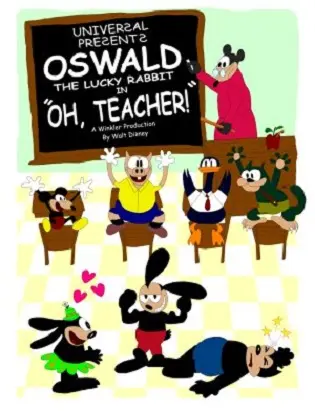
Is 'Oh Teacher' (1927) worth watching today? Short answer: yes, but with significant caveats. This early Walt Disney-produced Oswald the Lucky Rabbit short is an invaluable historical artifact, a foundational piece for anyone fascinated by the origins of animation, yet it offers little in the way of contemporary entertainment value for a casual viewer. It is absolutely for animation historians, Disney enthusiasts, and those with a deep appreciation for silent-era slapstick. It is decidedly NOT for audiences seeking modern narrative complexity, sophisticated humor, or high-fidelity visuals.
This film works because it provides an unvarnished look at the nascent stages of character animation, showcasing the raw, inventive energy that would soon define a cinematic empire. It fails because its simplistic narrative and rudimentary comedic timing are largely products of its era, struggling to resonate beyond a purely academic interest. You should watch it if you want to understand the evolutionary steps of a medium and witness the very early brushstrokes of a legendary animator's career, recognizing it as a historical document rather than a timeless piece of entertainment.
In the grand tapestry of early cinematic comedy, 'Oh Teacher' emerges as a quintessential example of the era’s penchant for straightforward, gag-driven narratives. The plot, as simple as it is effective for its time, centers around Oswald the Lucky Rabbit's dual struggle: maintaining the affection of his beloved and safeguarding his prized bicycle from a relentless, mischievous cat. This isn't a story of profound emotional depth or intricate character arcs; rather, it’s a canvas for rapid-fire physical comedy and a testament to the power of a clear, easily understood conflict.
The girlfriend, a charming if somewhat passive figure, serves primarily as the object of Oswald’s romantic aspirations and occasionally, as the damsel in distress, highlighting the prevalent gender roles of the period. Her presence anchors Oswald’s motivation, providing a sentimental counterpoint to the anarchic energy of the feline antagonist. It’s a dynamic seen in countless silent shorts, from the romantic pursuits in Saturday (1925) to the broader comedic battles in something like Stop That Shimmy.
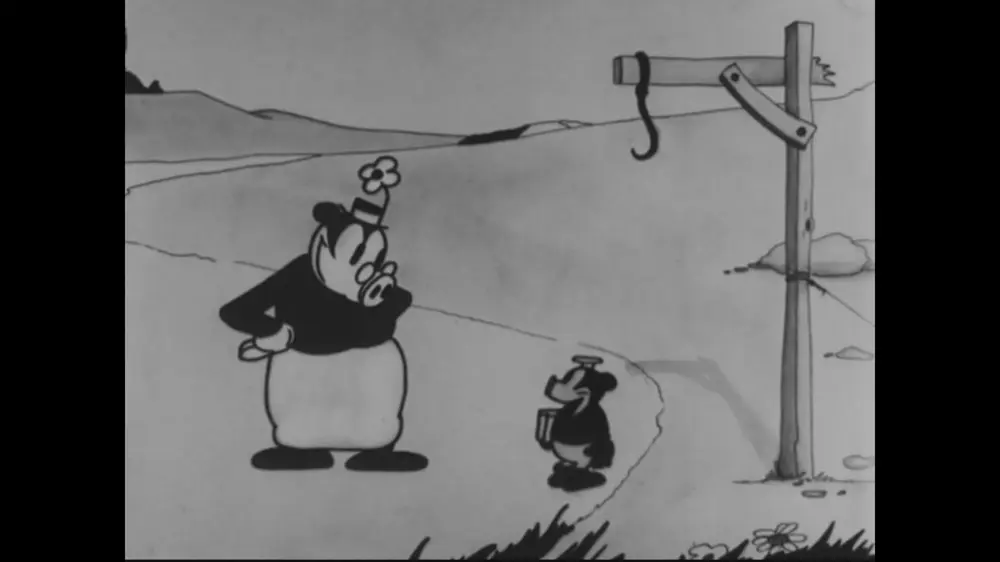
The cat, however, is the true engine of chaos. More than just an animal, it embodies pure, unadulterated mischief. Its relentless pursuit of Oswald’s bicycle isn't merely a petty theft; it’s an active disruption of Oswald’s attempts at a serene, domestic existence. This continuous battle for the bicycle, which Oswald often uses to impress his sweetheart or simply get around, becomes a running gag, each recapture and subsequent loss escalating the comedic tension. It’s a simple premise, yes, but one that allows for maximum visual inventiveness within the constraints of rubber-hose animation.
One might argue that the simplicity borders on the vacuous, but I contend it’s precisely this streamlined focus that made such shorts universally accessible. There’s no need for dialogue, no complex cultural references; just a rabbit, a girl, a cat, and a bicycle – archetypes of desire, obstacle, and pursuit. The narrative is less about what happens and more about how it happens, with an emphasis on visual gags and physical exaggeration.
The directorial choices in 'Oh Teacher' are a fascinating window into the early stages of animated storytelling. Walt Disney, credited here, was still refining his craft, and the film reflects the trial-and-error approach common to the era. Pacing is key in silent animation, and here, it’s a relentless, almost frenetic dash from one gag to the next. There's little time for lingering shots or atmospheric build-up; the action is immediate, propelled by a sense of urgency that matches Oswald's exasperation.
The film often employs quick cuts, shifting rapidly between Oswald’s predicament, the cat’s mischievous actions, and the girlfriend’s reactions. This rapid editing keeps the energy high, preventing any single moment from overstaying its welcome. For instance
IMDb —
1935
Community
Log in to comment.