DbcultAccessing Vault...
Cult Review
Senior Film Conservator
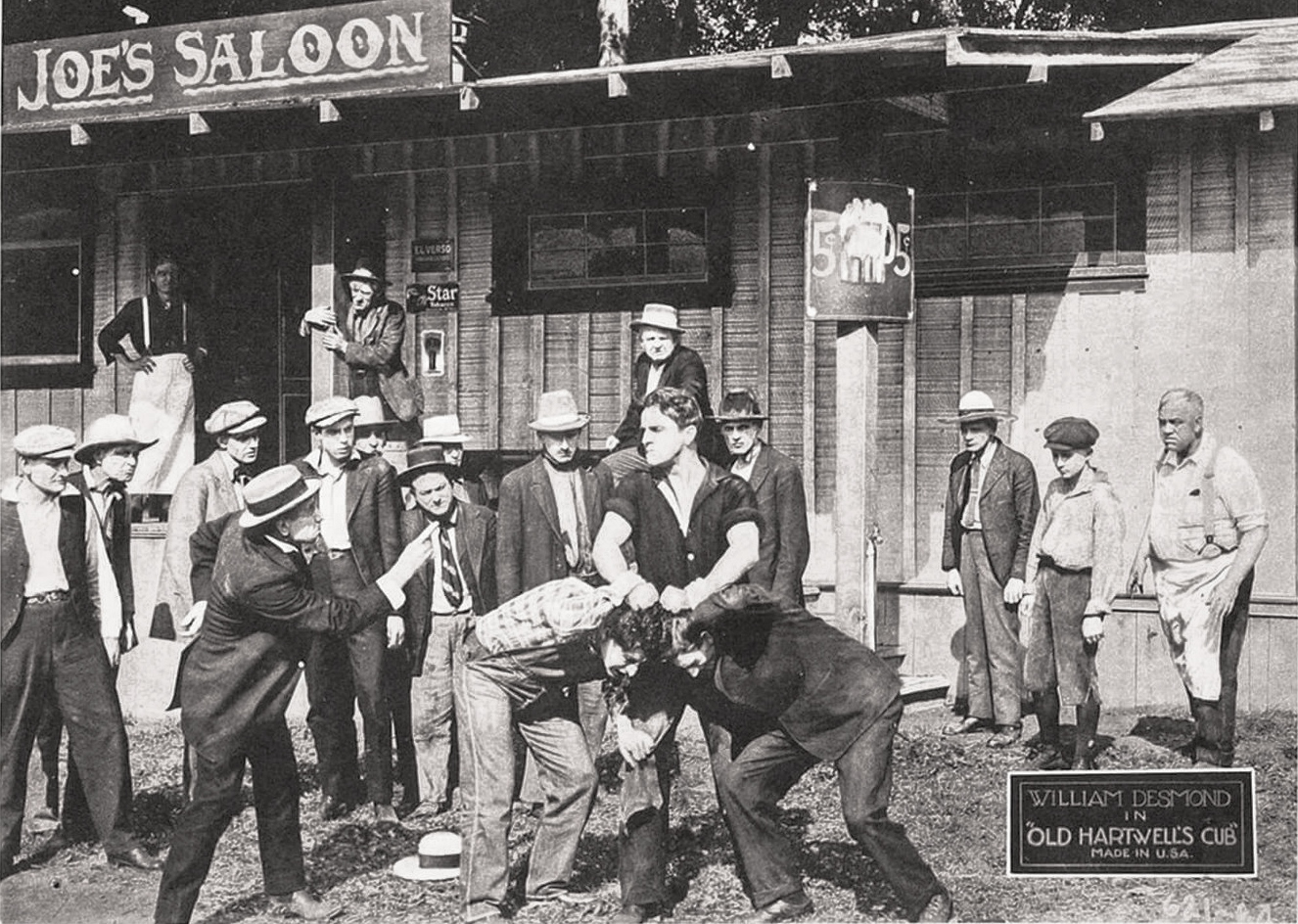
The cinematic landscape of 1918 was an era of profound transition, caught between the burgeoning sophistication of the feature-length narrative and the lingering vestiges of the nickelodeon’s primitive morality plays. Within this crucible, Old Hartwell's Cub emerges not merely as a relic of early American filmmaking, but as a visceral exploration of the 'sins of the father' trope, executed with a raw, proletarian energy that feels startlingly modern in its cynicism toward organized society. Unlike the more polished, aristocratic dramas of its time, such as Barriers of Society, this film wallows in the soot of the forge and the dust of the trail, presenting a protagonist whose nobility is defined by his calloused hands rather than his lineage.
William Desmond’s portrayal of Bill Hartwell is a masterclass in silent-era physicality. He occupies the screen with a pugnacious grace, his every movement suggesting a man perpetually on the verge of either a violent outburst or a profound act of tenderness. The opening acts in Matherville serve as a brutal sociological study. The town itself is a character—a collective of judgmental eyes and wagging tongues that mirrors the stifling atmosphere found in The Struggle Everlasting. When Bill batters down the jail door to rescue his father, the act is framed not as a crime, but as a primal scream against a legal system that punishes the symptom (Tom’s alcoholism) while ignoring the systemic poverty and isolation that fuel it.
The cinematic language here is one of high-contrast chiaroscuro. The darkness of the blacksmith’s shop, illuminated only by the intermittent glow of the furnace, serves as a metaphor for Bill’s internal state. He is a man of fire and iron, unrefined but pure. This stands in stark opposition to the 'civilized' townspeople, whose clean collars hide a rot of hypocrisy. The film’s writer, Mabel Richards, avoids the easy path of making Bill a saint; instead, he is a 'cub'—untamed, reactive, and fiercely territorial over the one thing he has left: his father’s dignity. This depiction of addiction and its ripple effects on the family unit echoes the darker themes of Das Laster, though with a distinctly American frontier optimism eventually peeking through the gloom.
The introduction of Reverend David Lane, played with a quiet, dignified gravitas by Walt Whitman, provides the film’s first major tonal shift. In many films of this period, the clergy were depicted as either cartoonish moralists or ethereal saints. Here, Lane is a pragmatist. His defense of Bill is not based on divine intervention but on a fundamental recognition of the man’s labor and loyalty. The dinner scene at the rectory is a pivotal moment of social transgression. Bill, the 'cub,' is brought into the domestic sphere of the 'shepherd.' The visual composition of this scene—Bill’s large, awkward frame juxtaposed against the delicate lace and fine china of the Lane household—emphasizes the class divide that the film seeks to bridge.
However, the grace offered by the Reverend is complicated by the presence of Mary Lane. Mary Warren’s performance captures the tragic vulnerability of a woman sheltered from the world’s harshness, making her eventual infatuation with Edward Jones all the more agonizing to witness. Jones is the quintessential 'city slicker' villain, a character type that would become a staple of the genre, yet here he is imbued with a predatory charisma that makes Mary’s betrayal of Bill’s silent devotion feel inevitable. This romantic entanglement serves as a precursor to the thematic complexities of Sumerki zhenskoy dushi, where the female soul is tested by the callousness of men who view them as mere acquisitions.
When the narrative shifts to Chico, Arizona, the film sheds its Victorian skin and adopts the rugged vernacular of the Western. This transition is not merely a change in scenery; it is a psychological migration. For Bill, Arizona is a tabula rasa, a place where the reputation of 'Old Hartwell's Cub' carries no weight. For Mary, it is a descent into a living purgatory. The discovery of Jones’s bigamy is handled with a stark, unblinking realism that eschews the melodramatic flourishes common in 1918. The revelation is silent, heavy, and devastating.
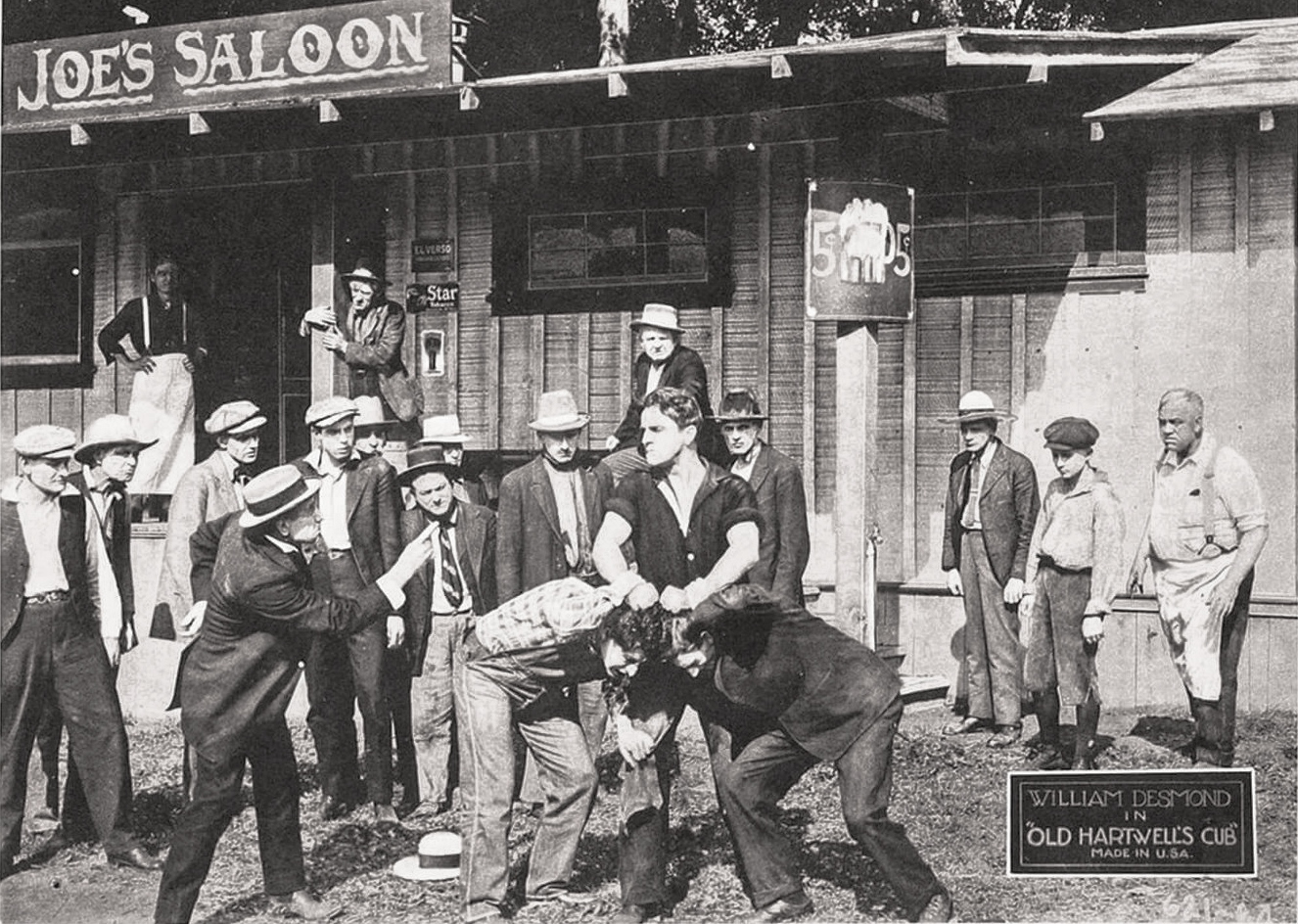
The film brilliantly utilizes the vast, empty landscapes of the Southwest to mirror the isolation of its characters. While contemporary films like The Call of the North utilized the wilderness as a site of adventure, Old Hartwell's Cub treats the frontier as a place of judgment. The sequence where Bill is accused of horse theft is a masterclass in tension. The lynch mob that forms is not a group of outlaws, but a collective of 'respectable' men who have allowed their fear to override their justice—a direct echo of the Matherville townspeople from the film’s first act. The circularity of this narrative structure suggests that whether in the industrial East or the wild West, the mob remains the ultimate antagonist of the individual.
"The genius of the film lies in its refusal to grant Bill Hartwell a traditional hero's journey. He does not conquer the West; he survives it. He does not save the damsel; they save each other through a shared recognition of their own brokenness."
The climax of the film, involving Mary’s desperate intervention to save Bill from the gallows, is a significant departure from the 'damsel in distress' tropes seen in works like Sweet Kitty Bellairs. In Old Hartwell's Cub, the gender roles are fluidly swapped. Bill’s physical strength, which served him so well in the forge, is useless against the weight of a false accusation and a hempen rope. It is Mary’s voice, her truth, and her agency that provide the salvation. This moment of empowerment for Mary Lane elevates the film above its contemporary peers, offering a proto-feminist reading of the frontier experience.
The return to Matherville as man and wife is not a triumphant homecoming in the traditional sense. They do not return to the applause of the town; they return to a place that once rejected them, now fortified by their shared trauma. It is an ending of quiet defiance. They have transcended the labels of 'drunkard’s son' and 'betrayed wife,' forging a new identity in the crucible of the Arizona desert. This nuanced approach to closure is far more sophisticated than the moralistic resolutions of The Spreading Evil, which sought to punish its characters rather than allow them growth.
From a technical standpoint, the film benefits immensely from the collaborative efforts of Mabel Richards and George Elwood Jenks. The pacing is deliberate, allowing the psychological weight of the scenes to breathe—a rarity in an era often defined by frantic action. The cinematography captures the tactile nature of the world: the grit of the dust, the heat of the forge, the coldness of the jail cell. While it may lack the experimental flair of something like The Iced Bullet, its commitment to a grounded, naturalistic aesthetic makes it a far more resonant piece of storytelling.
The use of intertitles is also noteworthy. Rather than merely providing dialogue, they often offer a poetic commentary on the characters' inner lives, bridging the gap between the visual and the literary. This technique creates a narrative depth that rivals the complex character studies found in Chained to the Past. The film understands that in the silence, the smallest gesture—a bowed head, a clenched fist, a shared glance—carries the weight of a thousand words.
To watch Old Hartwell's Cub today is to witness a moment in cinematic history where the medium was beginning to realize its potential as a tool for social critique. It challenges the viewer to look past the surface—past the 'drunkard' and the 'cub'—to find the inherent humanity beneath. It is a film about the difficulty of escaping one's history and the immense courage required to build a future on one's own terms. In the pantheon of 1918 releases, it stands alongside The City of Failing Light as a testament to the power of character-driven drama.
Ultimately, the film’s lasting power resides in its empathy. It does not judge Tom Hartwell for his failings, nor does it condemn Mary for her naivety. Instead, it places them all in a world of 'narrow-minded townspeople' and 'atavistic frontier justice' and asks them to survive. It is a rugged, beautiful, and deeply human work that deserves a prominent place in the conversation about the evolution of American narrative film. Whether one is a scholar of the silent era or a casual fan of historical drama, the story of Bill and Mary Hartwell remains a compelling reminder that the forge of life can either break us or temper us into something stronger.
IMDb 6.5
1936
Community
Log in to comment.