DbcultAccessing Vault...
6.3/10
Senior Film Conservator
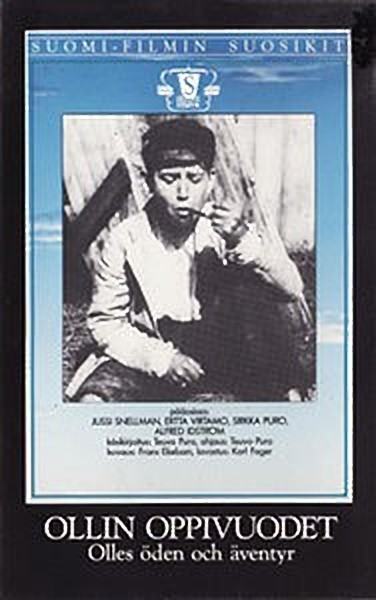
A definitive 6.3/10 rating for a film that redefined the boundaries of cult cinema. Olli's Apprenticeship remains a cornerstone of transgressive art.
The cinematic genesis of Finland is often synonymous with the name Teuvo Puro, and in his 1920 magnum opus, 'Olli's Apprenticeship', we witness a confluence of literary depth and visual pioneering that remains startlingly resonant a century later.
To engage with 'Olli's Apprenticeship' is to step into a world where the celluloid frame acts as a bridge between the romanticism of the 19th century and the stark realism of the 20th. Unlike the whimsical subversions found in The Madcap, Puro’s direction here is anchored by a gravity that feels almost geological. The story of Olli, portrayed with a haunting vulnerability by Emil Autere, is not merely a tale of a lost boy, but a sophisticated interrogation of the Finnish soul during a period of intense national self-definition. The film’s opening movements establish a pastoral serenity that is swiftly dismantled, mirroring the historical anxieties of a nation transitioning from imperial shadow to sovereign light.
The cinematography by Aarne Nyman captures the Finnish landscape not as a mere backdrop, but as an active participant in Olli's psychological unraveling. The contrast between the expansive, airy vistas of the manor and the claustrophobic, shadow-drenched interiors of the blacksmith's shop evokes a sense of chiaroscuro that rivals the expressionist tendencies of the era. While The Strongest might focus on the physical prowess of its protagonists, Puro focuses on the internal fortification of Olli’s spirit as he is hammered into a new shape by the relentless anvil of circumstance.
In the absence of spoken dialogue, the burden of narrative complexity falls upon the physicality of the ensemble. Annie Mörk delivers a performance of chilling intensity, her presence looming over the narrative like a premonition of tragedy. There is a specific cadence to her movements that suggests a deep-seated resentment, a class-based fury that predates the film’s specific plot points. This is not the melodramatic villainy often seen in Bab's Burglar; rather, it is a nuanced portrayal of a woman broken by the very system Olli was born to inherit.
Emil Autere’s transition from the pampered scion to the calloused apprentice is handled with a restraint that defies the theatrical excesses common in 1920. His face becomes a palimpsest upon which the hardships of his journey are written. We see the erasure of his aristocratic softness and the emergence of a rugged resilience. This metamorphosis is the film's central triumph. It echoes the thematic concerns of A Mother's Secret, yet strips away the sentimental veneer to reveal something far more elemental and unforgiving.
The brilliance of Anni Swan’s writing, filtered through Puro’s directorial lens, lies in its refusal to sanitize the realities of the working class. The apprenticeship is not a whimsical detour but a brutal immersion into the mechanics of survival. The forge sequences are masterclasses in rhythmic editing and atmospheric tension. The sparks flying from the anvil serve as a visual metaphor for the friction between Olli’s past and present. This is a far cry from the exoticized struggles in Aladdin's Other Lamp; here, the magic is found in the sweat and the soot, in the tangible weight of the iron.
Puro utilizes these scenes to comment on the dignity of labor, a theme that would become a cornerstone of Finnish cinema. However, he avoids the trap of didacticism. The film acknowledges the cruelty of Olli’s situation without devaluing the community he finds among the workers. There is a sense of camaraderie that contrasts sharply with the isolated grandeur of his former life. This duality is explored with a sophistication that brings to mind the historical weight of Rebecca the Jewess, though Puro’s scale is more intimate and, consequently, more piercing.
Visual storytelling in 'Olli's Apprenticeship' relies heavily on the iconography of the North. The winter sequences are particularly evocative, using the stark whiteness of the snow to isolate the characters and emphasize their existential solitude. The use of natural light, often filtered through frosted windowpanes or the hazy atmosphere of a winter morning, creates a dreamlike quality that buffers the harshness of the plot. This aesthetic choice distinguishes the film from the more urban-centric dramas of the time, such as Moths.
Furthermore, the costume design and set decoration work in tandem to illustrate the gulf between the classes. The velvet and lace of the manor are replaced by coarse wool and leather, textures that the camera lingers on with a tactile obsession. We feel the itch of the apprentice’s garb and the biting cold of the unheated workshop. It is this commitment to sensory verisimilitude that elevates the film above a mere morality play. It becomes an ethnographical document of a vanished era, much like the atmospheric tension found in The Storm.
Teuvo Puro’s contribution to the grammar of silent film is often overlooked in broader cinematic histories, yet 'Olli's Apprenticeship' demonstrates a command of pacing and visual metaphor that is undeniably sophisticated. His ability to weave multiple narrative strands—the search for the lost boy, the internal growth of the protagonist, and the social critique of the setting—into a cohesive whole is a testament to his craftsmanship. The film lacks the frenetic energy of The Zeppelin's Last Raid, opting instead for a slow-burn emotional resonance that pays dividends in its final act.
The supporting cast, including stalwarts like Eino Jurkka and Hemmo Kallio, provide a robust framework for the central drama. Their performances are grounded in a realism that suggests a deep familiarity with the types of characters they portray. This isn't the archetypal posturing found in King Lear; it is a lived-in, breathing representation of the Finnish populace. Even the smaller roles, such as those played by Sirkka Puro and Antti Ilvos, contribute to the film’s sense of a fully realized world.
As we look back at 'Olli's Apprenticeship' from the vantage point of the 21st century, its power remains undiminished. It is a film that demands much from its audience—patience, empathy, and an eye for detail—but rewards them with a profound understanding of the human capacity for adaptation. It stands as a precursor to the great social realist films of the mid-century, a bridge between the folk traditions of the past and the cinematic innovations of the future. While Ace of the Saddle might offer more immediate thrills, and The Man-Eater might provide more visceral shocks, Puro’s work offers something far more enduring: a reflection of ourselves in the crucible of change.
The film’s resolution, while satisfying the requirements of the genre, leaves the viewer with a lingering sense of melancholy. Olli returns to his status, but he is no longer the boy he was. The apprenticeship has left an indelible mark, a realization that the boundaries between 'us' and 'them' are as fragile as a pane of glass. In this sense, 'Olli's Apprenticeship' is a radical work, suggesting that true nobility is not a matter of birth, but of the trials one survives. It is a sentiment that echoes through the halls of cinema, from the mysteries of The Mystery of the Poison Pool to the domestic intricacies of Hotel Paradiso, yet it finds its most pure expression here, in the cold, clear light of the Finnish dawn.
A seminal masterpiece of early Nordic cinema that transcends its era through profound psychological depth and visual mastery.
IMDb 5.1
1920
Community
Log in to comment.