DbcultAccessing Vault...
Cult Review
Senior Film Conservator
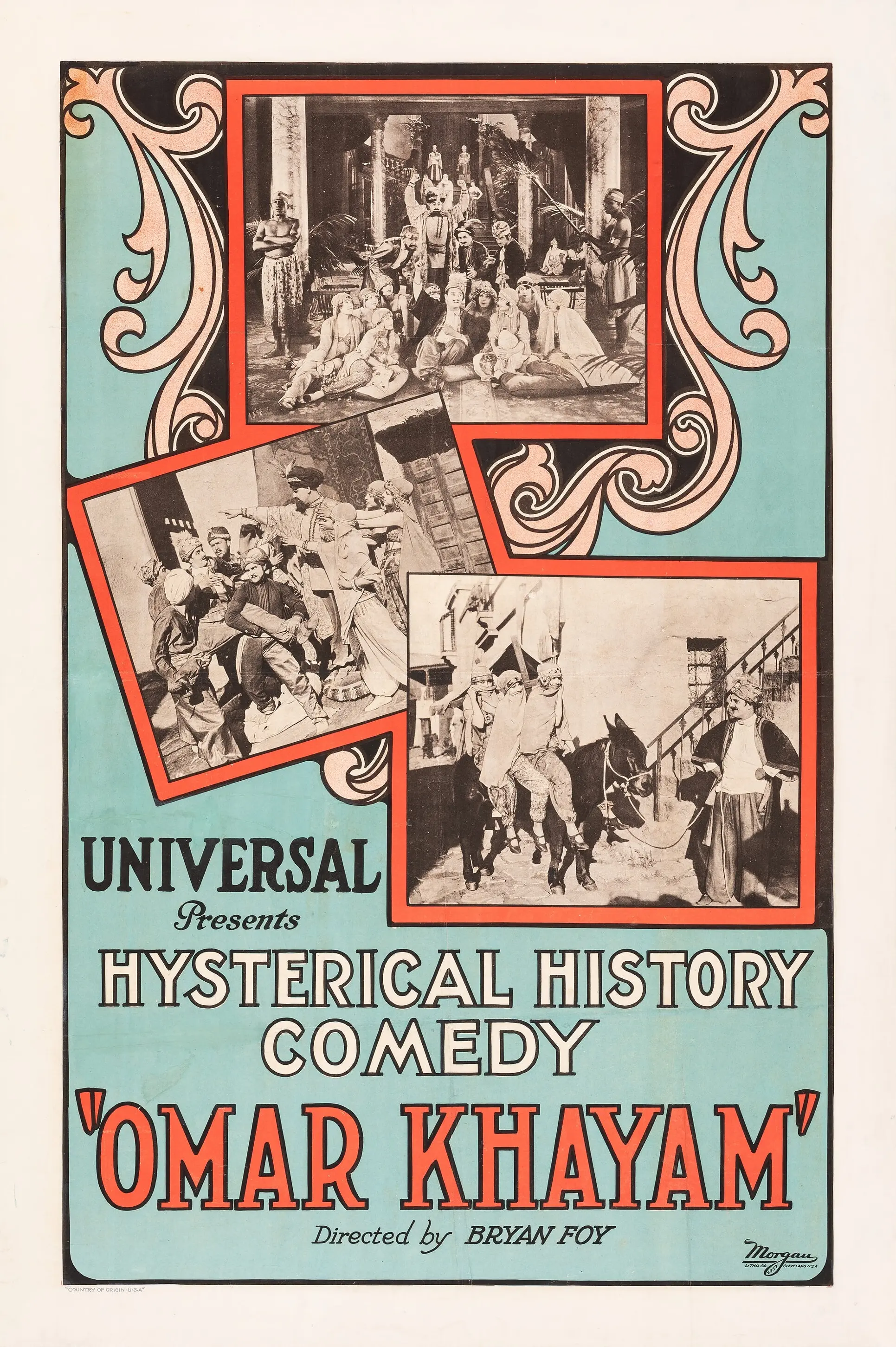
Step into the vibrant, often absurd, world of early 20th-century cinema with Bryan Foy’s delightful, if somewhat forgotten, silent comedy, 'Omar Khayham'. This 1922 confection, starring the inimitable Phil Dunham, offers a fascinating glimpse into the comedic sensibilities of its era, replete with mistaken identities, daring escapades, and a moral that’s as wry as it is timeless. At its core, the film is a testament to the power of infatuation, a force potent enough to drive a humble poetry piece-worker to the most audacious of deeds. Omar, our protagonist, is no epic hero in the traditional sense; rather, he's an everyman, albeit one possessed of an exceptionally active romantic imagination, who finds himself utterly smitten with Atta Bey-Bee, a woman whose beauty is matched only by her unfortunate status as a prized possession within Sultan Hassan Feifeh's sprawling harem.
The narrative, though simple, unfurls with a charming directness characteristic of the period. Omar's initial objective is not grand liberation or political intrigue, but a mere glimpse, a chance to behold the object of his sudden, overwhelming affection. This singular focus immediately endears him to the audience; who hasn't been gripped by an irrational desire to simply be near someone? His subsequent invasion of the seraglio is less a calculated military maneuver and more a spontaneous act of romantic desperation. The film expertly leverages the inherent humor in this premise, pitting Omar's amateurish yet determined efforts against the supposedly impregnable defenses of the harem. The eunuch guards, far from being formidable adversaries, are depicted as comically inept, easily outmaneuvered by Omar's blend of guile and sheer luck. This portrayal aligns with a common comedic trope of the era, where authority figures are often rendered impotent or foolish, paving the way for the protagonist's improbable successes. One might draw a parallel here to the physical comedy seen in films like Squabs and Squabbles, where the absurdity of the situation is amplified by the sheer clumsiness of those meant to uphold order.
Phil Dunham, in the role of Omar, is an absolute revelation. His performance is a masterclass in silent film acting, relying heavily on exaggerated facial expressions, precise physical comedy, and an underlying earnestness that prevents Omar from becoming a mere caricature. He embodies the lovestruck fool with such conviction that his outlandish actions feel almost justified. The moment he overpowers the eunuch guards is played for maximum comedic effect, a ballet of flailing limbs and bewildered expressions rather than genuine violence. This lighthearted approach ensures the film remains firmly in the realm of farce, never veering into anything genuinely threatening. Dunham's ability to convey a wide range of emotions without uttering a single word is truly remarkable, a skill honed by the demands of silent cinema. His performance here could easily be placed alongside other comedic luminaries of the time, recalling the energetic antics of actors in films such as What Happened to Jones, where the chaos is the very essence of the humor.
The plot thickens with Omar's detection by Sultan Hassan Feifeh, leading to a sprawling, breathless chase sequence that is undoubtedly one of the film's highlights. The seraglio transforms from a place of exotic allure into a labyrinthine playground for pursuit, with Omar dodging and weaving through its opulent chambers. This sequence is a masterclass in visual storytelling, using the architecture and furnishings of the harem to create dynamic comedic obstacles. The Sultan, initially a figure of imposing authority, is quickly reduced to a frustrated pursuer, his dignity eroding with each failed attempt to capture the elusive Omar. It's a classic setup: the underdog outwitting the powerful, a trope that resonates deeply with audiences across generations. The sheer inventiveness of the chase, with Omar utilizing every available prop and corner, speaks volumes about Bryan Foy’s directorial flair for comedic timing. There's an echo of the frantic, almost balletic chaos found in films like The Catspaw, where physical comedy drives much of the narrative.
But Omar's ingenuity doesn't stop there. His return, disguised as a dancer, elevates the comedic stakes considerably. This transformation is not merely a plot device; it's a commentary on gender roles and societal expectations, playfully subverted for comedic gain. Omar, now adorned in flowing silks and exotic makeup, performs a vampish dance for the Sultan. The humor here is multi-layered: the audience is privy to the deception, watching with bated breath as Omar, in drag, seduces his unwitting adversary. Dunham's portrayal of the dancer is wonderfully over-the-top, blending feminine grace with a hint of awkward masculinity, creating a truly memorable scene. The Sultan's infatuation with this mysterious newcomer is both ludicrous and perfectly understandable within the film's heightened reality. This kind of cross-dressing comedy was a staple of the era, often used to explore themes of identity and desire, albeit in a lighthearted manner. One might compare the playful subversion of identity here to the dramatic, yet equally transformative, disguises seen in films like The Phantom Fortune, though with vastly different narrative intentions.
The rescue of Atta Bey-Bee is, predictably, fraught with comedic tension. Omar, still in his dancer's guise, manages to extract Atta from the harem, a triumphant moment that promises a romantic climax. However, it is precisely at this juncture that Foy delivers the film's most delicious twist. As Omar prepares to bask in the glory of his daring rescue and claim his beloved, he discovers, to his utter dismay, that Atta already has a husband waiting for her. This revelation is a masterful stroke of comedic irony, deflating Omar's heroic aspirations with a single, unexpected truth. The audience, having invested in Omar's romantic quest, is left to revel in the sheer absurdity of the situation. It's a classic punchline, delivered with impeccable timing, and it recontextualizes Omar's entire adventure. His grand romantic gesture, born of infatuation, turns out to be entirely misplaced. This kind of narrative subversion, where the expected romantic payoff is cleverly denied, showcases a sophisticated comedic sensibility that goes beyond mere slapstick.
The film’s moral – “When a man decides to take a wife he should be careful whose wife he takes” – is delivered with a knowing wink, encapsulating the entire farcical journey in a single, pithy statement. It’s a humorous caution against jumping to conclusions, against the perils of unverified romantic pursuits. This moral isn't preachy; rather, it's an amusing summation of Omar's misadventure, reinforcing the film's lighthearted tone. It suggests that even in matters of the heart, a modicum of due diligence can save one from considerable embarrassment. This understated wisdom is a charming flourish, elevating 'Omar Khayham' beyond simple slapstick into a realm of observational comedy. The film, in its brevity, manages to explore themes of desire, deception, and the often-unforeseen consequences of impulsive actions. It reminds us that appearances can be deceiving, and that the object of one's affection may not always be available or, indeed, even desirable once the full truth is revealed. The final image of Omar swearing off further 'harem-scarem' adventures is both comical and poignant, a man humbled by experience but perhaps no less prone to future romantic folly.
From a technical perspective, 'Omar Khayham', like many films of its era, showcases the burgeoning artistry of silent cinema. The intertitles are concise and effective, conveying dialogue and narrative beats without bogging down the visual flow. The cinematography, while perhaps not groundbreaking, is functional and clear, allowing Dunham's performance and the comedic action to take center stage. The set design, particularly within the harem, is evocative, creating an atmosphere of exoticism that was popular with audiences of the time. The costumes, too, play a crucial role, especially Omar's dancer disguise, which is both visually striking and essential to the plot. The pacing is brisk, a necessity for silent comedies aiming to maintain audience engagement through continuous action and visual gags. There’s a raw energy to these early films, a directness in their storytelling that can be incredibly refreshing compared to the more convoluted narratives of later eras. This directness can be seen in other contemporary works, such as His Briny Romance, where the narrative, though different in subject, shares a similar streamlined approach to comedic storytelling.
The film's comedic appeal is rooted in universal themes: the folly of love, the thrill of forbidden desire, and the humor found in human error. While the specific cultural context of a harem might seem distant to modern viewers, the underlying emotions and motivations remain entirely relatable. Omar's journey is a microcosm of countless romantic pursuits, albeit one amplified by the dramatic backdrop of a Sultan's seraglio. The film’s ability to elicit genuine laughter almost a century after its release is a testament to the enduring power of well-crafted physical comedy and sharp, albeit simple, storytelling. It doesn't rely on complex character arcs or profound philosophical insights; instead, it offers pure, unadulterated entertainment. It’s a reminder that sometimes, the simplest stories, told with conviction and a healthy dose of wit, are the most effective. In an age where spectacle often overshadows substance, there's a certain charm in revisiting a film that finds its strength in the expressive power of its performers and the cleverness of its gags.
Comparing 'Omar Khayham' to other films of its period reveals its place within a vibrant cinematic landscape. While it lacks the epic scope of some dramas or the groundbreaking innovation of certain experimental works, it perfectly encapsulates the spirit of early comedic shorts. It shares a certain anarchic energy with films like The Sons of Satan, where characters often find themselves in ludicrous situations, driven by impulse and desire. Yet, it maintains a lighter, more whimsical tone, avoiding any genuine sense of peril. The film's charm lies in its unpretentious nature, its willingness to simply entertain without grandiosity. It doesn't aim to be a profound cinematic statement, but rather a momentary diversion, a chuckle-inducing romp that leaves the audience with a smile. It is, in essence, a perfectly executed piece of silent era fluff, a testament to the fact that even the most straightforward narratives can be elevated by charismatic performances and clever comedic beats.
Ultimately, 'Omar Khayham' stands as a delightful artifact from a bygone cinematic era. It’s a film that, despite its age, continues to charm and amuse, primarily due to Phil Dunham’s magnetic performance and Bryan Foy’s adept handling of comedic pacing. It’s a valuable piece for anyone interested in the evolution of film comedy, offering insights into the tropes and techniques that defined the genre in its nascent stages. The moral, delivered with such a knowing wink, ensures the film concludes on a memorable, humorous note, cementing its place as a minor but thoroughly enjoyable classic. For those seeking a dose of old-fashioned fun, a peek into the whimsical world of silent-era escapades, 'Omar Khayham' is a journey well worth taking. It’s a reminder that laughter, in all its forms, transcends time and medium, enduring as one of cinema’s most powerful and universal languages. The film's enduring appeal lies in its ability to transport viewers to a simpler time, where a man's misguided quest for love could lead to the most wonderfully chaotic and ultimately heartwarming misadventures, proving that sometimes, the biggest laughs come from the most unexpected places. It's a testament to the timeless nature of human folly and the delightful ways cinema captures it.
IMDb 7.4
1925
Community
Log in to comment.