DbcultAccessing Vault...
Cult Review
Senior Film Conservator
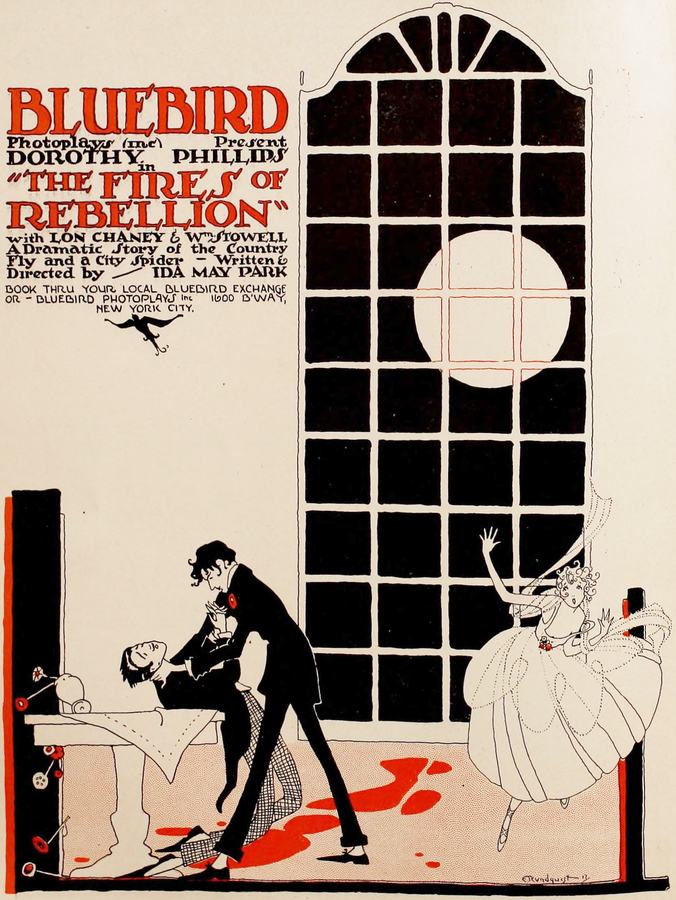
The furnace-light of Ida May Park’s Fires of Rebellion (1918) flickers like a kinetoscopic cautionary sermon, yet its embers still scorch contemporary retinas.
From the first iris-in on the Garvey kitchen—where a battered kettle whistles over a father's slurred lament—Park orchestrates a chiaroscuro ballet between industrial determinism and the mirage of metropolitan emancipation. Dorothy Phillips’s Madge moves through frames as though every step might crack the celluloid: shoulders squared against fate, eyes registering each airborne cinder as a possible omen. Her refusal of John Blake’s proposal is not mere romantic caprice; it is an existential revolt against the gravitational pull of generational entropy. William Stowell’s Blake, foreman by daylight and poet by gas-lamp, embodies the film’s dialectic: muscled tenderness wrapped in soot, a man who can calibrate a loom yet weep over a broken sparrow’s egg.
Park’s screenplay, lean yet feverish, distills the Progressive-Era fear that cities are centrifuges spinning virtue into froth. Once Madge boards the outbound train, the intertitles shed their pastoral patience and acquire the staccato urgency of telegraph wires: "Opportunity—like silk—slips fast." The metropolis, rendered through sprawling miniatures and double-exposed skylines, looms like a phosphorescent Kraken, its neon tentacles promising silk stockings and self-sovereignty. Inside the department-store salon, rows of faceless mannequins stand sentinel, glass eyes reflecting Madge’s trepidation back at her until she becomes one of them—an object d’art for predatory buyers.
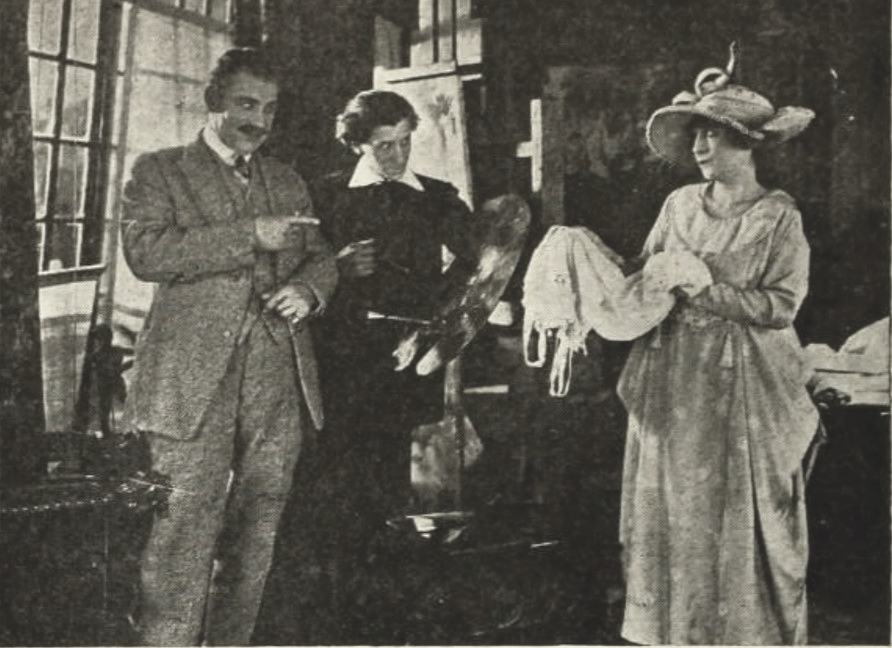
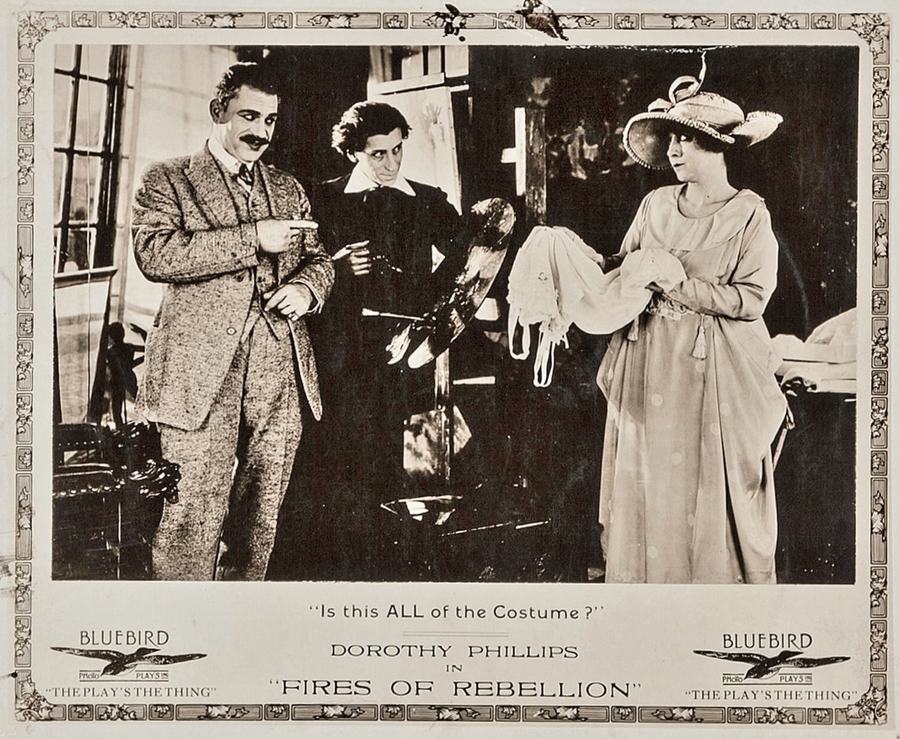
The notorious lingerie sequence—censored in several territories—operates on two registers of voyeurism: the diegetic purchasers measuring Madge’s proportions with carnal arithmetic, and the extra-diegetic audience forced to confront its own appetite for the spectacle of endangered innocence. Cinematographer King D. Gray bathes the set in pearlescent key lights, so every satin strap becomes a moral tripwire. When the garments shrink to scandalous brevity, the camera tilts upward, not to titillate but to indict: ceiling fans spin like tribunal blades above the girl who dared seek autonomy.
Enter Lon Chaney, uncredited yet magnetic, as the slick floor manager whose grin is all canines. Chaney’s physical lexicon—wrists flicking like switchblades, torso inclined as though perpetually sniffing for weakness—prefigures his later macabre triumphs. Here he is urban modernity incarnate: efficient, seductive, spiritually eviscerated. His presence hovers even when off-screen; characters glance over shoulders as though fearing his shadow might sprout from their own.
Park’s montage grammar alternates between languid cross-fades that suggest temporal paralysis and Eisensteinian smash-cuts that mirror Madge’s cardiac flutters. A match-cut from factory piston to city steam vent literalizes the interchangeability of oppressive apparatuses, whether they be in mill towns or skyscrapers. Meanwhile, the recurring visual motif of fire—forge sparks, candle stubs, train-engine plumes—implies that rebellion, once ignited, can either purify or raze.
William Stowell’s Blake, arriving mid-film like a deus ex machina in a flat cap, complicates the rescue narrative. Instead of wielding brute possessiveness, he petitions Madge’s trust through restraint: palms upturned, voice hushed, the very antithesis of her drunken father’s belligerence. Their reconciliation inside a moonlit rooftop garden—obviously a studio set draped in gauze—becomes a transcendent tableau: two figures negotiating love as if it were a union contract, clause by tender clause. The moment Blake swears he will "never ask for more than your willing heart," the film pivots from melodrama to moral fable, arguing that ethical masculinity can be learned, not merely inherited.
Golda Madden’s Cora Hayes, the stenographer who first tempts Madge cityward, functions as an anti-Mephistopheles: well-intentioned yet catastrophically naïve. Her arc—from chirping optimist to disillusioned casualty—exposes the city’s bait-and-switch cruelty. Cora’s eventual exit, framed behind frosted glass while clutching a paycheck that might as well be an eviction notice, delivers a gut-punch of irony: the urban ladder has rungs only for those already airborne.
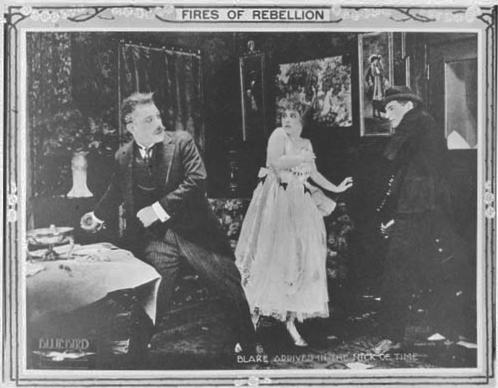
Composer-conducted scores for the 1918 roadshows varied wildly; some exhibitors slapped on generic foxtrots, while others commissioned original leitmotifs. In today’s archival screenings, a thoughtful accompanist will weave factory-whistle minor chords under Madge’s rural scenes, then segue into ragtime dissonance as elevators ascend skyscrapers. Such musical dialectics amplify Park’s thesis: progress whistles a jaunty tune while pickpocketing the soul.
Comparative contextualization enriches the experience: Little Miss Optimist offers a sun-blanched counter-fantasy where virtue ricochets back as prosperity, whereas Fantomas: The Man in Black revels in criminal anarchy sans moral reckoning. Fires of Rebellion occupies the liminal midpoint—neither utopic nor nihilistic, but prismatically conflicted.
Contemporary viewers may bristle at the finale’s apparent concession to patriarchal refuge; after all, Madge’s liberation is mediated through a man’s protective embrace. Yet a closer read reveals a sly subversion: notice the last shot’s blocking—Madge stands in foreground focus while Blake recedes, slightly out of focus, his supportive posture mirroring the film’s earlier mannequins but with the crucial inversion of agency. She faces the camera, and by extension the audience, with a gaze that is neither conquered nor rescued but strategically allied. Park smuggles a proto-feminist compromise into a cultural climate that demanded marital closure.
Archival survival of the seven-reeler remains patchy; only five reels surfaced in the 1998 Gosfilmofrod vault indexing, and a 4K restoration by EYE Filmmuseum in 2019 stitched in stills and explanatory intertitles for the missing segments. The restored tinting—amber for interiors, viridian for exteriors, fuchsia for the risqué salon—revives Park’s chromatic symbolism, reminding viewers that silent cinema was never monochromatic but rather a symphonic spectrum.
Ultimately, Fires of Rebellion endures because its anxieties are our own: the gig economy replicates the piece-work floor, urban rents devour wages like cotton looms devouring fingers, and the promise of self-branding often demands the exhibition of one’s intimate strata. Park’s flickering parable cautions that rebellion devoid of communal ethic merely substitutes one predatory apparatus for another. Yet in the ember-glow of Blake and Madge’s rooftop pact, the film whispers that solidarity—tempered by mutual accountability—can rekindle agency even within capitalism’s blazing maw.
Seek out a screening with live accompaniment; let the violins saw through your complacency, allow the celluloid scratches to remind you that history’s reel still turns, its sprocket holes clicking like the metronome of unresolved struggle. When the lights rise, you may find yourself inspecting your own garments—literal and metaphorical—wondering which invisible foreman currently appraises your silhouette. And in that moment of audience self-reflexivity, Ida May Park’s century-old fires spark anew, searing the present tense.
IMDb 4.7
1926
Community
Log in to comment.