DbcultAccessing Vault...
Cult Review
Senior Film Conservator
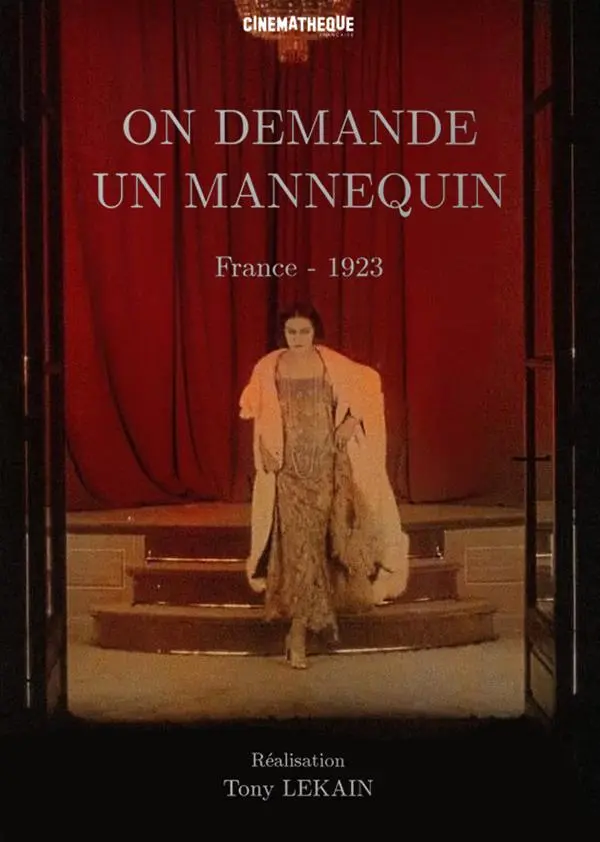
In the 1920s French film On demande un mannequin, director Tony Lekain presents a thought-provoking exploration of identity, class, and the objectification of women in high fashion. The film tells the story of Eugénie, the ingénue daughter of a humble barmaid, who undergoes a transformation, trading her plebeian existence for a life of opulence as Nicole, a mannequin in a prestigious couture house.
The film's protagonist, played by Monique Chrysès, is a complex and multifaceted character, whose journey from obscurity to fame serves as a scathing critique of the societal pressures that govern the lives of women, particularly those in the spotlight. As Eugénie navigates the rarefied realm of high fashion, she must confront the consequences of her newfound status and the expectations that come with it.
The film's portrayal of the fashion world is both captivating and unsettling, as it exposes the darker side of an industry that objectifies and commodifies women. The couture house, with its opulent decor and exquisite garments, serves as a symbol of the aspirational lifestyle that Eugénie and her peers strive for, but at what cost?
The supporting cast, including Paulette Ray and Jeanne Helbling, add depth and nuance to the film, as they navigate their own struggles and relationships within the fashion world. André Luguet's character, in particular, serves as a foil to Eugénie, highlighting the class divisions and social hierarchies that govern the world of high fashion.
Upon closer inspection, On demande un mannequin reveals itself to be a film that is both a product of its time and remarkably prescient. The themes of identity, class, and the objectification of women are just as relevant today as they were when the film was first released. In this sense, On demande un mannequin can be seen as a pioneering work, one that paved the way for future explorations of these issues in film.
In comparison to other films of the era, such as Without Evidence and Ludzje bez jutra, On demande un mannequin stands out for its nuanced and multifaceted portrayal of women's lives. While films like Die toten Augen and The Shoes That Danced also explore themes of identity and class, On demande un mannequin does so with a unique blend of style and substance.
The film's cinematography and production design are equally noteworthy, capturing the opulence and glamour of the fashion world with a level of detail and authenticity that is nothing short of remarkable. The use of costume and set design serves to further underscore the themes of identity and class, highlighting the ways in which appearance and material possessions can both empower and ensnare.
In conclusion, On demande un mannequin is a film that is both a fascinating artifact of the 1920s French cinema and a thought-provoking exploration of themes that remain remarkably relevant today. With its nuanced portrayal of women's lives, scathing critique of societal pressures, and remarkable production design, On demande un mannequin is a must-see for anyone interested in film, fashion, or the human experience.
For those interested in exploring more films like On demande un mannequin, we recommend checking out The Eternal Sin, Her Own People, and A Quiet Street. These films, like On demande un mannequin, offer nuanced explorations of identity, class, and the human condition.
Ultimately, On demande un mannequin is a film that will leave viewers pondering the consequences of their own desires and the expectations that come with them. As a work of cinematic art, it is a testament to the power of film to challenge, inspire, and transform.
IMDb 5.9
1927
Community
Log in to comment.