DbcultAccessing Vault...
5.5/10
Senior Film Conservator
A definitive 5.5/10 rating for a film that redefined the boundaries of cult cinema. On the Banks of Allan Water remains a cornerstone of transgressive art.
There are films that merely tell a story, and then there are those that etch themselves into the very fabric of your being, challenging preconceived notions and exposing the raw, uncomfortable truths of human existence. On the Banks of Allan Water, a poignant cinematic endeavor penned by Reuben Gillmer, belongs firmly in the latter category. It’s not just a tale of romance gone awry; it’s a searing indictment of societal rigidity, a lament for lost innocence, and a stark examination of how deeply ingrained class distinctions can poison even the purest of affections. From its evocative title to its heart-wrenching climax, this film compels you to reflect on the true cost of 'marrying up' and the often-invisible burdens placed upon those who dare to cross social chasms.
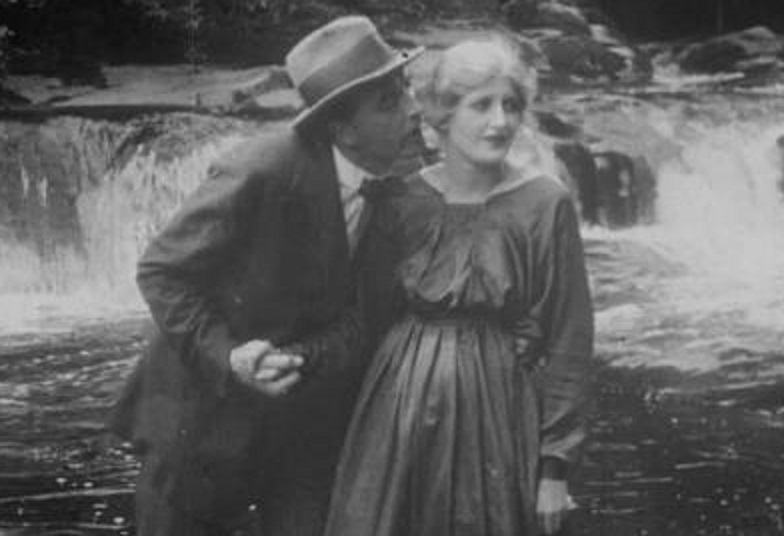
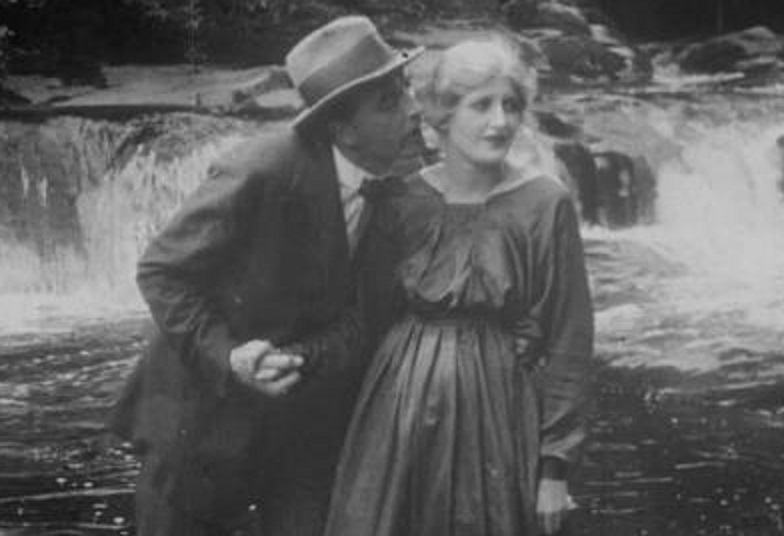
At the core of this narrative lies the seemingly idyllic romance between Elspeth, the miller's daughter, brought to life with exquisite sensitivity by Violet Graham, and Alistair, the scion of a baronet, portrayed with conflicted earnestness by F.G. Clifton. Their initial courtship, we can imagine, was a whirlwind of stolen glances amidst the rustic charm of the Allan Water, a place where their differences seemed to melt away under the glow of nascent love. Elspeth, vibrant and unburdened by the complexities of aristocratic life, embodies a natural grace and forthrightness. She is a woman of the earth, her hands accustomed to honest labor, her spirit untamed by societal artifice. Alistair, on the other hand, while smitten, carries the invisible weight of his lineage, a burden he perhaps underestimated in the flush of young love. He sees Elspeth's beauty and spirit, but perhaps not the impenetrable fortress of tradition that surrounds his world, a fortress she would soon find herself trapped within.
Their decision to marry, a testament to love’s defiant optimism, serves as the narrative’s pivotal turning point. It’s a moment of profound hope, yet simultaneously, a harbinger of the tribulations to come. Much like the characters in When Love Is King, they believe their affection will conquer all, but the film quickly disabuses them, and us, of such romantic naivety. The transition from the miller’s humble, yet loving, abode to the grand, imposing estate of Alistair’s family is depicted with a palpable sense of unease. For Elspeth, it’s not merely a change of address; it’s an alien landscape where every gesture, every word, every silence is imbued with unspoken rules and judgments she cannot comprehend.

The true genius of Gillmer’s writing, and the film’s powerful execution, lies in its meticulous portrayal of Elspeth’s gradual unraveling. It’s not a sudden, dramatic collapse, but a slow, insidious erosion of her self-worth. Grania Gray, perhaps as Alistair’s mother or a formidable aunt, along with J. Hastings Batson and Roy Byford in roles that likely represent the entrenched aristocracy, expertly craft an environment of subtle, yet relentless, condescension. There are no overt cruelties, perhaps, but a thousand tiny slights: the raised eyebrow, the hushed conversation, the patronizing smile, the impossible expectations of etiquette that Elspeth simply cannot meet. Her attempts to adapt, to learn, to fit in, are met not with encouragement, but with a polite, impenetrable wall of judgment. Her natural vivacity is stifled, her laughter replaced by a nervous quietude, her forthrightness by a hesitant meekness.
Alistair, caught between his devotion to Elspeth and his lifelong conditioning, becomes a tragic figure himself. F.G. Clifton conveys his struggle with a quiet intensity. He loves his wife, undoubtedly, but his inability to shield her from his family’s unspoken disdain, or perhaps his own unconscious absorption of their values, makes him complicit in her suffering. He tries, perhaps, to bridge the gap, to explain the nuances of her world to his, or his to hers, but the chasm is simply too vast. His efforts, however well-intentioned, often serve only to highlight Elspeth’s perceived inadequacies, deepening her sense of isolation. This delicate dynamic, where love is present but insufficient to overcome deep-seated social barriers, resonates with the struggles depicted in films like Marrying Money, though On the Banks of Allan Water delves into the psychological toll with far greater depth and pathos.
The film masterfully charts Elspeth's psychological torment. The initial culture shock gives way to profound loneliness, then to a crushing sense of inadequacy, and finally, to a desperate despair. Her once bright eyes become haunted, her posture stooped, her spirit visibly diminished. Violet Graham's performance here is nothing short of breathtaking, conveying the inner turmoil with a raw authenticity that transcends the silent era's often grander gestures. We witness her withdrawal, her silent pleas for understanding, and the ultimate realization that she is an outsider, forever alien in her new world. This internal struggle, a battle against an unseen enemy of social expectation, is reminiscent of the psychological tension found in The Shadow of a Doubt, where internal anxieties become as formidable as external threats.
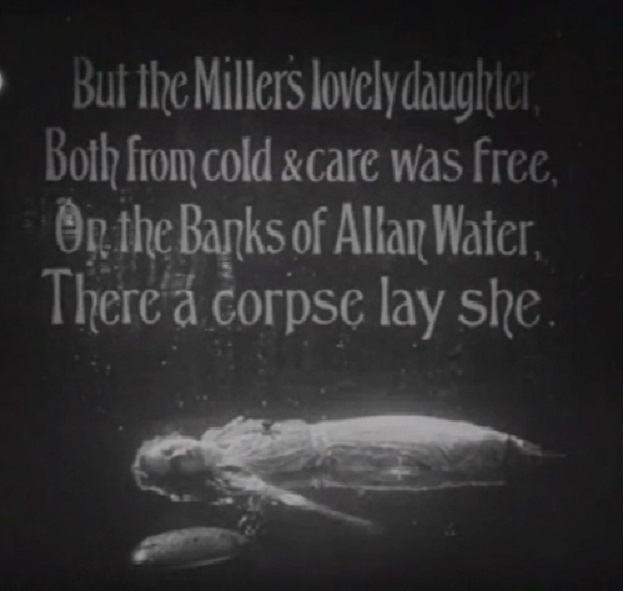
The climactic moments, leading to her near-fatal act, are handled with a sensitivity that avoids sensationalism, instead focusing on the profound tragedy of a soul pushed to its absolute breaking point. It is not an act of madness, but an act born of utter exhaustion and the crushing weight of a life she can no longer bear. The film doesn't shy away from the brutal reality of what relentless social pressure can do to an individual, especially one who lacks the tools or the support system to navigate such treacherous waters. Basil Gill, perhaps as a sympathetic clergyman or a doctor, might offer a glimmer of humanity, a voice of reason amidst the suffocating judgment, but even such solace comes almost too late.
Reuben Gillmer's screenplay is a testament to the enduring power of character-driven drama. The plot, while seemingly straightforward, is imbued with layers of social commentary that remain relevant even today. Gillmer avoids easy answers or simplistic villains. The 'antagonists' are not overtly malicious, but rather products of their environment, perpetuating a system that they themselves are bound by. This nuanced portrayal elevates the film beyond a mere melodrama, transforming it into a profound exploration of human nature and societal constructs. The pacing allows for a deep immersion into Elspeth's emotional journey, building tension not through external events, but through the slow, agonizing erosion of her inner world.
The visual storytelling, a hallmark of cinema from this period, would have relied heavily on expressive performances and evocative settings. One can imagine the stark contrast between the warm, inviting interiors of the miller’s cottage and the cold, imposing grandeur of the baronet’s estate. The use of natural landscapes, perhaps the very 'Allan Water' itself, could serve as a visual metaphor for Elspeth’s yearning for freedom and simplicity, a stark counterpoint to the gilded cage she finds herself in. The direction, therefore, must have been acutely aware of these visual cues, using them to amplify the emotional resonance of Gillmer's narrative.
The themes explored in On the Banks of Allan Water find compelling parallels in other cinematic works, highlighting the universal and timeless nature of class struggle and the challenges of social mobility. One cannot help but draw comparisons to films like Graustark, where aristocratic settings often serve as the backdrop for romantic entanglements complicated by rigid social structures and expectations. While Graustark might lean more towards adventure or lighter romance, the underlying tension of social standing is undeniably present.
Similarly, the plight of an individual attempting to ascend or navigate a new social sphere, often with disastrous personal consequences, is a recurring motif. Think of the societal pressures and the yearning for acceptance seen in works like The Upstart, where characters challenge or are challenged by existing hierarchies. The internal conflict of Alistair, caught between his loyalty and his conditioning, also finds echoes in films like The Man on the Box, which often explores themes of mistaken identity and the blurring of class lines, though perhaps with a more comedic or adventurous bent. Here, the blurring is tragic, not humorous.
Even films focused on the intricacies of relationships, such as Akit ketten szeretnek (Those Whom Two Love), while perhaps dealing with different kinds of emotional entanglements, share the common thread of individuals navigating complex emotional landscapes where love is tested and sometimes fails under duress. The raw emotional honesty of Elspeth’s struggle is a reminder that the human heart, regardless of era or setting, is vulnerable to the pressures of its environment.
What ultimately makes On the Banks of Allan Water such a powerful and enduring piece of cinema is its profound capacity to evoke empathy. We don't just observe Elspeth's suffering; we feel it. We understand the suffocating weight of expectations, the pain of being perpetually misunderstood, and the devastating impact of a society that values lineage over genuine human connection. The film serves as a timeless reminder that true love, while powerful, is not always enough to overcome the deeply entrenched prejudices and structures that define our world. It forces us to confront uncomfortable questions about privilege, acceptance, and the often-invisible lines that divide us.
Reuben Gillmer's work, brought to life by a dedicated cast, especially the heart-rending performance of Violet Graham, stands as a testament to the enduring power of cinema to reflect and critique the human condition. It’s a film that lingers long after the credits roll, prompting introspection and perhaps, a renewed appreciation for the often-unseen battles waged within the quiet confines of a human heart. It's a somber, yet essential, viewing experience that underscores the fragility of happiness when confronted by the unyielding forces of class and tradition.
IMDb 7.4
1926
Community
Log in to comment.