DbcultAccessing Vault...
Cult Review
Senior Film Conservator
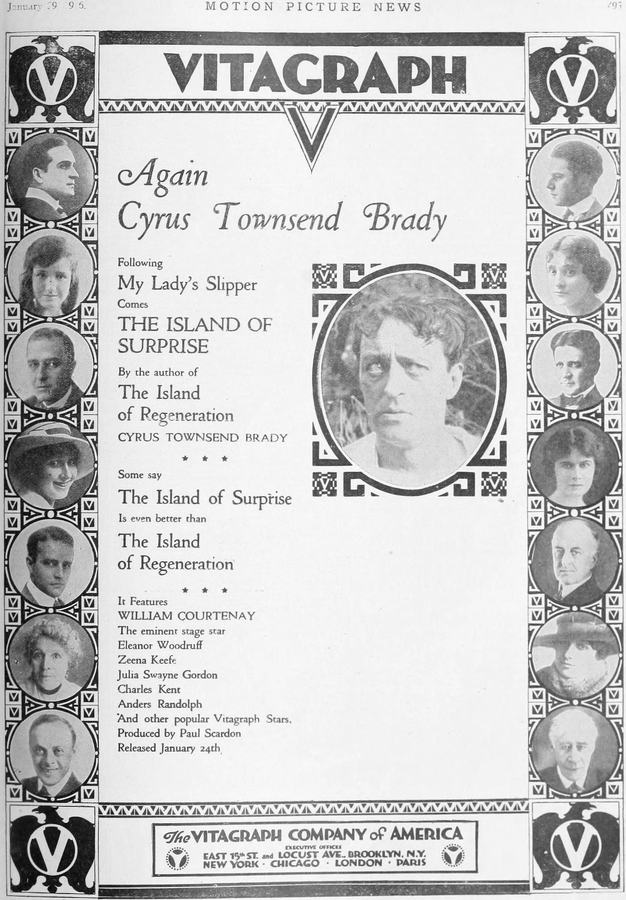
The year 1916 represented a watershed moment for American cinema, a period where the medium began to shed its nickelodeon skin and embrace the sprawling complexity of the multi-reel feature. Within this transformative era, The Island of Surprise emerges not merely as a relic of its time, but as a fascinating interrogation of social artifice and psychological fragility. Directed with a surprisingly modern sense of pacing, the film utilizes a bifurcated structure that begins in the mahogany-scented boardrooms of Wall Street and terminates on the jagged, sun-bleached shores of an unnamed Pacific isle. It is a narrative of two halves: the first, a drawing-room comedy of manners; the second, a proto-survivalist thriller that predates the tropes of modern island cinema by decades.
At the heart of this cinematic labyrinth is William Courtenay’s Robert Lovell, a character caught between the crushing gravity of paternal expectation and the burgeoning autonomy of the modern individual. His secret marriage to Dorothy Arden (played with a quiet, steely resolve by Eleanor Woodruff) serves as the catalyst for a series of deceptions that feel remarkably contemporary. Unlike the more straightforward morality plays of the era, such as The Mating, this film leans into the inherent messiness of human desire. When Robert is pressured to court the 'other' Dorothy—the daughter of his father’s business partner—the film cleverly avoids making any character a true villain, instead portraying them as prisoners of their respective social strata.
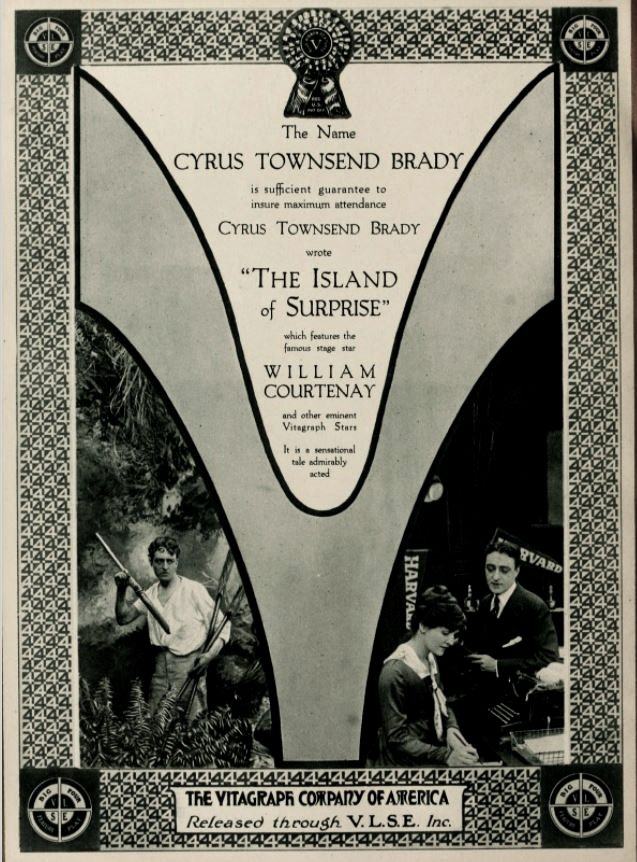
The transition to the yachting sequence introduces a palpable sense of dread beneath the veneer of high-society leisure. The cinematography here, while limited by the technology of the day, manages to capture the vastness of the ocean, a visual metaphor for the characters' increasing isolation from the rules of civilization. It is here that we see the echoes of other contemporary works like The Spendthrift, where the accumulation of wealth provides no shield against the whims of fate. The 'Island of Surprise' itself acts as a crucible, a place where the masks of Wall Street are forcibly removed. When a storm separates the trio from the yacht, the film sheds its societal trappings and enters a realm of pure, unadulterated human instinct.
The central conceit—Robert’s amnesia following a landslide—is handled with a narrative audacity that challenges the audience's perception of truth. In a sequence that feels like a precursor to the psychological depth seen in Three Weeks, the two women are forced into a competition for Robert’s soul. Dorothy Casselis, portrayed with a desperate, almost tragic ambition by Zena Keefe, seizes the opportunity to claim a life that was never hers. It is a fascinating study in identity; if a man has no memory of his past, is he still the husband he once was? This existential quandary elevates the film above the standard melodrama of the 1910s, placing it in conversation with more avant-garde European works like Satanasso.
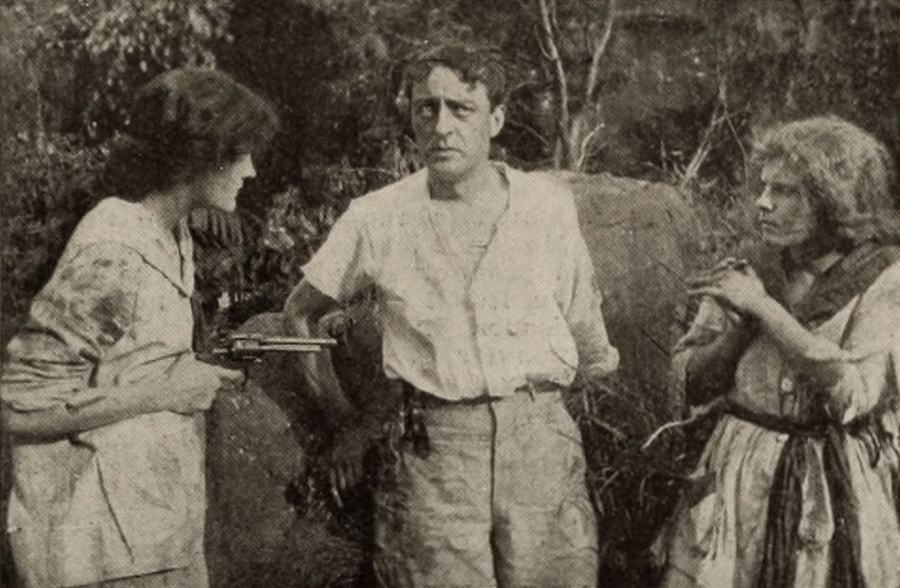
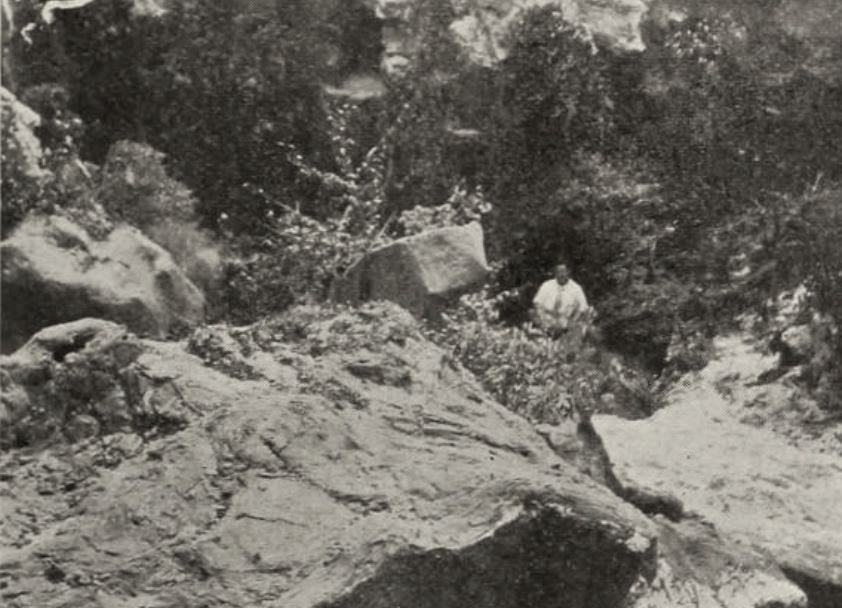
The production design of the island sequences deserves significant praise. While many films of this vintage relied on painted backdrops, The Island of Surprise utilizes location shooting to great effect. The rugged terrain and the encroaching jungle create a sense of genuine peril. This isn't the romanticized wilderness of The Trail of the Lonesome Pine; it is a hostile environment that demands adaptation. The landslide sequence, in particular, is a marvel of early practical effects, conveying a sense of terrestrial violence that feels visceral even to a modern viewer accustomed to CGI spectacles.
As the narrative progresses, the tension between the two Dorothys reaches a fever pitch. The script, penned by the Brady brothers, eschews the typical catfight tropes in favor of a more nuanced psychological battle. There is a profound sadness in Dorothy Arden’s inability to prove her marriage, a struggle that mirrors the erasure of female agency often found in the era’s cinema, such as in Diane of the Follies. Her husband is physically present but emotionally absent, a ghost of the man she married. Meanwhile, the 'false' Dorothy’s claim is fueled not by malice, but by a delusional hope for a love that could have been. This complexity is rare for 1916 and suggests a maturity in the writing that was ahead of its time.
The third act introduces a sudden shift into the 'primitive' adventure genre. The arrival of the island's indigenous population as a threat is, admittedly, a product of its time, reflecting the colonial anxieties and racial stereotypes prevalent in early 20th-century media. Yet, from a purely structural standpoint, this external threat serves to resolve the internal deadlock between the three protagonists. Facing certain annihilation, the petty disputes over marital status evaporate, replaced by a primal drive for survival. This sequence reminds one of the physical intensity found in Jeffries-Johnson World's Championship Boxing Contest, where raw physicality takes center stage over intellectual discourse.
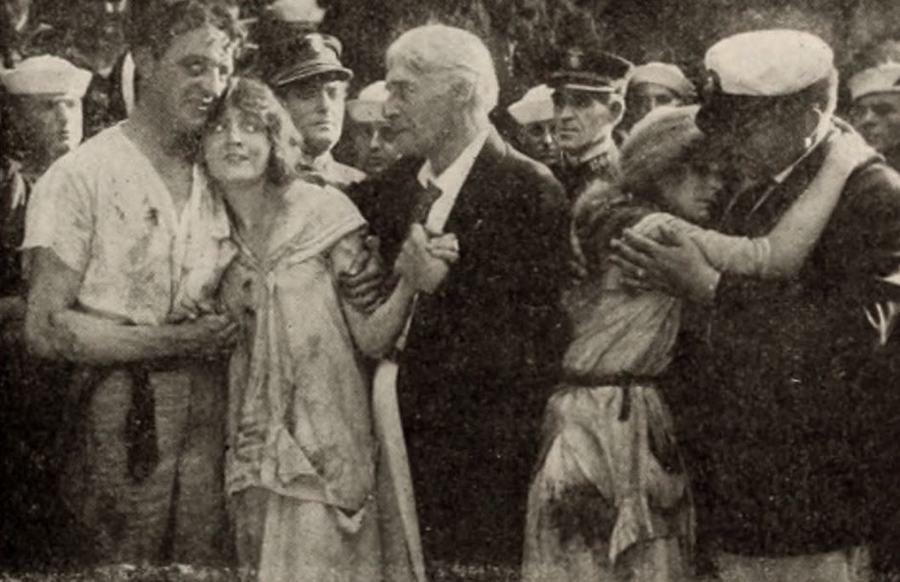
The resolution, involving a naval rescue and a sudden restoration of memory, might seem like a convenient deus ex machina to contemporary audiences. However, within the context of the film's thematic exploration, it functions as a restoration of the 'natural order.' The shrapnel from the man-of-war doesn't just disperse the attackers; it shatters the illusion that the island had cast over the trio. Once the safety of 'civilization'—represented by the Navy—is reintroduced, the truth can no longer be suppressed. Robert’s awakening is not just a medical recovery; it is a moral one. He recognizes his wife not through a logical deduction, but through a spiritual reconnection that transcends his fractured psyche.
Comparing this film to others of its ilk, such as The Middleman or The Strength of Donald McKenzie, one notices a distinct lack of heavy-handed moralizing. The film allows its characters to exist in a gray area for a significant portion of its runtime. The father, Godfrey Lovell, is not a mustache-twirling villain but a man blinded by his own success, much like the characters in Evidence. His eventual forgiveness of the secret marriage is a poignant admission that life, like the ocean, cannot be fully controlled by even the wealthiest of men.
Technically, the film is a showcase for the Vitagraph Company’s high production standards. The lighting in the cabin scenes on the yacht utilizes shadows to create a sense of intimacy and secrecy that was quite sophisticated for the era. The contrast between these dark, indoor spaces and the blindingly bright island exteriors underscores the shift from the hidden world of the secret marriage to the exposed reality of the survival struggle. It lacks the exoticism of Die Lieblingsfrau des Maharadscha, opting instead for a gritty, realistic depiction of isolation that feels more grounded in the American experience.
Ultimately, The Island of Surprise is a testament to the power of early narrative cinema to explore complex themes of memory and identity. It is a film that rewards close viewing, offering more than just the thrills of a desert island adventure. It asks us to consider what defines us when our history is stripped away. Is it our legal status? Our social standing? Or is it something more intrinsic, a pull of the heart that even a landslide cannot bury? In its final frames, as the party is reunited and the deceptions are forgiven, there is a sense of profound relief—not just for the characters, but for the audience. The surprise of the island was not the storm or the savages, but the realization that the truth is the only thing that can truly set us free.
For those interested in the evolution of the melodrama, this film is an essential watch. It bridges the gap between the theatricality of the 19th century and the psychological realism of the 20th. While it may share some DNA with the folk-melodrama of Arrah-Na-Pogue or the urban grit of Anny - en gatepiges roman, it carves out its own unique space in the cinematic canon. It is a work of ambition, a narrative voyage that, much like its characters, emerges from the storm changed, battered, but ultimately triumphant. It remains a sparkling example of how early filmmakers used the 'exotic' not just as a backdrop, but as a mirror to reflect the complexities of the human condition.
In the grand scheme of silent film history, The Island of Surprise deserves a seat at the table alongside the more famous epics. Its influence can be felt in every 'stranded' narrative that followed, from the high-stakes drama of The Love Mask to the survivalist grit of Dan Morgan. It is a film that understands the volatility of the human heart and the unpredictable nature of the world we inhabit. It is, in every sense of the word, a surprise—a hidden gem waiting to be rediscovered by a new generation of cinephiles who appreciate the artistry of a bygone era.

IMDb —
1933
Community
Log in to comment.