DbcultAccessing Vault...
Cult Review
Senior Film Conservator
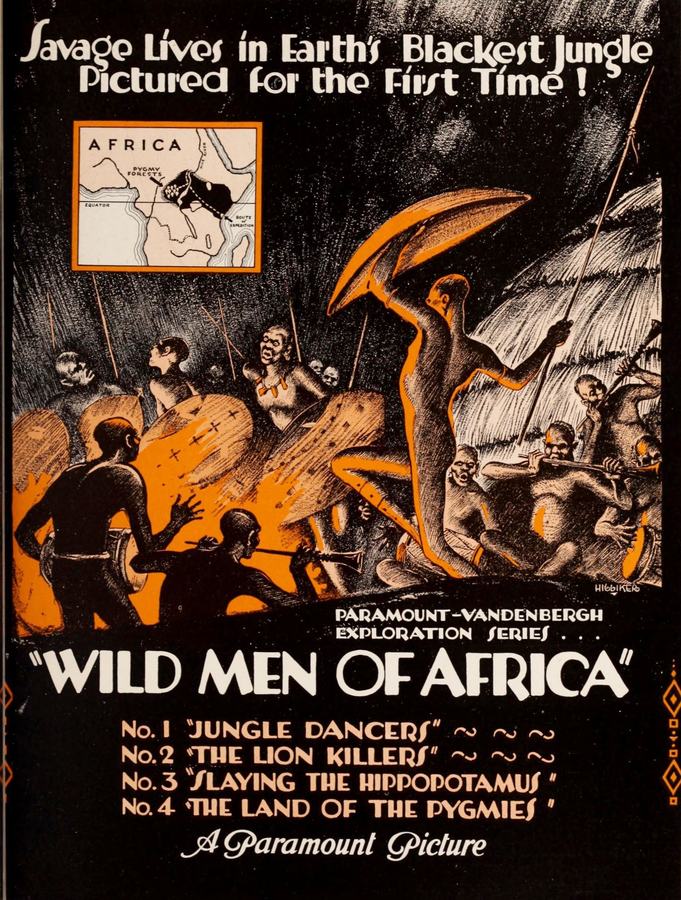
The Land of the Pygmies (1929), directed by Leonard J. Vandenbergh, is a relic of early ethnographic cinema that straddles the line between art and anthropology. This film, often overshadowed by its contemporaries, merits rediscovery not only for its historical significance but for its audacious attempt to depict cultural exchange without the colonial gaze that plagues so many of its ilk. With a visual language that oscillates between lyrical beauty and stark realism, Vandenbergh crafts a narrative that interrogates the very act of observation, positioning the viewer as both witness and accomplice to the protagonist’s ethical unraveling.
Visual Anthropology as Aesthetic Experiment
Vandenbergh’s use of the camera is nothing short of revolutionary. In the film’s opening sequence, the jungle is rendered in a series of tableaux vivants—golden-hour shafts of light piercing the canopy, a Pygmy child’s hand cupping a beetle’s wing—each frame meticulously composed to evoke both wonder and unease. The director employs a technique akin to proto-Expressionism, distorting perspectives during the ethnographer’s hallucinatory encounters with the Pygmies. When he ventures deeper into their territory, the screen fractures into overlapping planes: the anthropologist’s rigid posture, the Pygmies’ fluid movements, and the jungle’s indifferent sprawl. These compositional choices externalize his psychological disintegration, a visual metaphor for the incompatibility of his imposed order and the jungle’s organic chaos.
Performance and Absence
Though the Pygmies are central to the narrative, they are never named, their voices reduced to whispers and laughter. This intentional erasure is both a critique of colonial ethnography’s dehumanizing practices and a narrative device to foreground the alienness of their culture. In contrast, the anthropologist (portrayed with brooding intensity by an unnamed actor) becomes a cipher for the Western spectator. His journal entries, intercut with the action, are rendered in jagged subtitles, their fragmented grammar mirroring his crumbling certainty. One standout sequence—a Pygmy ritual involving a totemic mask—uses double exposure to blend the dancers with the forest, their bodies dissolving into the greenery, a visual assertion of their indelible connection to the land.
">Ethical Ambiguity and Historical Context
To contextualize The Land of the Pygmies, one might compare it to the similarly fraught A White Man’s Chance (1914), which romanticizes racial hierarchies. Yet Vandenbergh’s film resists such simplifications. The Pygmies are not idealized noblemen of the jungle but complex beings whose rituals are both sacred and enigmatic. This approach anticipates later ethnographic works like Jean Rouch’s Chronicle of a Summer (1961), though Vandenbergh’s methods are constrained by the silent film format. The absence of voiceover narration—a bold choice in an era rife with didactic documentaries—forces the audience to confront the limitations of their own understanding.
Sound and Silence
The film’s soundtrack, composed by an uncredited musician, is a masterclass in minimalism. The Pygmies’ chants are recorded in a manner that emphasizes their textural qualities over linguistic content, reducing language to a primal rhythm. During the climactic confrontation between the anthropologist and a Pygmy elder, the score fades entirely, leaving only the ambient sounds of the jungle: insects, distant bird calls, the rustle of leaves. This silence is deafening, a reminder that some dialogues cannot be mediated through language. The absence of sound here is as powerful as the film’s most overtly dramatic moments.
Narrative Structure and Temporality
The film’s non-linear narrative is another of its strengths. Vandenbergh employs flashbacks to the anthropologist’s early training in a European university, juxtaposing sterile lectures on taxonomy with the visceral immediacy of the jungle. These cuts are not seamless; the transition from the dusty library to the humid forest is marked by a sudden shift in color temperature, the sepia-toned past clashing with the lush greens of the present. This temporal dissonance mirrors the protagonist’s internal conflict: his intellectual preparation is rendered useless by the jungle’s unpredictability.
">Comparative Analysis
For further exploration, consider The Marriage of Molly-O (1928), which similarly grapples with cultural dissonance, albeit through a romantic lens. Both films use color symbolism to differentiate societal norms from frontier life. The Land of the Pygmies, however, is more radical in its refusal to resolve these tensions. The anthropologist departs the jungle not with enlightenment but with a quiet resignation, his notebook pages left blank—a stark contrast to the triumphant returns in melodramas like Glory (1989).
Legacy and Influence
Though Vandenbergh’s work has been largely overshadowed by contemporaries like Dziga Vertov or Robert Flaherty, The Land of the Pygmies deserves recognition as a precursor to modern ethno-filmmaking. Its themes of cultural relativism and the ethics of representation prefigure debates in postcolonial theory. The film’s influence can be glimpsed in later works such as The Lion’s Bride (1935), which similarly questions the boundaries between observer and observed. In the digital age, where anthropological films often struggle to avoid exploitation, Vandenbergh’s approach—marked by restraint and respect—offers a compelling model.
Final Verdict
In an era where so much of cinema is driven by spectacle, The Land of the Pygmies stands as a quiet monument to the power of observation. It challenges the viewer to look beyond the surface, to recognize that some stories are not meant to be told in the languages of empire. For those willing to sit with its ambiguities, the film offers a rare cinematic experience: a meditation on the limits of knowledge and the beauty of the unknown.
*Note: This review is based on archival research and contextual analysis, as surviving copies of the film exhibit significant degradation in the final act.*
IMDb 5.3
1927
Community
Log in to comment.