DbcultAccessing Vault...
Cult Review
Senior Film Conservator
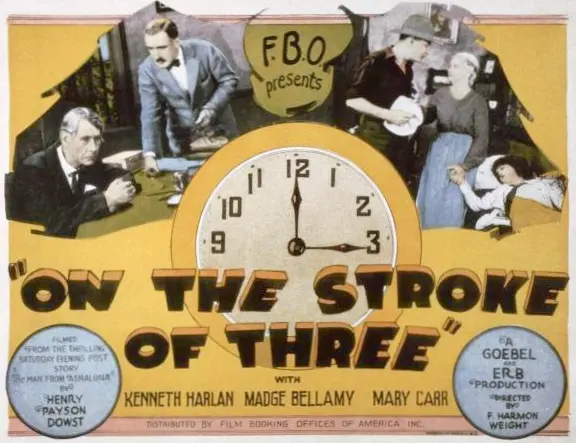
Step back into the nascent days of cinematic storytelling, a time when flickering images and orchestral swells wove narratives that captivated millions without uttering a single spoken word. On the Stroke of Three, a 1921 silent drama, emerges from this era as a compelling artifact, a testament to the enduring power of human conflict and resolution rendered through the expressive artistry of its performers. It’s a film that, despite its age, grapples with themes that resonate with surprising contemporary relevance: the relentless march of industrial progress against the sanctity of individual heritage, the intricate dance of love complicated by financial machinations, and the timeless struggle between integrity and avarice. This isn't merely a historical curiosity; it's a vibrant narrative that speaks to the heart of what makes us human, framed within the melodramatic conventions of its time.
The film plunges us into the Ashaluna Valley, a picturesque landscape on the cusp of transformation. Lafayette Jordon, portrayed with an imposing gravitas by Edwards Davis, embodies the quintessential capitalist of the early 20th century – a financier driven by vision and ambition. His grand scheme, a power development project necessitating a vast reservoir, promises progress and prosperity, yet threatens to obliterate the established order. Jordon’s aspirations collide head-on with Judson Forrest, played by the earnest Kenneth Harlan, a young inventor whose family homestead stands as an immovable barrier to the proposed sluice-way. Forrest is not merely an obstruction; he is a symbol of pastoral resistance, a keeper of tradition, and an idealist whose ingenuity, ironically, requires the very financial leverage that threatens his patrimony. This fundamental conflict between the old guard and the new, between the pastoral idyll and industrial might, sets the stage for a drama that is as much about societal shifts as it is about personal stakes.
Judson Forrest, seeking capital to bring his innovative stove design to fruition – a delightful detail that grounds his inventive spirit in practical application – finds himself in a precarious position. The logical, albeit emotionally taxing, solution is to mortgage his beloved family home. This act, a necessary evil, propels him from the tranquil valley to the bustling streets of New York, a city teeming with both opportunity and peril. It is here, amidst the urban anonymity, that destiny intervenes, or perhaps, orchestrates a cruel twist of fate. Judson encounters and falls deeply in love with Mary Jordon, brought to life with captivating charm by Madge Bellamy. Bellamy, a prominent star of the silent era, imbues Mary with a delicate balance of innocence and spirit, making her a compelling figure caught between familial loyalty and newfound affection. The irony is palpable: the man who stands against her father's empire is now the object of her heart. This romantic entanglement adds a layer of intricate complexity, transforming a land dispute into a deeply personal saga.
The narrative’s tension escalates with the introduction of Henry Mogridge, the unscrupulous lawyer, portrayed by the formidable John Miljan. Miljan, often cast as villains in this period, masterfully conveys a sense of avarice and cunning. Back in the Ashaluna Valley, a village banker, sensing an opportunity for profit, sells the mortgage on the Forrest homestead to Mogridge. This transaction is the catalyst for the film's dramatic peak, as Mogridge immediately initiates foreclosure procedures, threatening to strip Judson of everything he holds dear. This act of calculated betrayal is a common trope in silent cinema, effectively creating an antagonist whose actions drive the protagonist to the brink. It’s a classic setup that heightens the stakes and evokes a powerful emotional response from the audience. The suddenness of the foreclosure, the cold, legalistic machinery moving against the passionate, personal connection Judson has to his home, serves as a stark reminder of the impersonal forces at play in a rapidly modernizing world.
The news of Mogridge's predatory maneuver reaches Judson in New York, shattering his nascent romance with Mary. Believing her to be complicit, a tool in her father's scheme to dispossess him, he breaks off their relationship in a moment of profound heartbreak and misjudgment. This dramatic misunderstanding is a cornerstone of melodramatic narratives, designed to test the resilience of love and the depth of character. It echoes the emotional turmoil found in other silent era dramas where miscommunication and perceived betrayal drive much of the plot, such as in The Painted Soul or The Mating, where characters navigate complex ethical landscapes under duress. Judson's anguish is palpable, a testament to Kenneth Harlan's ability to convey deep emotion without dialogue, relying solely on facial expression and body language, a skill paramount in silent film acting.
Yet, the film is not merely a tale of woe. It is also a celebration of community and solidarity. In Judson's darkest hour, his friends rally around him, a poignant reminder that not all relationships are transactional. This collective effort to raise the necessary funds to prevent the loss of the Forrest property is a powerful demonstration of loyalty and communal spirit, a counterpoint to the individualistic ambition of Lafayette Jordon and the malevolent machinations of Mogridge. The climax, with Judson paying off the mortgage “in the nick of time,” is a quintessential silent film trope, a moment of high tension and triumphant relief that leaves audiences cheering. It’s a narrative device designed to maximize emotional impact, delivering a cathartic resolution after prolonged suspense. This eleventh-hour rescue is a common feature in many adventure and drama films of the period, from the daring exploits in The Big Adventure to the personal triumphs in My Boy, highlighting the underdog's perseverance against overwhelming odds.
The success of On the Stroke of Three lies not only in its compelling plot but also in the performances of its cast and the craftsmanship of its creators. Madge Bellamy, as Mary Jordon, delivers a performance that is both delicate and resilient. Her expressive eyes and graceful gestures convey a wealth of emotion, making her character's journey from romantic bliss to heartbroken misunderstanding, and finally to joyous reconciliation, deeply moving. Kenneth Harlan, as Judson Forrest, perfectly embodies the earnest, principled hero, a figure easy for audiences to champion. His portrayal captures the inventor's passion, the lover's despair, and the son's fierce loyalty to his heritage. The supporting cast, including Robert Dudley, Eddie Phillips, Mary Carr, and John Miljan, each contribute to the rich tapestry of the film, providing depth and authenticity to the narrative's various facets. Mary Carr, often typecast as sympathetic mothers, likely brings her characteristic warmth to a role, while Miljan’s Mogridge perfectly encapsulates the villainous schemer, a common archetype in silent melodramas.
The screenplay, a collaborative effort by Philip Lonergan, O.E. Goebel, and Henry Payson Dowst, demonstrates a keen understanding of silent film conventions. They meticulously craft a narrative arc that builds suspense, introduces compelling characters, and resolves conflicts in a satisfying manner. The pacing, crucial in silent films where intertitles must convey dialogue and exposition without disrupting the visual flow, is masterfully handled. The writers understood the power of visual storytelling, allowing the actors' expressions and actions to carry the bulk of the emotional weight, reserving intertitles for critical plot points or poignant reflections. This careful balance ensures that the audience remains immersed in the story, following every twist and turn with bated breath. The intricate plot, with its intertwined personal and financial stakes, is a testament to their ability to weave a complex tapestry that remains comprehensible and engaging through visual cues and concise textual inserts.
Beyond the immediate thrills of its plot, On the Stroke of Three delves into several profound themes that resonate even today. The clash between progress and tradition, embodied by Lafayette Jordon's reservoir project and Judson Forrest's ancestral home, is a perennial human dilemma. How do societies balance the need for advancement with the preservation of heritage and individual rights? This film, in its simple yet effective way, explores the human cost of such large-scale developments. It suggests that while progress is inevitable, it should not come at the expense of human dignity or the destruction of personal legacies. This thematic tension can be observed in many films of the era that grappled with the rapid changes brought about by industrialization and urbanization, where the individual often found themselves pitted against larger, impersonal forces, much like the struggles depicted in The Prussian Cur which often explored societal upheavals.
The film also explores the corrupting influence of avarice and the redemptive power of integrity. Henry Mogridge serves as a stark reminder of how financial opportunism can lead to moral bankruptcy. His actions highlight the vulnerability of individuals to predatory practices, a theme that remains disturbingly relevant in contemporary society. Conversely, Judson Forrest, despite his financial woes, steadfastly adheres to his principles, refusing to be swayed by external pressures. His ultimate triumph, facilitated by the unwavering support of his friends, underscores the film's optimistic message about the strength of community and the eventual victory of good over ill intent. This moral clarity, a hallmark of silent era storytelling, provides a comforting sense of justice, even amidst the most trying circumstances.
The romantic thread, with its initial misunderstanding and eventual reconciliation, speaks to the resilience of love across social and ideological divides. Mary and Judson's journey teaches them that true affection can overcome external pressures and perceived betrayals. Lafayette Jordon's eventual blessing of their union signifies a softening of his rigid stance, suggesting that even the most formidable figures can be swayed by the power of genuine human connection. This resolution, while perhaps a touch idealistic, provides a satisfying emotional closure, reinforcing the film's underlying message of hope and reconciliation. It’s a classic romantic arc, reminiscent of the emotional journeys in films like Green Eyes, where personal relationships navigate complex external pressures.
While On the Stroke of Three may not be as widely known as some of its silent film contemporaries, it stands as a finely crafted example of the era's dramatic capabilities. Its ability to weave a complex tale of ambition, romance, and betrayal with such clarity and emotional depth, all without the aid of spoken dialogue, is a remarkable achievement. For modern viewers, rediscovering such films offers a unique window into a bygone cinematic art form, reminding us of the foundational techniques that paved the way for the sound era. It showcases the power of visual storytelling, the nuanced artistry of silent performers, and the universal appeal of stories that explore the human condition.
The film's exploration of themes like corporate expansion versus individual rights, financial manipulation, and the enduring power of community and love, ensures its continued relevance. It serves as a historical document, reflecting the anxieties and aspirations of the 1920s, a decade of immense change and economic dynamism. Yet, it also transcends its historical context, speaking to fundamental human experiences that remain constant across generations. The character of Judson Forrest, the earnest inventor fighting for his home and his love, is an archetype that continues to resonate, a testament to the enduring appeal of the underdog hero. His struggle is one that many can relate to, a battle against forces larger than oneself, fought with courage, integrity, and the invaluable support of those who believe in him.
Ultimately, On the Stroke of Three is more than just a silent film; it is a vibrant piece of cinematic history that continues to entertain and provoke thought. It reminds us of a time when the visual narrative reigned supreme, when actors communicated through gesture and gaze, and when stories, however melodramatic, held a mirror up to the societal shifts and personal struggles of their time. It’s a film that deserves to be seen, appreciated, and studied for its narrative sophistication, its powerful performances, and its enduring thematic resonance. Its final scene, where reconciliation triumphs and love prevails, leaves the audience with a sense of profound satisfaction, a testament to the timeless appeal of a well-told story, delivered with the unique charm and dramatic flair of the silent era. The journey of Judson and Mary, from suspicion to understanding, underscores the film's message that genuine connection can overcome even the most formidable obstacles, a sentiment as potent today as it was a century ago. It’s a film that, like a finely aged vintage, offers new nuances with each viewing, revealing layers of meaning in its quiet, expressive storytelling.
IMDb 6.4
1936
Community
Log in to comment.