DbcultAccessing Vault...
Cult Review
Senior Film Conservator
Spoiler-rich excavation below—enter only if you’re ready to have century-old secrets blown wide open.
The film’s first reel unfolds like a lithograph in motion: tenements yawning with laundry lines that resemble nooses, newsboys hawking broadsheets inked with blood-red scare-heads. Into this chiaroscuro strides Frank Norman—played with combustive earnestness by William Phillips—whose campaign feels less like politics and more like tent-revival fervor. Every close-up of Phillips’ eyes threatens to ignite the nitrate; every wide-shot frames him against billboards already peeling, as though the city itself can’t bear the weight of sincerity.
Ruth, the disabled seer, is cinema’s earliest example of what we now call a resistance coder—a bedridden hacker avant la lettre. Confined to candle-lit quarters, she scripts manifestos that Norman smuggles out like samizdat. Edith Luckett’s performance is all voice-without-voice, conveyed through intertitles that jitter across the screen with the cadence of Emily Dickinson crossed with Emma Goldman. When she finally expires, the film double-exposes her departing spirit over a bustling polling station—an effect so primitive yet so uncanny it makes today’s CGI resurrections look obscene.
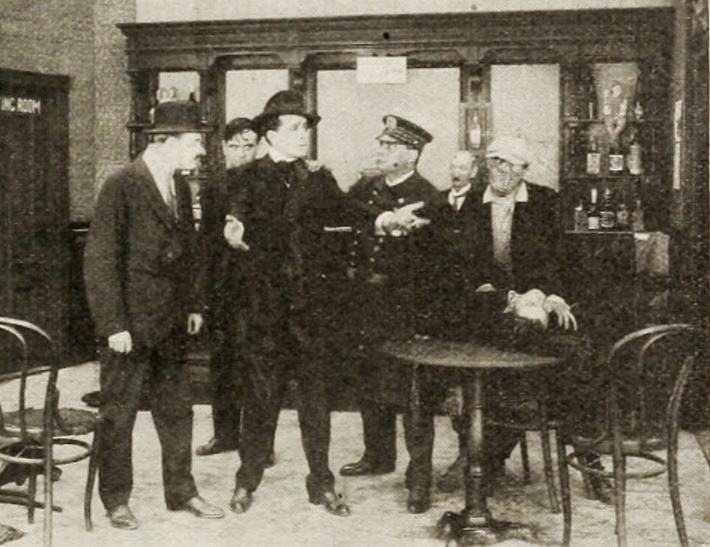
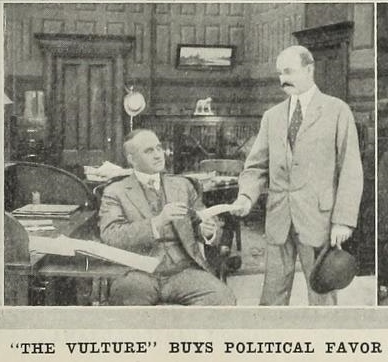
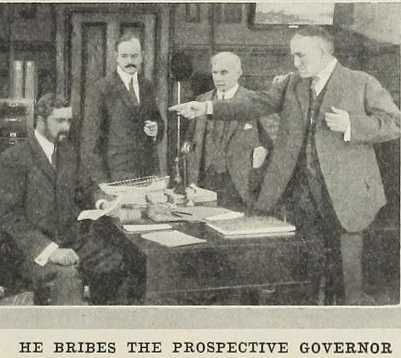
Carter, rendered by Lionel Adams with top-hat menace, is not merely corrupt; he is corruption institutionalized—his office contains a massive ledger labeled “Futures,” under which human lives are chalked the way other men mark pork-belly futures. The film’s most bravura set-piece involves a tracking shot (achieved by laying street-car rails for the camera operator) through Carter’s boozy, subterranean club where aldermen, brothel madams, and precinct captains bargain under cigar smoke thick enough to butter bread.
Vera’s arc—from vamp to vestal—avoids the hooker-with-heart-of-gold cliché because Anna Rose plays her as a woman awakening from ideology as if from a fever. Her seduction of Norman is filmed in a park at twilight; the camera keeps circling them, each revolution stripping away another layer of artifice until both faces fill the frame, raw and terrified. The moment she realizes Norman’s rejection is not prudishness but moral disgust, her pupils contract with something akin to physical pain.
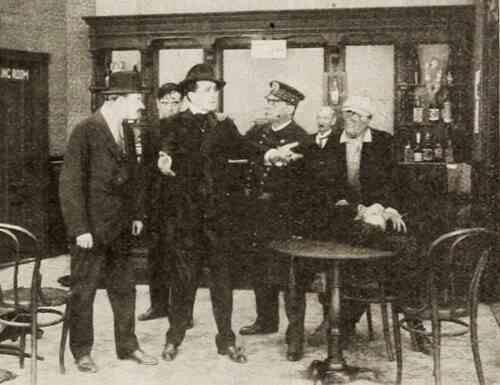
The frame-up sequence deploys cross-cutting worthy of Griffith but with a socialist sting: a gangster’s gambling den, Norman’s alibi at a union hall, a bullet fired in a mirror-lined saloon that reflects the shooter ad infinitum—an early visual metaphor for media echo-chambers. Once imprisoned, Norman’s cell is diagonally split by a shadow that looks uncannily like Ruth’s profile, suggesting that ideas, not iron, are his true bars.

Exoneration arrives via Vera’s midnight infiltration of the hospital. Cinematographer Theodore Kerwald lights the ward like a cathedral: moonlight slanting through venetian blinds becomes stained glass, nurses glide like novices, the wounded gangster’s confession is shot in an extreme close-up that makes his pallid lips a trembling tabernacle of truth.
William Phillips, whose career imploded soon after talkies arrived, delivers here a masterclass in silent restraint; watch how he modulates posture—shoulders square on the stump, slightly caved in private rooms—mirroring public vs. private integrity. William Crimmins as the campaign manager injects Buster-Keaton physicality into scenes of ballot-box sabotage, pratfalling into legitimacy.

The 4K restoration by Eye Filmmuseum reveals textures previously smothered: the herringbone pattern of Norman’s frayed coat, the opalescent sheen of Vera’s gown in the climactic ballroom, the chalk dust that hangs like nebula around Ruth’s deathbed. Composed by Donald Sosin, the new score interpolates labor anthems with Bartók pizzicatos, creating a soundscape that is both agitprop and lullaby.
Place The Coming Power beside The Rival Actresses and you’ll notice both trade in women weaponizing visibility, yet this film adds class warfare to the powder-keg. Contrast it with Life of Christ: whereas DeMille’s piety is otherworldly, Norman’s secular sermon insists salvation is municipal. The DNA of Frank Capra’s Mr. Smith flows directly from these reels, though Capra would never allow his hero’s muse to die unmarried and unavenged.
Meanwhile, the ruthless financier archetype resurfaces in Alone with the Devil and Sündige Liebe, yet none paint plutocratic demise with the karmic relish seen when Carter clutches his chest atop a pile of worthless paper.
Is the picture didactic? Unashamedly. Melodramatic? To the hilt. Yet its urgency slices through a century like a straight razor. In an age when algorithms micro-target voters and dark-money PACs launder influence, this artifact from 1913 feels less quaint than prophetic—a reminder that democracy’s gravest enemy is not the foreign saboteur but the domestic purse-string. Watch it for the proto-film-noir shadows, stay for the revelation that hope, like nitrate film, is flammable but incandescent.
Stream the tinted 4K restoration on Criterion Channel, or catch a rare 35mm print at the San Francisco Silent Film Festival this July—bring handkerchiefs and a healthy distrust of billionaires.

IMDb —
1911
Community
Log in to comment.