DbcultAccessing Vault...
Cult Review
Senior Film Conservator

There’s a particular kind of quiet heartbreak that only early cinema seems to capture with such an unvarnished honesty. "A Weaver of Dreams" unfurls itself as precisely that: a delicate yet devastating tapestry woven from the threads of burgeoning love, abrupt betrayal, and the arduous, often solitary, journey toward self-reconciliation. It’s a film that, despite its vintage, resonates with an emotional authenticity that transcends the decades, proving that the human heart’s complexities are timeless. What begins as an idyllic vision of domesticity, meticulously crafted by Dr. Carter Keith for his fiancée Judith Sylvester, quickly unravels into a poignant study of disillusionment and the unexpected fortitude one discovers when all seems lost. The narrative, penned by Myrtle Reed, William Parker, and John H. Collins, navigates these tumultuous waters with a surprising depth for its era, avoiding simplistic melodrama in favor of a more nuanced portrayal of emotional wreckage and subsequent reconstruction.
From the outset, the film establishes a setting that is almost too perfect, too saccharine, to truly endure. Dr. Carter Keith, portrayed with a certain earnest, if ultimately vacillating, charm by Clifford Bruce, prepares a home for Judith, christening it the 'House of Hearts.' This symbolic abode, meant to be the bastion of their shared future, quickly becomes a crucible for their burgeoning romance. Judith Sylvester, brought to life with exquisite sensitivity by Viola Dana, embodies the hopeful fiancée, her expressions a window into a soul brimming with optimism. Dana’s performance is a masterclass in silent film acting, conveying a spectrum of emotions from radiant joy to profound sorrow with subtle shifts in posture, gaze, and the almost imperceptible tremor of a hand. Her portrayal anchors the film, making Judith’s eventual heartbreak not just a plot point, but a deeply felt experience for the viewer. The initial chapters of their engagement paint a picture of domestic bliss, a future meticulously planned and eagerly anticipated. This meticulous construction, however, is precisely what makes its subsequent demolition so impactful. It speaks to the ephemeral nature of human promises and the often-unforeseen forces that can dismantle even the most carefully laid plans.
The intrusion of Margery Gordon, played by Mildred Davis with an understated yet effective allure, marks the turning point. Margery isn't a villain in the mustache-twirling sense, but rather a catalyst for Carter's latent fickleness. Her presence introduces a disquieting element into the meticulously arranged world of Judith and Carter. The shift in Carter's affections isn't sudden or overtly dramatic; it's a gradual, insidious erosion, a subtle turning away that Judith, with her innocent trust, initially struggles to comprehend. This slow burn of emotional infidelity is far more agonizing than an abrupt declaration, making Judith's dawning realization all the more agonizing. The 'House of Hearts,' once a symbol of their unity, transforms into the very stage for her betrayal. The scene where Judith witnesses Margery and Carter embracing within its walls is rendered with a quiet devastation, relying on Dana’s expressive face to communicate the shattering of her world. It’s a moment that resonates with the universal pain of discovering a loved one’s infidelity, a betrayal not just of trust, but of the very future one had so carefully envisioned. This isn't merely a broken engagement; it's the collapse of an entire constructed reality.
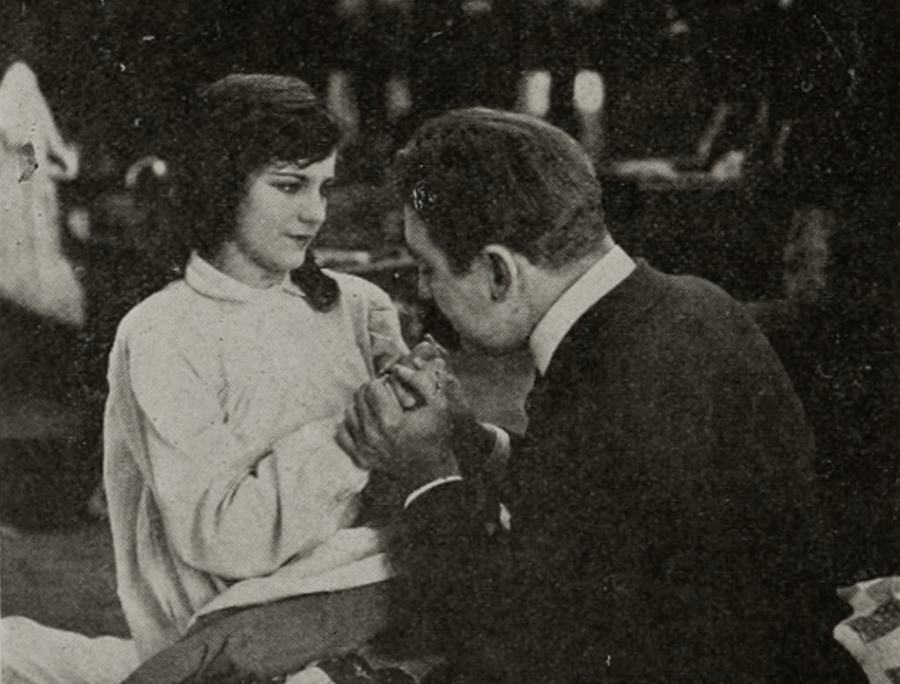
With her engagement irrevocably severed, Judith finds herself adrift, a common trope in narratives of the era, yet handled here with a refreshing emphasis on agency rather than despair. Her decision to move in with Cynthia Bancroft, portrayed by Clarissa Selwynne with a warm, empathetic presence, signifies a crucial pivot. Cynthia isn't just a friend; she represents a new kind of support system, a haven from the wreckage of Judith’s romantic aspirations. This shift from romantic entanglement to platonic solidarity is a powerful message, particularly for a film of its time, suggesting that life's richness extends beyond the confines of a heterosexual partnership. It subtly echoes themes found in films like The Waifs, which similarly explores how individuals find new forms of belonging and connection after being cast out or losing their original anchors.
The narrative then introduces a fascinating subplot that further illuminates Judith's character. Cynthia, it turns out, has her own story of love and loss, having met and fallen for Judith’s guardian, Martin Chandler (Russell Simpson), during a train wreck. This seemingly tangential detail serves a profound purpose: it allows Judith, still reeling from her own personal catastrophe, to become an agent of healing for others. Her instrumental role in reuniting Cynthia and Martin is not just a selfless act; it's a therapeutic one. By helping others mend their fractured lives, Judith inadvertently begins to mend her own. It's a testament to the idea that compassion and active participation in the happiness of others can be a powerful balm for personal pain. Russell Simpson, as Martin Chandler, exudes a paternal warmth, making his eventual reunion with Cynthia feel earned and genuinely heartwarming. Vera Lewis also makes a compelling appearance, though her role is more peripheral, adding texture to the ensemble.
This section of the film is where its true heart beats strongest. Judith, stripped of her romantic illusions, doesn't descend into bitterness or self-pity. Instead, she grimly, yet resolutely, resolves to make the best of life. This isn't a saccharine, fairytale ending where a new love instantly appears to replace the old. It’s a far more realistic and, dare I say, empowering conclusion for a protagonist of her era. Her resolution speaks to a nascent feminism, a quiet declaration of self-sufficiency. It’s a message that resonates with the emotional journey of a character in a film like Lea, where a woman navigates significant personal challenges and emerges with a renewed sense of self, even if the path is arduous. The film champions the idea that happiness isn't solely dependent on romantic fulfillment, but can be forged through resilience, purpose, and perhaps, the quiet satisfaction of helping others find their own.
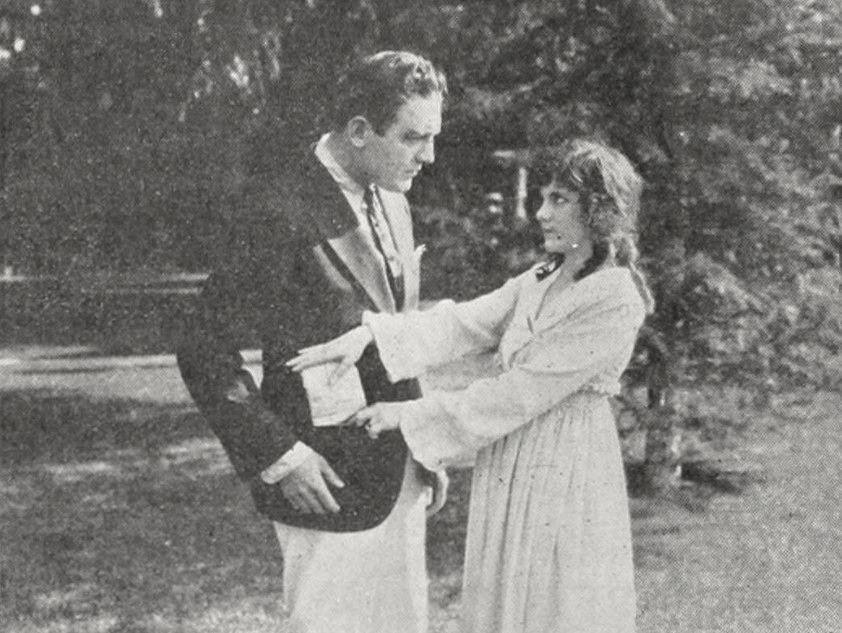
The direction, though uncredited for a specific individual in the provided synopsis, effectively guides the audience through Judith's emotional landscape. The visual storytelling, characteristic of the silent era, relies heavily on the actors' physicality and facial expressions, as well as the careful composition of scenes. The use of the 'House of Hearts' as both a symbol of hope and betrayal is particularly effective, an early example of using setting to mirror emotional states. The pacing of the film, from the initial joyful preparations to the slow-motion collapse of Judith's world, feels deliberate and impactful. It allows the audience to fully invest in Judith’s happiness before plunging them into her despair, making the subsequent journey of recovery all the more compelling.
Viola Dana's performance is, without hyperbole, the cornerstone of "A Weaver of Dreams." Her ability to convey complex inner turmoil without uttering a single word is remarkable. From the innocent exuberance of a woman deeply in love to the profound anguish of a heart shattered, and finally, to the quiet resolve of one who has found strength in adversity, Dana traverses this emotional arc with grace and conviction. Her eyes, in particular, are incredibly expressive, communicating volumes in every scene. Clifford Bruce, as the fickle Dr. Keith, manages to make his character’s betrayal feel less like outright villainy and more like a tragic flaw, a weakness of character that makes the heartbreak more relatable. Mildred Davis, in her role as Margery Gordon, doesn't resort to caricature, but instead provides a subtle, almost naturalistic portrayal of the 'other woman,' making the conflict feel more grounded in human fallibility than outright malice.
The screenplay by Myrtle Reed, William Parker, and John H. Collins is surprisingly robust, offering a narrative that, while adhering to certain conventions of the period, still manages to feel fresh in its emotional honesty. They craft characters that, even without dialogue, possess distinct personalities and motivations. The choice to introduce Cynthia and Martin's storyline, not as a distraction, but as a parallel narrative that allows Judith to exercise agency and compassion, is a particularly shrewd move. It elevates the film beyond a simple tale of romantic woe, transforming it into a more expansive exploration of human connection and resilience. This narrative complexity, where supporting characters' arcs feed into the protagonist's growth, showcases a sophisticated approach to storytelling for its time, perhaps even more intricate than some of the straightforward romantic dramas of the era. It certainly provides more emotional layers than a film strictly focused on a single predicament, such as Please Help Emily, which might center more on the immediate crisis of its titular character.

Ultimately, "A Weaver of Dreams" is a profound meditation on resilience. Judith's journey from heartbreak to a quiet resolve to 'make the best of life' is not a simple, linear progression. It's fraught with the pain of loss, the confusion of betrayal, and the arduous process of rebuilding one's internal world. Yet, it is precisely this struggle that makes her eventual triumph – not in finding a new love, but in finding strength within herself – so compelling. The film subtly argues that true happiness is not merely found in external circumstances or romantic partnerships, but cultivated from within, through self-acceptance and a commitment to living a purposeful life. This theme of finding light after darkness can be seen metaphorically in titles like A fekete szivárvány (The Black Rainbow), where characters might navigate profound despair to find unexpected beauty or meaning.
The enduring appeal of "A Weaver of Dreams" lies in its universal themes. Who among us hasn't experienced the sting of betrayal, the crushing weight of disappointment, or the challenge of picking up the pieces after a significant loss? The film offers no easy answers, no magical solutions. Instead, it presents a protagonist who, through sheer force of will and a burgeoning inner strength, chooses to embrace life despite its inevitable sorrows. It’s a powerful testament to the human spirit's capacity for adaptation and growth. The film's conclusion, rather than tying everything into a neat bow, leaves Judith in a state of quiet determination, a woman transformed by her experiences, ready to face the world on her own terms. This open-endedness, this focus on the individual’s internal journey rather than just external resolution, gives the film a timeless quality and a depth that resonates long after the final frame.
"A Weaver of Dreams" is more than just a historical artifact; it's a compelling piece of cinematic art that speaks to the enduring complexities of love, loss, and the quiet heroism of rebuilding one's life. It showcases the remarkable talent of Viola Dana and the thoughtful storytelling of its writers, offering a poignant and ultimately uplifting experience for contemporary audiences willing to delve into the rich emotional tapestry of early cinema. It’s a stark reminder that even in an era of nascent filmmaking, the power of human emotion translated onto the screen could be profoundly moving and deeply impactful.

IMDb 6.3
1933
Community
Log in to comment.