DbcultAccessing Vault...
6.6/10
Senior Film Conservator
A definitive 6.6/10 rating for a film that redefined the boundaries of cult cinema. The Man from Home remains a cornerstone of transgressive art.
Step back in time, dear reader, to an era when cinema was still finding its voice, an age of flickering images and grand narratives conveyed through the eloquent dance of gesture and the poignant intertitle. We're venturing into the nascent years of Hollywood, specifically to 1914, a pivotal moment when a certain Cecil B. DeMille was rapidly cementing his reputation as a visionary filmmaker. Among his early, though perhaps lesser-remembered, gems is The Man from Home (the-man-from-home), a film that, even in its silent grandeur, speaks volumes about human nature, the perils of wealth, and the eternal clash between innocence and cunning.
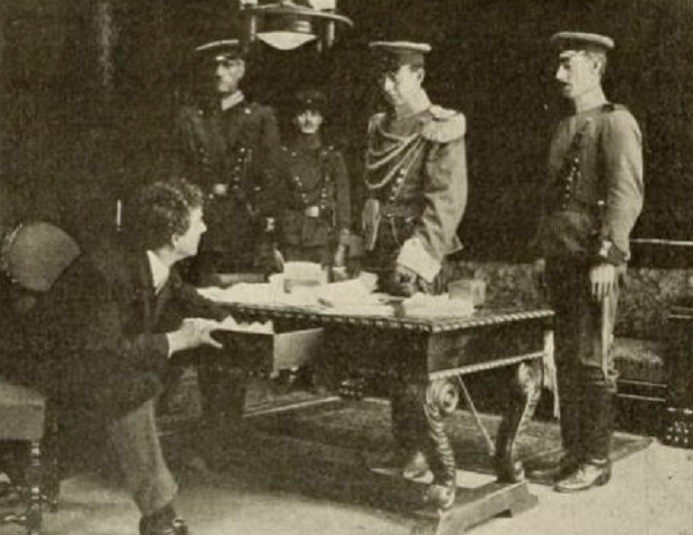
This cinematic endeavor, born from the popular stage play by Booth Tarkington and Harry Leon Wilson, transports us across the Atlantic, plunging us into a quintessential 'Americans abroad' narrative. The story centers on the exceedingly wealthy, yet remarkably naive, Simpson siblings: Horace (played with a delightful, almost blundering charm by Horace B. Carpenter) and Ethel (the captivating Mabel Van Buren). Their grand European tour, intended as a leisurely exploration of culture and refinement, quickly devolves into a perilous odyssey. You see, their immense fortune, a beacon of irresistible allure, draws the attention of a predatory syndicate of Russian conmen. These aren't your back-alley thugs; no, these are sophisticated, aristocratic charlatans, masters of manipulation and social engineering, led by a particularly persuasive rogue, undoubtedly portrayed with a sinister elegance by Monroe Salisbury.
The core of their nefarious plot is Ethel. With a calculating precision that chills the blood, the leader of this band of rogues sets his sights on her, intending a marriage that would not only secure her hand but, more importantly, siphon off her vast inheritance. It's a classic tale of the wolf in sheep's clothing, where the glittering facade of European aristocracy conceals a predatory avarice. Ethel, perhaps charmed by the exotic allure and the flattering attention, becomes increasingly susceptible to their machinations, while her brother Horace remains blissfully, almost comically, unaware of the impending catastrophe.
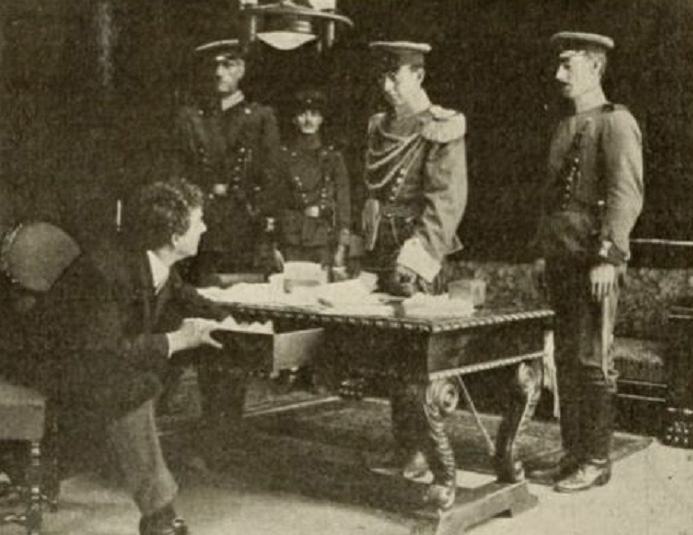
Enter Daniel Pike, the eponymous 'man from home,' portrayed with a compelling blend of gravitas and pragmatic determination by Charles Richman. Pike isn't just an executor; he's the embodiment of American common sense, a steadfast bulwark against European artifice. His journey across the ocean is not merely a business trip; it's a mission to rescue. Richman imbues Pike with an quiet strength, a palpable sense of duty that anchors the narrative amidst the swirling currents of deceit. He represents the moral compass, the uncorrupted spirit of the homeland, arriving just in the nick of time to confront the burgeoning conspiracy.
Pike's task is formidable. He must navigate a labyrinth of social niceties and veiled threats, unraveling a meticulously spun web of lies. What makes his quest even more compelling is the fortuitous intervention of Grand Duke Vasill, a character likely brought to life with regal authority by Theodore Roberts. The Grand Duke provides the necessary insider's perspective, a genuine aristocratic counterpoint to the fraudulent one, lending crucial aid to Pike's efforts. This alliance between American pragmatism and genuine European nobility forms the dramatic backbone of the film, highlighting a fascinating cultural dialogue. It’s a testament to the script by Tarkington, Wilson, and DeMille himself that such a complex interplay of characters and motivations could be so effectively conveyed through the silent medium.
In The Man from Home, DeMille, even in his early directorial phase, demonstrates a remarkable command of visual storytelling. He understood how to build tension, how to convey character through gesture, and how to use the emerging language of cinema to translate the wit and drama of the stage. The film, though over a century old, resonates with timeless themes: the vulnerability of wealth, the corrupting influence of unchecked ambition, and the enduring strength of familial loyalty and moral rectitude.
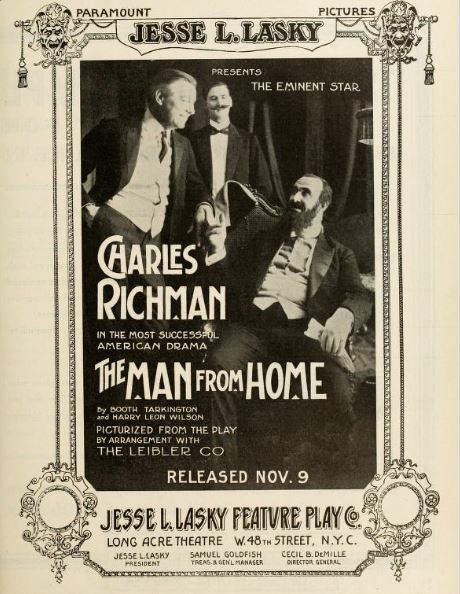
The performances, constrained by the conventions of silent cinema, are nonetheless impactful. Mabel Van Buren's Ethel conveys a captivating blend of innocence and budding romanticism, making her susceptibility to the conmen's charms believable and her predicament genuinely concerning. Horace B. Carpenter, as Horace, provides the necessary comedic relief, his oblivious nature a stark contrast to the escalating danger. The ensemble, including figures like James Neill, Dick La Reno, and Florence Dagmar, fill out a world teetering on the brink of exposure, each contributing to the rich tapestry of the narrative.
Placing The Man from Home within the broader context of early 20th-century cinema offers fascinating insights. While films like The Last Days of Pompeii (1913) showcased the epic potential of the medium with its sweeping historical canvases and grand spectacles, the-man-from-home demonstrates the potency of character-driven drama and social commentary. It proves that cinema didn't need cataclysmic events to captivate; the intricate dance of human deceit and redemption was equally compelling.
Much like the adaptation of Jack London’s John Barleycorn, the-man-from-home exemplifies the burgeoning trend of translating established literary and theatrical successes to the nascent silver screen. This period saw filmmakers actively seeking out popular narratives that already resonated with audiences, leveraging their familiarity to draw crowds to the new medium. The collaborative effort of Booth Tarkington, Harry Leon Wilson, and Cecil B. DeMille in adapting this story highlights the cross-pollination between different artistic forms during this fertile period.
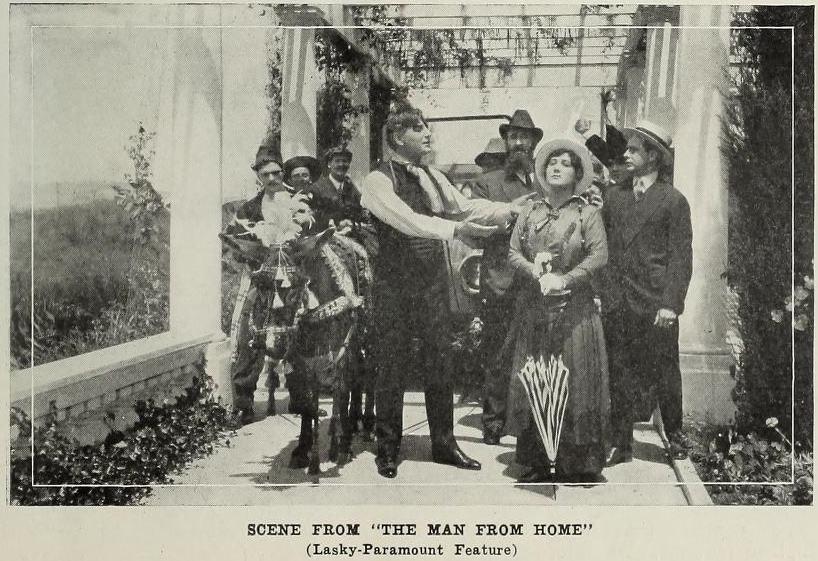
The film's portrayal of European intrigue, particularly involving Russian characters, is also worth noting. It's a fascinating counterpoint to imagine how a contemporary Russian production, perhaps like Obryv, might have depicted similar aristocratic machinations from a different cultural lens. While The Man from Home approaches this through an American gaze, often highlighting the perceived moral superiority of the 'man from home,' it nonetheless captures a universal struggle against deception. One might also draw parallels to European thrillers of the era, such as the German production Das Geheimschloss (The Secret Castle), which similarly delved into aristocratic secrets and hidden motives, albeit with its own distinctive national cinematic style.
The cast, a veritable who's who of early silent film talent, truly brings this narrative to life. Beyond the principal players, supporting actors like Tex Driscoll, Bob Fleming, Fred Montague, Jode Mullally, Anita King, and Jack W. Johnston contribute to the film's rich texture, each performing their part in a grand ballet of human drama. Their collective efforts, under DeMille's direction, craft a world that, despite its lack of spoken dialogue, feels vibrant and full of urgent stakes. The reliance on expressive facial movements, grand gestures, and the carefully crafted intertitles meant that every frame had to communicate, every actor had to be a master of visual rhetoric.
The production values, for a film of its time, were undoubtedly impressive. While we may not have the luxury of experiencing its original grandeur in pristine condition today, one can infer the attention to detail in costume, set design, and the recreation of European locales – whether filmed on elaborate studio sets or carefully selected American backlots. DeMille was known even then for his meticulous approach, aiming for a spectacle that would transport audiences. This commitment to visual immersion, combined with a compelling storyline, is what allowed early cinema to rapidly evolve from a novelty into a powerful art form.
In conclusion, The Man from Home stands as more than just a historical curiosity. It’s a compelling piece of early filmmaking that showcases Cecil B. DeMille's nascent genius and the enduring power of a well-told story. It's a delightful reminder that even without spoken words, films from this era possessed an incredible capacity to engage, to thrill, and to reflect the complexities of the human condition. For anyone interested in the foundational works of cinema, or simply a captivating tale of wits and wealth, this silent masterpiece offers a remarkably resonant experience, proving that some stories, and some lessons, truly are timeless. It reminds us that while the setting may be Europe and the characters may be from a bygone era, the struggle between integrity and deceit remains a universal constant, a battle fought and won (or lost) in every age.
IMDb 5.2
1928
Community
Log in to comment.