DbcultAccessing Vault...
6/10
Senior Film Conservator
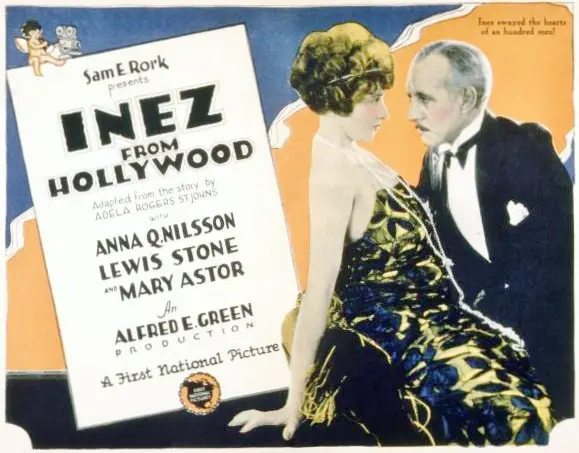
A definitive 6/10 rating for a film that redefined the boundaries of cult cinema. Inez from Hollywood remains a cornerstone of transgressive art.
The 1920s was a decade defined by the tension between the burgeoning liberation of the 'New Woman' and the lingering, suffocating constraints of Victorian morality. In the center of this cultural hurricane stood the 'Vamp'—a cinematic construct of predatory femininity that both fascinated and repelled the American public. Inez from Hollywood (1924), directed by Alfred E. Green and penned by the formidable trio of Adela Rogers St. Johns, J.G. Hawks, and a young Dorothy Arzner, serves as a searing deconstruction of this very archetype. It is not merely a film about the artifice of stardom; it is a profound exploration of the cost of reputation and the brutal economy of female sacrifice.
Anna Q. Nilsson delivers a performance of remarkable psychological density as Inez Laranetta. In the film’s opening movements, we see her through the distorted lens of public perception. She is the 'worst woman in Hollywood,' a title earned through a calculated campaign of vampiric roles and fabricated decadence. This meta-narrative reflects the industry's own penchant for manufacturing scandal to drive box office returns, a theme explored with varying degrees of cynicism in other contemporary works like A Flirt There Was. Yet, the moment the cameras stop rolling, Nilsson shifts her physicality. The predatory slouch vanishes, replaced by the rigid, weary posture of a woman carrying the weight of a secret family.
The narrative pivot occurs when we realize that Inez’s 'vamping' is a protective camouflage. She embraces the role of the pariah to provide a sanctuary for her sister, Fay (played with ethereal innocence by a young Mary Astor). It is a fascinating subversion; usually, the vamp is a creature of pure id, but Inez is a creature of pure, albeit hidden, superego. Her life is a performance within a performance, a concept that mirrors the identity shifts seen in Les frères corses, though here the duality is internal rather than literal.
Enter Stewart Cuyler, portrayed by Lewis Stone with the requisite gravitas of a man who believes his social standing grants him moral clarity. Stewart represents the 'Old World' judgment of the 'New World' artifice. He is drawn to Inez—respecting her in a way few men do—but his inherent prejudices prevent him from seeing the truth. The conflict intensifies when Stewart, searching for a supposed rival, stumbles upon Fay. The irony is thick and suffocating: the man who admires the 'vamp' for her honesty falls for the 'saint' for her purity, unaware they are branches of the same family tree.
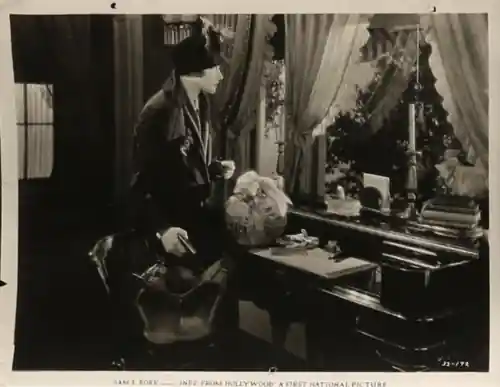
This dynamic elevates the film beyond a standard melodrama. It becomes a critique of the male gaze and the binary categories into which women are forced. If Inez is the 'whore,' Fay must be the 'madonna.' There is no room in Stewart’s world for a woman who is both, or for a family that bridges that gap. This rigid social stratification is a recurring motif in silent cinema, often used to create the stakes in films like The Discard, where past sins haunt the possibility of future happiness.
One cannot discuss Inez from Hollywood without acknowledging the presence of Dorothy Arzner in the writers' room. Even in this early stage of her career, Arzner’s preoccupation with the internal lives of women and the structural barriers they face is palpable. The dialogue—captured in evocative intertitles—avoids the mawkish sentimentality common in 1924. Instead, there is a sharp, almost clinical edge to the way Inez discusses her career. She views her notoriety as a tool, a grim necessity that allows her to buy Fay a life free from the 'devastating impulses of men.'
The pacing of the film, while adhering to the conventions of the era, allows for moments of quiet contemplation. The scenes between Inez and her manager, Pat Summerfield (Snitz Edwards), provide a grounded contrast to the heightened drama of the Cuyler-Fay romance. Pat is the only one who sees Inez without the filter of her persona or her maternal duty. Their relationship, while secondary, offers a glimpse into a different kind of Hollywood—one of professional camaraderie and mutual survival, echoing the gritty realism found in Dzhymmi Hihhins.
The climax of the film is a masterclass in emotional devastation. When Inez discovers Stewart’s intentions toward Fay, her immediate reaction is one of protective cynicism. She assumes the worst because she has seen the worst. Her attempt to intervene is not an act of jealousy, but a desperate effort to prevent Fay from being 'discarded' once the novelty of her innocence wears off. However, the revelation of Stewart’s genuine desire for marriage leads to the film’s most harrowing realization: for Fay to enter the 'respectable' world of the Cuylers, Inez must be excised.
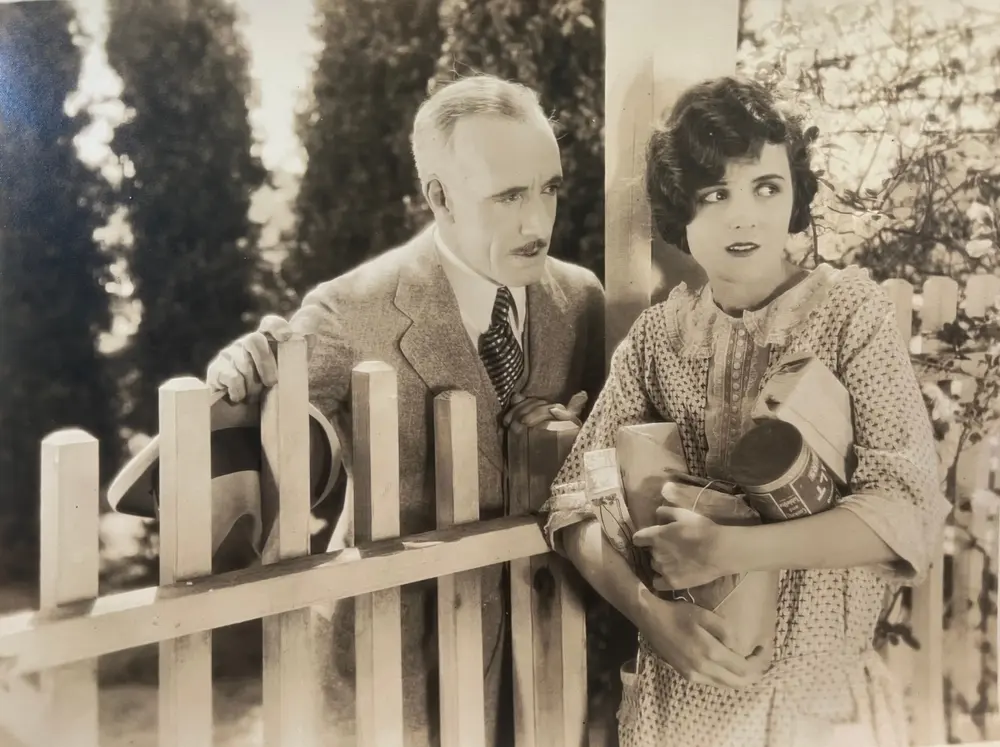
Stewart’s demand is not framed as villainy, which makes it all the more chilling. He presents it as a logical necessity. In his view, the 'worst woman in Hollywood' cannot coexist with a New York socialite. The social contagion of Inez’s reputation is too great. This theme of reputation as a terminal illness is handled with more nuance here than in the more lighthearted Why Smith Left Home. Here, the stakes are existential.
Inez’s decision to withdraw is played with a heartbreaking lack of histrionics. Anna Q. Nilsson uses her eyes to convey a lifetime of suppressed grief. She doesn't just give up her sister; she gives up the only part of her life that was real. The tragedy of Inez from Hollywood is that the protagonist’s 'redemption' requires her total disappearance. She is the architect of her own exile.
Visually, the film utilizes high-contrast lighting to delineate the two worlds Inez inhabits. The studio sets are often bathed in harsh, artificial light, emphasizing the performative nature of her 'vamp' identity. In contrast, the scenes with Fay are softer, utilizing naturalistic shadows and more intimate framing. This visual dichotomy reinforces the narrative theme of artifice versus reality. The cinematography captures the opulence of the era without becoming distracted by it, a feat also achieved in Bucking Broadway, though that film operates in a vastly different genre.
The supporting cast adds layers of texture to the world-building. Mary Astor, even in this nascent stage of her career, possesses a screen presence that explains Stewart’s obsession. She isn't just a victim; she is a symbol of a purity that Inez has long since traded for security. Lewis Stone’s performance is a fascinating study in the arrogance of the 'moral' man. He is the catalyst for the tragedy, yet the film allows us to see his perspective, making the ultimate sacrifice of Inez feel inevitable rather than merely cruel.
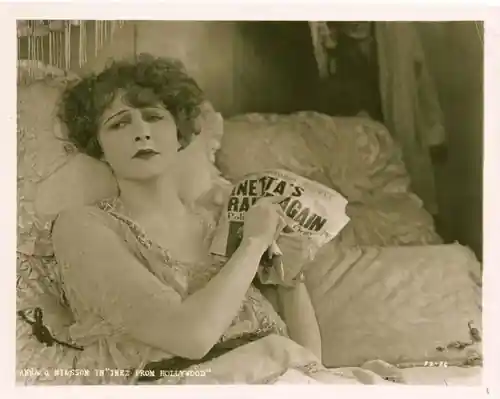
When placed alongside other films of the period, Inez from Hollywood stands out for its lack of a 'happily ever after' in the traditional sense. While Inez finds a companion in Pat, the loss of her sister remains an open wound. Compare this to the more straightforward resolutions of A Yankee Go-Getter or the adventurous spirit of The Blue Streak. Inez’s story is one of compromise and the harsh realities of social mobility. It shares a certain thematic DNA with The Brute Breaker in its exploration of character transformation, but it is far more interested in the psychological toll of that change.
The film also avoids the slapstick or escapist tendencies found in Jumping Beans or Beach Nuts. It is a serious-minded drama that takes the internal lives of its characters—particularly its female characters—with utmost gravity. Even the more whimsical elements, like the publicity stunts of the Hollywood machine, are treated as part of a stultifying system that traps the individuals within it.
For the modern viewer, Inez from Hollywood is a haunting artifact of a lost era. It reminds us that the 'Golden Age' was built on the backs of women who were often forced to choose between their public personas and their private happiness. The film’s exploration of the 'vamp' as a construction of labor rather than a moral failing was decades ahead of its time. It anticipates the feminist critiques of the male gaze that would emerge much later in the century.
While many silent films of this ilk have faded into obscurity, or exist only in fragmented form like Iwami Jûtarô, the narrative strength of Inez from Hollywood remains potent. It is a testament to the writing of Adela Rogers St. Johns and the emerging vision of Dorothy Arzner. They took a sensationalist premise and turned it into a deeply moving character study about the invisibility of female altruism.
In the final frames, as Inez retreats from the limelight to find a quiet life with Pat, we are left with a sense of profound melancholy. She has saved Fay, but at the cost of her own identity. She remains, forever, the woman from Hollywood—a title that is both her crown and her cage. It is a film that demands to be remembered, not just as a piece of history, but as a vibrant, aching piece of cinema that speaks across the decades to anyone who has ever had to hide their true self for the sake of another’s light.
Whether compared to the simple charms of Boots or the high-flying antics of Up in the Air, Inez offers a weightier, more complex experience. It is a cinematic journey through the shadows of fame, the brightness of sisterly love, and the gray twilight of sacrifice. It is, quite simply, essential viewing for anyone who wishes to understand the soul of the silent era.
IMDb —
1922
Community
Log in to comment.