DbcultAccessing Vault...
Cult Review
Senior Film Conservator
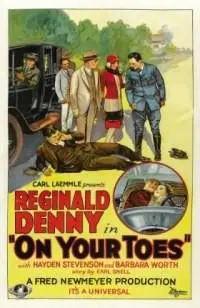
Is On Your Toes worth watching today? Short answer: yes, but only if you appreciate the specific, rhythmic mechanics of late-silent era physical comedy. This film is for those who find joy in the expressive, athletic performances of the 1920s and for historians of the sports-comedy genre. It is certainly not for viewers who demand the gritty, high-stakes realism of modern combat sports cinema.
This film works because Reginald Denny possesses a unique ability to blend high-society charm with genuine physical vulnerability, making his transition to the boxing ring feel both earned and hilarious. This film fails because the narrative pacing suffers from a bloated middle act that relies too heavily on repetitive training tropes that were already becoming clichés by 1927. You should watch it if you want to see how silent cinema transitioned from pure slapstick into more sophisticated, character-driven narrative structures.
Reginald Denny was the quintessential 'nervous hero' of the 1920s. In On Your Toes, he plays Elliot Beresford with a twitchy elegance that feels remarkably modern. Unlike the broad, often cartoonish movements of his contemporaries, Denny’s comedy comes from a place of internal anxiety. When he first steps into the training camp, his reaction to the smell of liniment and the sight of scarred bruisers isn't just a gag; it's a character study in class anxiety. It works. But it’s flawed by the era's insistence on a happy, clean resolution.
Consider the scene where Elliot attempts to skip rope for the first time. In a lesser actor's hands, this would be a simple trip-and-fall routine. Denny, however, turns it into a complex psychological battle between his brain and his feet. This specific moment highlights why he was Universal's golden boy during this period. He doesn't just fall; he fails with style. This performance is a fascinating bridge between the frantic energy of Hands Up and the more grounded comedies of the early talkie era.
The writing credits for On Your Toes read like a roll call of the era's most reliable workhorses. Pierre Couderc, Albert DeMond, James D. Davis, Gladys Lehman, and Earle Snell all had a hand in this script. Usually, too many cooks spoil the broth, but here, the collaborative effort ensures a steady stream of gags. Gladys Lehman, in particular, brings a touch of domestic groundedness that balances the more outlandish boxing sequences. The dialogue titles are sharp, avoiding the overly poetic fluff that bogged down films like A Kentucky Cinderella.
However, the sheer number of writers might explain the film's episodic feel. The transition from the opening establishment of Elliot’s character to the final climactic fight feels like a series of interconnected sketches rather than a fluid narrative. This is a common issue in films of this vintage, where the 'plot' is often just a clothesline to hang the set pieces on. When compared to a film like Not Built for Runnin', the structural deficiencies in On Your Toes become more apparent, as it lacks the singular, driving momentum found in the best action-comedies of the decade.
Visually, the film is a product of its time, but with occasional flashes of brilliance. The boxing sequences are shot with a static camera that emphasizes the stage-like quality of the ring. While we don't see the handheld, visceral energy of modern sports films, there is a clear effort to capture the geometry of the fight. The use of lighting in the gym scenes—harsh, overhead shadows—creates a sense of claustrophobia that contrasts sharply with the airy, bright interiors of Elliot’s home life.
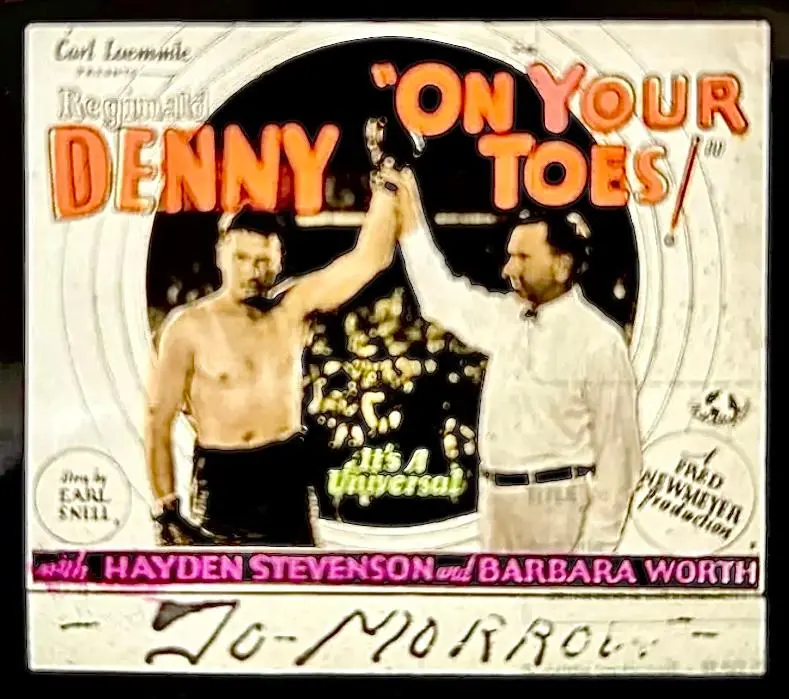
One surprising observation is how the film handles the supporting cast. Gertrude Howard and Mary Carr provide a maternal backbone that is often missing from these 'tough guy' stories. The way the camera lingers on Mary Carr’s face during the more tense moments adds a layer of emotional stakes that the script itself doesn't quite earn. It’s an unconventional choice for a film that is ostensibly a light comedy, suggesting a deeper undercurrent of familial duty that mirrors the themes found in Smith's Baby.
Does On Your Toes (1927) hold up for a modern audience? The direct answer is that it serves as an excellent entry point for those curious about silent comedy beyond the 'Big Three' (Chaplin, Keaton, Lloyd). It offers a more sophisticated, upper-middle-class brand of humor that relies on social embarrassment rather than just falling down stairs. It is a charming, if slightly overlong, artifact of a lost style of American filmmaking.
Pros:
The film avoids the overly sentimental traps of many 1920s dramas. Denny’s charisma is undeniable and carries the film through its slower moments. The fight choreography, while dated, is remarkably safe and well-timed, showing a high level of professional stunt coordination for the era.
Cons:
The antagonist, played by Frank Hagney, is a one-dimensional brute with little motivation beyond being a foil for the hero. Some of the social commentary regarding class feels a bit 'on the nose' and lacks the subtlety of later screwball comedies. The film lacks a truly iconic 'stunt' moment that would make it a hall-of-famer.
On Your Toes is a solid, three-star effort from a time when the movie industry was perfecting the art of the 'light' feature. It doesn't possess the profound soul of a Keaton masterpiece, nor the social bite of a Chaplin film. Instead, it offers a comfortable, professional, and frequently funny look at a man out of his element. It is the cinematic equivalent of a well-tailored suit that’s just a little bit too tight in the shoulders—impressive to look at, but slightly restrictive in its movement.
In the grand scheme of silent cinema, it sits comfortably alongside middle-tier successes. It is better than the forgotten fluff of the era, such as some of the lesser-known shorts like Midst Peaceful Scenes, but it never quite reaches the heights of the decade's true innovators. It’s a knockout in its own weight class, but it wouldn't survive a round with the heavyweights. Watch it for Denny, stay for the period detail, and forgive the occasional lulls in the action.
"A fascinating relic of the era where comedy was as much about the placement of a hand as it was about the punchline of a joke."
IMDb 6.1
1916
Community
Log in to comment.